

Hypnos
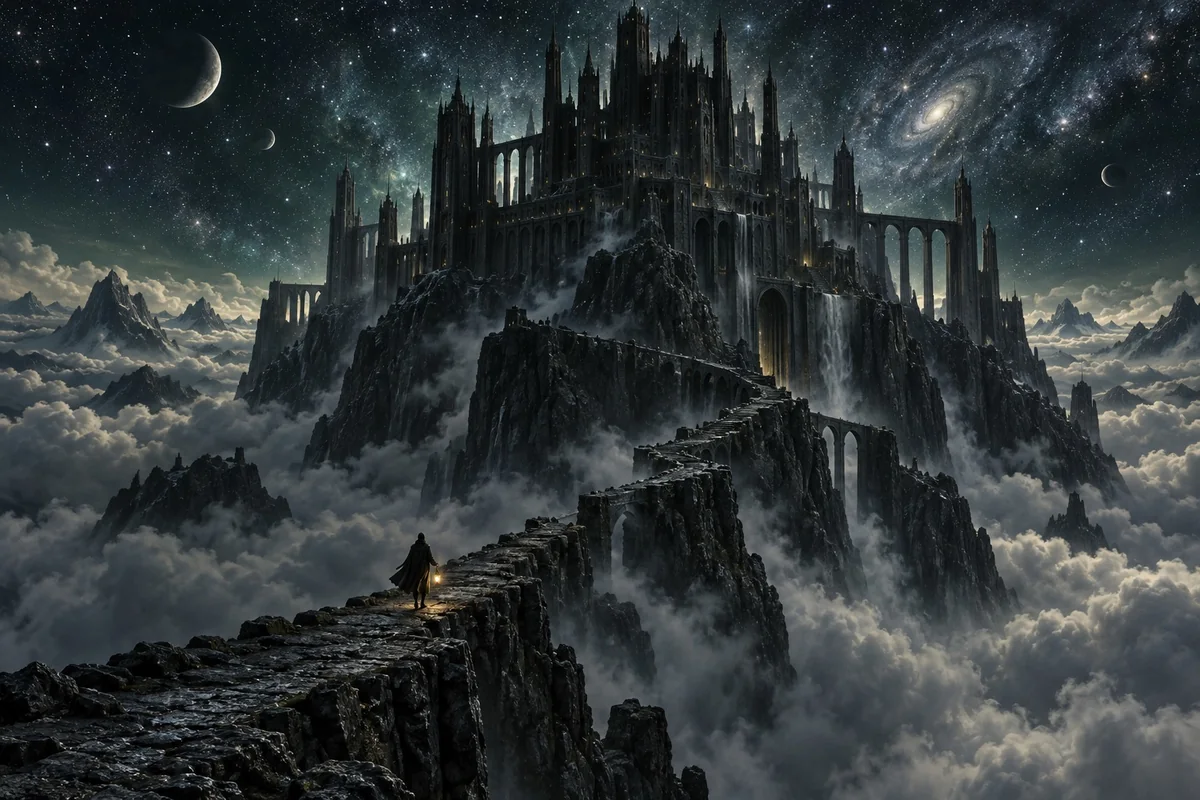
Hypnos is a dream-horror narrative in which an isolated sculptor follows a mysterious companion beyond ordinary consciousness, then struggles to avoid sleep after that companion crosses an unseen limit. The ending turns the apparent partnership into a problem of identity, art and unreliable testimony, with a marble head standing where the narrator believes his friend has been destroyed.
5 min read · 975 words
Composition and publication
The story was written in March 1922 and first published in the May 1923 issue of The National Amateur. Its text includes a dedication to S. L. and an epigraph attributed to Baudelaire, preparing the reader to regard the apparently ordinary act of sleeping as a dangerous adventure.
The meeting at the station
The unnamed narrator encounters a man who has fallen unconscious in a railway station. His response is immediate fascination. As a sculptor, he sees the stranger's face in terms of classical beauty, comparing it to a figure of ancient Greek art brought into an inhospitable modern world.
When the man awakens, the narrator reads extraordinary experience in his eyes and invites him home as a teacher. The bond begins without the ordinary exchange of a name or personal history. Throughout the account, the companion remains undefined by those social facts.
Sources: [3]
Art and companionship
The narrator models busts and small ivory heads of his friend, seeking to preserve different expressions. That artistic activity is not incidental decoration. It establishes the face as something the narrator repeatedly makes, studies and carries in memory.
Their relationship becomes exclusive. The narrator presents the stranger as his only friend and as the guide to a field of experience he had previously approached only through longing. Intimacy and intellectual dependence develop together.
The end will force the reader to reconsider how this sustained production of likenesses relates to the companion's apparent existence.
Sources: [3]
Experiments in Kent
In a tower studio in an old Kent manor house, the pair use drugs to pursue unusual dreams. The narrator insists that the resulting sensations lie outside the range for which human language and the nervous system ordinarily provide categories.
He describes movement through darkness and resistance from barriers resembling dense vapor, while warning that these comparisons are inadequate. His companion usually travels ahead. Even without a physical body, the narrator recognizes him through an image of his face.
The explorers lose interest in measuring time and are surprised that they seem not to age. The account presents this as part of their altered existence rather than a securely observed chronological experiment.
Sources: [3]
Ambition beyond exploration
The companion's purposes extend beyond seeing unusual things. He entertains dominion over the visible universe and more. One statement of that ambition is so disturbing that the narrator burns the paper on which it is written.
The narrator emphatically denies sharing these aims. His insistence can be read as fear of responsibility as well as a description of their differing characters. He has willingly followed the guide, but now wants a boundary between his own curiosity and the companion's desire for mastery.
The story thus makes forbidden knowledge a question of intention, not merely distance traveled.
Sources: [3]
The barrier
During a particularly intense excursion, the companion passes beyond a resistance the narrator cannot penetrate. The narrator wakes first and waits for the still-unconscious man.
When the friend returns, his terror is overwhelming. He refuses to describe what lies beyond the barrier and demands that they abandon further exploration. More radically, he warns that they must sleep as little as possible.
The activity that once promised freedom becomes the route by which danger may find them. The barrier that frustrated the narrator may also have spared him the guide's fullest exposure.
Sources: [3]
Avoiding sleep
The men age rapidly and change their lives. The companion, formerly reclusive, seeks crowded revelry because solitude has become intolerable. Their conspicuous age and behavior attract ridicule, which he accepts as less frightening than being alone.
He repeatedly watches a particular area of the sky. The narrator eventually associates the direction of his gaze with Corona Borealis. The changing position through the seasons gives a concrete pattern to a fear that remains unexplained.
They move to London and use their dwindling resources to sustain wakefulness. The narrator sells his sculptures; poverty, fatigue and the effects of their habits erode the means by which they have tried to protect themselves.
Sources: [3]
The last vigil
One night the companion falls into a deep sleep from which he cannot be roused. Rain, distant city sounds and clocks intensify the narrator's attention as he keeps watch in the dark studio.
A red-gold beam appears without generally illuminating the room. It brings out the sleeper's face as the narrator remembers it from their dream journeys, young and radiant but filled with terror. A distant sound accompanies it.
The narrator follows his companion's gaze toward the source, sees something he cannot describe and collapses into a violent fit. Lodgers and police break into the room.
Sources: [3]
The marble head
Those who enter deny the narrator's account of a friend. They find a remarkable marble head and praise it as his work. According to them, its face resembles the sculptor himself at twenty-five.
The head has a poppy crown and an inscription naming Hypnos. The narrator interprets it as the petrified remnant of his companion, whereas the others see an artistic object. Their explanation also conflicts with his claim that he sold the last of his statuary.
The story ends without an independent account that settles the conflict. Transformation, projection, divided identity and an artist's delusion remain competing ways of understanding the evidence.
Sources: [3]
The title and the unnamed threat
The narrator invokes Hypnos as the lord of sleep, but cannot describe the final source of terror. The statue's name does not establish a complete Mythos genealogy or identify every presence in the story.
The repeated classical imagery prepares the object found at the end: the friend's beauty, the sculptor's work and the final marble face belong to the same visual pattern. The uncertainty is carefully structured through that pattern rather than produced solely by withholding a monster's appearance.
Sources: [3]
References
- H. P. Lovecraft Archive — fiction in composition order
Composition dates; question marks and ranges retain the source uncertainty.
- H. P. Lovecraft Archive — fiction in publication order
First publication dates and venues; issue dates can differ from actual release dates.
- Hypnos — Unspeakable Tales ebook
The fictional narrative is evidence for what the story says, not proof of events in the real world.
At a glance
H. P. Lovecraft
March 1922
1923, May
The National Amateur, 45, No. 5
Fiction