

Winifred V. Jackson
Winifred Virginia Jackson was a poet, amateur journalist and collaborator associated with Lovecraft’s early literary network. The Green Meadow and The Crawling Chaos connect her with dream narratives and visionary catastrophe, while Lovecraft’s criticism records his enthusiasm for her independent poetry. Her importance includes editorial and organizational work as well as the two stories preserved in collections of their collaborations.
6 min read · 1,060 words
The amateur journalist and correspondent
Jackson entered the United Amateur Press Association in 1915 through Anne Tillery Renshaw. During her marriage to Horace Jordan she appeared in amateur publications as Winifred Virginia Jordan; the return to Jackson in correspondence followed her divorce. Elizabeth Berkeley was another name associated with her literary work.
In 1917 Lovecraft became the association's president and Jackson its vice-president. She edited Eurus and worked on The Bonnet. Their correspondence consequently involved an active publishing community, not only private discussion between two isolated writers.
Bobby Derie's reconstruction identifies six surviving Lovecraft letters to her from 1920–1921 and warns that later accounts of a romance rely on uncertain retrospective testimony. The surviving evidence supports literary friendship and collaboration; it does not establish the fuller romantic narrative sometimes attached to her name.
Jackson’s poetry in Lovecraft’s criticism
Lovecraft devoted a substantial appreciation to Jackson in the March 1921 United Amateur. He praised her imagination, musical language and range of subjects, presenting her as an original poet whose individuality could operate within regular form. His argument was also a defense of his own poetic preferences: he contrasted her writing with the introspection and formal experimentation he disliked in contemporary verse.
Several examples give the essay more value than a general declaration of admiration. The Bonnet creates an imagined gift from sky, stars, moonlight and dreams. Ellsworth to Great Pond turns instead toward the vigorous language of a Maine logging environment. Workin' Out places longing for an absent lover beside rural labor, allowing flowers and colors to interrupt a sequence of practical tasks. The Token emphasizes rhythm, movement and a refrain-like change in measure.
These examples show why Jackson should not be represented only as the supplier of material for two weird tales. Her poetry included pastoral feeling, vernacular energy, fantasy and songlike construction. Lovecraft found unity in that variety, especially in the way imagination altered the appearance of the natural world.
His extravagant praise remains an attributed critical position. It is evidence of what he valued and how he promoted a fellow amateur, rather than proof that all contemporary readers shared his estimate. It also exposes the tension between a critic who defended traditional forms and an imagination drawn to visionary strangeness.
Sources: Lovecraft — Winifred Virginia Jackson: A “Different” Poetess, March 1921
The Green Meadow: a manuscript from outside ordinary history
The Green Meadow begins with a pseudo-documentary discovery. A strange object recovered after a fireball falls near Potowonket contains a book made of unfamiliar, unusually resistant material. Scholars examine its substance and ancient Greek writing, but their expertise does not settle its origin. Damage to some pages prevents the surviving record from being complete.
The introductory translators' names, Elizabeth Neville Berkeley and Lewis Theobald, Junior, place the collaborators' literary aliases inside the fiction. The account then shifts from institutional examination to the impressions of a solitary consciousness in an alien landscape.
This arrangement makes uncertainty part of the narrative's structure. The frame promises a document that can be studied, yet even the material carrying the testimony resists classification. The inner story promises personal witness, yet its speaker cannot securely recover an identity or explain the relation between perception and physical existence. Neither level supplies a fully authoritative explanation.
The work therefore joins a dreamlike journey to the apparatus of documentary fiction. Its scientific witnesses and damaged record do not make the vision less strange; they allow the strangeness to remain after investigation.
Sources: The Green Meadow — original text
Landscape, attraction and danger in The Green Meadow
The narrator stands between an apparently hostile forest and the sea. Familiar categories such as tree, grass and sky remain available, but they no longer describe a familiar relationship between the observer and the world. The horror comes partly from recognizing objects without recognizing the order to which they belong.
A fragment of shore breaks loose and carries the narrator toward a distant meadow. As the floating earth crumbles, the threatened loss of a body begins to seem different from the extinction of consciousness. A chant from the meadow draws attention toward forms of life older and stranger than ordinary human experience.
The journey repeatedly combines attraction and fear. Escape from the forest is not secure rescue, and the meadow's apparent invitation does not guarantee benevolence. The surviving narrative leaves the reader with a threshold rather than a complete cosmography.
The collaboration grew from exchanged dreams and imaginative material. Its joint credit does not establish which writer supplied every sentence.
Sources: The Green Meadow — original text, Winifred V. Jackson — biographical context
The Crawling Chaos: a vision of planetary destruction
The Crawling Chaos frames its vision through a medical overdose of opium during an illness. The narrator awakens within a beautiful building while an insistent pounding reveals the sea destroying the land beneath it. The contrast between interior luxury and external annihilation makes shelter seem temporarily persuasive but ultimately inadequate.
Flight inland leads through unfamiliar vegetation toward a great palm tree. A radiant child and divine-looking figures offer escape to Teloe, beyond the Milky Way, with visions of beauty, youth and pleasure. The narrator rises with them but looks back when the ocean's pounding intrudes upon their music.
That backward look reveals devastation on a planetary scale. Seas expose drowned cities and older structures before pouring into a vast rift. The destruction expands until the Earth itself disappears, while the narrator eventually returns to consciousness in a sickbed.
The tale's movement is important: immediate bodily distress becomes landscape terror, apparent salvation and finally cosmic loss. Its named places belong to a vision whose literal geography is not independently confirmed. The contrast between promised beauty and the compulsion to witness catastrophe does more narrative work than a catalog of gods could explain.
Sources: The Crawling Chaos — original text
A title that does not identify Nyarlathotep
Despite its title, The Crawling Chaos does not introduce Nyarlathotep as a named character. The phrase should not be used to turn the story into an episode about that being without additional evidence. Its principal forces are the threatening environment, the alluring ascent and the destruction witnessed when the narrator looks back.
Read beside The Green Meadow, the story shows how dream fiction can make uncertain perception, unstable ground and movement beyond bodily limits central to horror. The two collaborations enlarge the range of Lovecraft-related writing, while Jackson's poetry and amateur work establish that the partnership was only one part of her literary activity.
Sources: The Crawling Chaos — original text, The Green Meadow — original text, Lovecraft — Winifred Virginia Jackson: A “Different” Poetess, March 1921
Related music
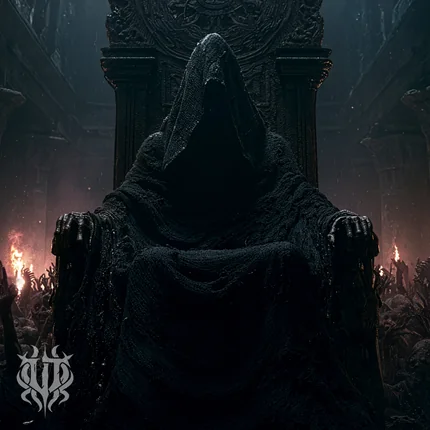
A Thousand Masks is a dark metal song inspired by Nyarlathotep, the Crawling Chaos who walks among humanity, hiding behind countless faces and whispered lies.
References
- Winifred V. Jackson — biographical context
- Lovecraft — Winifred Virginia Jackson: A “Different” Poetess, March 1921
Read as Lovecraft’s contemporary judgment, not an impartial measurement of the poet’s standing.
- The Green Meadow — original text
The fictional narrative is evidence for what the story says, not proof of events in the real world.
- The Crawling Chaos — original text
The fictional narrative is evidence for what the story says, not proof of events in the real world.
At a glance
Poet, amateur journalist, correspondent and collaborator
1876–1959
Winifred Virginia Jordan; Winifred Virginia Jackson; Elizabeth Berkeley
The Green Meadow; The Crawling Chaos
Romantic interpretations exceed what the surviving correspondence securely establishes