

The Tree
The Tree is a classical tale of two celebrated sculptors, a prestigious commission and an uncanny olive tree growing beside a tomb. The public account celebrates Musides’s devotion to his friend Kalos, while details of illness, exclusive care and the tree’s final action invite a more troubling interpretation. Lovecraft leaves the implied betrayal unconfirmed by a direct confession or witnessed crime.
4 min read · 832 words
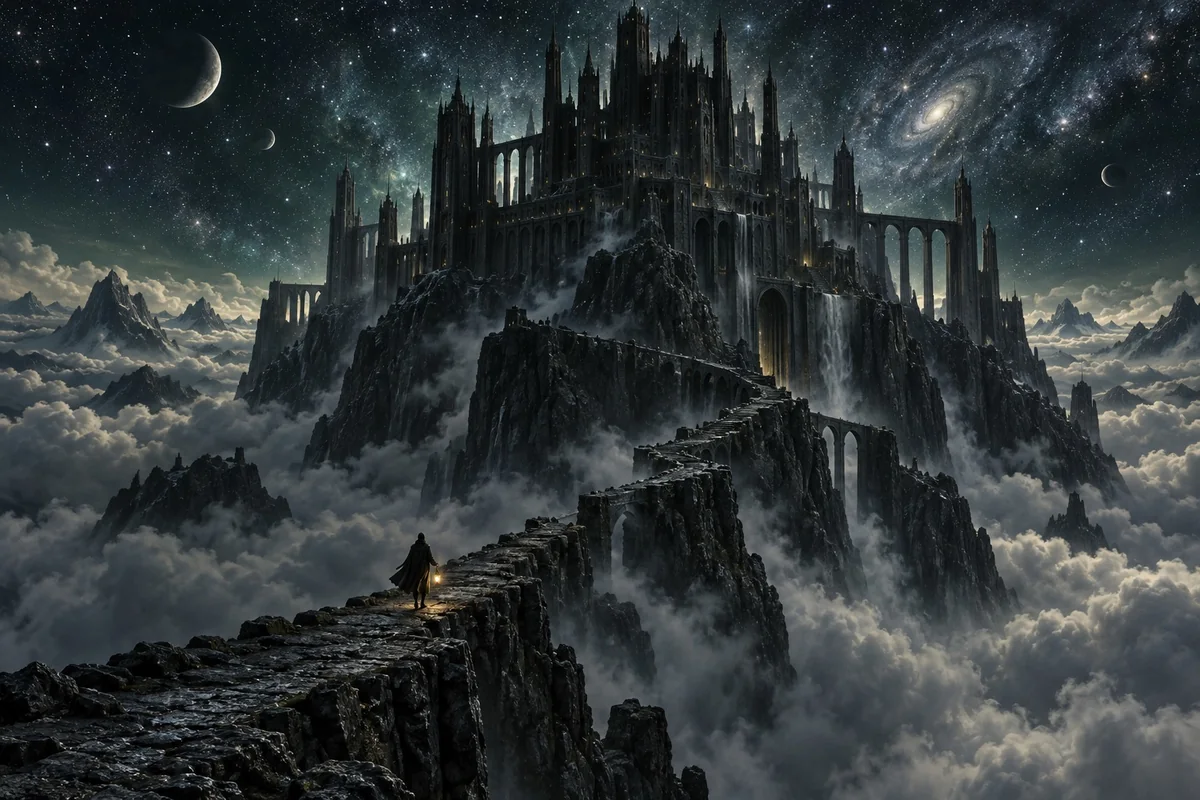
The ruined villa and the beekeeper’s account
An unnamed visitor describes a ruined villa and sculptured tomb on Mount Maenalus in Arcadia. An abnormally large olive tree grows beside the tomb, with a distorted resemblance to a human body.
Sources: [1]
Local people associate the tree with Pan's companions. A nearby beekeeper supplies another story, taking the narrative back to the time when the villa housed the sculptors Kalos and Musides. The setting's explanation is therefore transmitted as a tale rather than established through a modern investigation.
Two artists and different temperaments
Both sculptors are famous, and their friendship appears free of professional jealousy. Musides enjoys the social life of Tegea, while Kalos withdraws to the olive grove to contemplate the forms he will carve.
Rumor connects Kalos's art with encounters with fauns and dryads. His work is said to use no ordinary living models. The narrative presents those claims as part of the atmosphere around his practice, not as scenes in which the reader actually watches supernatural beings pose.
Their complementary reputations establish what the later events will unsettle: public confidence that artistic competition cannot damage the friendship.
Sources: [1]
The commission from Syracuse
The Tyrant of Syracuse invites both men to compete in making a great statue of Tyché. He expects their mutual advice and assistance to produce two extraordinary works, from which the better can be chosen.
The men accept and keep their developing statues from everyone except each other. The arrangement creates a private competitive space within the publicly celebrated friendship.
Musides becomes depressed before Kalos's illness is announced. Once the illness is known, observers explain that earlier unhappiness as concern for his friend. The sequence permits a more suspicious reading without explicitly settling it.
Sources: [1]
Illness and the request for olive twigs
Kalos grows weaker despite medical attention and Musides's devoted care. Musides insists on personally feeding and attending him, a detail that can be read either as affection or as an opportunity for concealed harm.
The dying artist asks to visit the grove and be left alone there. When Musides promises an exceptionally grand tomb, Kalos instead emphasizes a smaller request: olive twigs from particular trees should be buried near his head.
Kalos dies, and Musides fulfills both his own promise of an elaborate monument and his friend's request concerning the twigs. The tree subsequently grows from the place associated with that request.
Sources: [1]
The tree and the finished statue
Musides returns to his work, now assured of the commission if he completes it. Three years after Kalos's death, he announces that the statue is finished.
By then the olive tree has grown with extraordinary speed and sends a heavy branch over the room where he works. Its shape and the sounds of wind through it disturb him. Visitors notice that he no longer likes to be alone.
The tree attracts attention comparable to that given the sculpture. A form associated with Kalos increasingly dominates the place where Musides expects his own artistic achievement to secure lasting honor.
Sources: [1]
The storm and the absence
On the night the Syracusan representatives arrive, a violent windstorm strikes the mountain. In the morning, the great branch has fallen on the villa's principal hall.
Searchers find neither Musides nor the completed statue. The story does not display his corpse or give a direct account of the instant of destruction. The disappearance leaves both the commission and the presumed future glory unrealized.
Syracuse eventually obtains another statue elsewhere, while Tegea creates a memorial honoring Musides's gifts and friendship. Public commemoration therefore preserves the generous interpretation even after the events have made another interpretation possible.
Sources: [1]
What the branches appear to know
The beekeeper says that the tree's branches sometimes repeat words meaning that they know. The suggestion attributes awareness to a growth rooted in Kalos's grave.
Readers can infer that the tree embodies Kalos's knowledge or retribution, and that Musides's apparent care concealed jealousy or murder. Lovecraft does not narrate a poisoning, identify a substance, or provide an explicit statement of guilt. Those remain interpretations supported by the pattern of details.
The final ambiguity gives the title its force. The tree is at once an abnormal natural object, a possible continuation of the dead artist and a witness whose message challenges the official story of brotherly devotion.
Sources: [1]
Art, survival and reputation
The tale places several attempts at permanence beside one another: commissioned sculpture, a carved tomb, a civic memorial and a living tree. The prestigious statue disappears, while the disturbing tree remains.
The opposition between the public monument and the whispered story also asks who controls an artist's reputation after death. The citizens honor what they believe they know, while the beekeeper preserves a less comfortable possibility.
The work contains classical divinities and supernatural suggestion but does not identify the tree with a named Mythos species. Its particular literary structure is more useful than an unsupported attempt to classify it as one.
Sources: [1]
References
- The Tree — original text
The fictional narrative is evidence for what the story says, not proof of events in the real world.
At a glance
H. P. Lovecraft
1920
1921, October
The Tryout, 7, No. 7
Fiction