

Cities and architecture
Buildings and cities in Lovecraft’s fiction organize the discovery of hidden histories. A cellar can preserve what a household refuses to see; a ruined city can carry an alien civilization’s own account of itself; a dream skyline can embody personal memory. Architecture is therefore both setting and evidence, shaping what a character can reach, observe and misunderstand.
5 min read · 893 words
Rooms as systems of access
A frightening room is often defined by its connections. The cellar in The Shunned House stands directly beside an ordinary sidewalk, giving the narrator a practical escape from the manifestation. Its fireplace and earthen floor identify where later excavation becomes meaningful.
The Martense mansion organizes a different investigation. Its upper room stages the first misleading encounter, while a cellar opening eventually reveals the route used by a large population. The building's apparent emptiness conceals continued occupation below it.
These details make circulation part of the plot. Doors, windows, stairs and openings determine the evidence available to a witness. The terror is not simply that a house looks old or unpleasant.
Sources: The Shunned House — Unspeakable Tales ebook, The Lurking Fear — Unspeakable Tales ebook
Construction on older ground
The Harris family's house inherits a dangerous site rather than creating its danger from nothing. Research into the earlier Roulet property and burial ground changes the meaning of a building constructed in 1763.
The Nameless City reverses the usual confidence of an archaeologist entering a human ruin. Its low spaces and representations of nonhuman inhabitants suggest that the architecture answers to bodies and purposes unlike the explorer's.
In both cases, later occupation or interpretation overlays an earlier order. The investigator must separate the building's visible period from the deeper history that gives it significance.
Sources: The Shunned House — Unspeakable Tales ebook, The Nameless City — original text
A city as its builders’ historical record
The Antarctic city contains sculptures that Dyer and Danforth interpret as an extended account of its builders' life. Architecture houses the record, while the record explains the architecture's growth, changing use and eventual decline.
The explorers learn about settlement, conflict, labor and movement into lower regions by reading those surfaces. Their reconstruction remains limited by unfamiliar conventions and their own hurried observation, but it transforms an apparently hostile ruin into evidence of a society.
This change affects their judgment of the beings encountered by the expedition. Once the city reveals a history of work and survival, the builders can be understood as more than monsters. The built environment enables that difficult recognition.
Scale and the nonhuman occupant
Dimensions become clues when a human visitor struggles to use a space. Huge inclines and archival arrangements in The Shadow Out of Time correspond to a civilization whose bodies differ radically from Peaslee's present body.
His strange familiarity with those arrangements is more disturbing than their size alone. The architecture seems designed for a form he has occupied in dreams. Navigating it joins bodily memory to material observation.
The effect differs from simple grandeur. A large building can inspire awe; a large building whose unfamiliar proportions feel personally remembered threatens the observer's account of who and what he has been.
Ports as social architecture
Dylath-Leen's towers, taverns, wharves, mole and lighthouse define a working commercial city. Carter obtains information there because its built spaces bring traders and travelers together.
The same network permits dangerous transactions. The black galleys can remain offshore or at the quays while their representatives conduct business, leaving the crew concealed. The visible economy and the hidden labor behind it occupy adjacent but unequally accessible spaces.
Architecture here supports a social arrangement. The city is menacing partly because its inhabitants accept profitable contact with a system they have reason to distrust.
K’n-yan and the inhabited underground
The Mound supplies an underground civilization with cities, roads, farms, apartment buildings and ceremonial spaces. Its extent exceeds the Gothic idea of a single secret chamber beneath an ordinary house.
Tsath's surviving inhabitants use only part of the vast built fabric inherited from a more populous past. Abandoned areas and older levels preserve different periods of settlement and worship. K'n-yan, Yoth and N'kai form historical layers as well as descending physical regions.
The spaces also distribute freedom unequally. A visitor may be shown extraordinary public achievements while remaining unable to leave, and the society's impressive infrastructure depends on coerced labor. Architectural sophistication does not establish an ethical civilization.
Sources: The Mound — original text
Dream cities and the memory of home
Carter pursues a sunset city whose terraces, towers and fountains seem to promise an ideal dwelling. Its eventual explanation connects those forms with the remembered beauty of New England.
Kuranes provides a contrasting case. As a powerful dream ruler, he can construct magnificent places and even recreate a Cornish landscape, yet still longs for the lost world that gave those forms meaning. Reproduction of appearance cannot restore a particular childhood.
The comparison gives architecture an emotional role beyond horror. Buildings can carry attachment and continuity as strongly as concealment and danger. Carter's return to his Boston room is effective because its familiar details answer the longing that drove the entire journey.
Preservation, demolition and incomplete endings
The Shunned House ends with a building made habitable and a narrator who would regret its eventual demolition. The Lurking Fear ends with deliberate destruction of a mansion and surrounding terrain, yet no certainty that the threat is wholly removed.
These different outcomes resist a single equation between old architecture and evil. One structure can survive once the concealed danger is ended; another can be destroyed without settling the problem it housed.
For illustrations and maps, the same attention to particulars matters. A described doorway, sloping site or cellar passage can be shown faithfully, while complete plans and measured tunnel networks should remain labeled interpretations wherever the fiction leaves them unspecified.
Sources: The Shunned House — Unspeakable Tales ebook, The Lurking Fear — Unspeakable Tales ebook
Related music
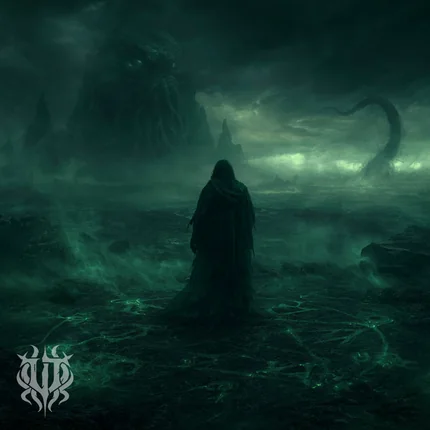
The Dead But Dreaming is a dark folk metal song inspired by The Call of Cthulhu, evoking R’lyeh, forbidden worship and the ancient dream beneath the sea.
References
- The Shunned House — Unspeakable Tales ebook
The fictional narrative is evidence for what the story says, not proof of events in the real world.
- The Lurking Fear — Unspeakable Tales ebook
The fictional narrative is evidence for what the story says, not proof of events in the real world.
- The Nameless City — original text
The fictional narrative is evidence for what the story says, not proof of events in the real world.
- At the Mountains of Madness — original text
The fictional narrative is evidence for what the story says, not proof of events in the real world.
- The Shadow out of Time — original text
The fictional narrative is evidence for what the story says, not proof of events in the real world.
- The Dream-Quest of Unknown Kadath — original text
The fictional narrative is evidence for what the story says, not proof of events in the real world.
- The Mound — original text
The fictional narrative is evidence for what the story says, not proof of events in the real world.
At a glance
Comparative interpretation of primary fiction
Access, concealment, historical evidence and memory
A building’s age does not by itself determine its danger
Unspecified plans and dimensions remain interpretive