

Alan Moore
Alan Moore is an English writer whose Lovecraftian comics use investigation, historical research and the unstable relation between language and reality as sources of horror. The Courtyard, Neonomicon and Providence form a connected body of work created with artist Jacen Burrows and other collaborators. They reinterpret Lovecraft within a broader career in comics and prose.
6 min read · 1,106 words
Comics, prose and Northampton
Moore was born in Northampton and has maintained a close association with the town. His wider bibliography includes From Hell, Lost Girls and The League of Extraordinary Gentlemen, alongside the prose books Voice of the Fire and Jerusalem. Illuminations collects short fiction, while The Great When begins the Long London sequence.
Sources: [1]
This range helps place the Lovecraftian projects in context. They bring an established interest in fictional worlds, historical settings and the possibilities of narrative form into a particular literary tradition. Moore's reputation as a comics writer should not obscure his prose, and his work as a writer should not obscure the artists and other collaborators who give the comics their visual form.
The Courtyard and the problem of investigation
The Courtyard reached comics as a two-issue Avatar Press miniseries beginning in January 2003. The publisher credits Moore with the story, Jacen Burrows with the art, Nimbus Studios with the gray tones, and Antony Johnston with Moore for the sequential adaptation.
Its investigator, FBI agent Aldo Sax, follows an apparently disconnected series of brutal murders. The clues lead toward the place named in the title. The story converts a professional talent for finding patterns into a potentially dangerous route toward hidden knowledge.
In the publisher's announcement, Moore described his aim as creating a Lovecraftian story without simply reproducing Lovecraft's style or historical setting. Its movement from prose to comics also involved a separate act of adaptation. Burrows's images and the organization of the narrative on the page are part of that transformation, not illustrations added to an otherwise unchanged reading experience.
Sources: [2]
Neonomicon and the continuation of the case
Neonomicon returns to the consequences of Aldo Sax's investigation. FBI agents Brears and Lamper examine further ritual murders linked to his earlier assignment. Sax is now imprisoned as a convicted killer, and the agents' inquiry leads through a club associated with strange symbols and language toward Innsmouth.
Avatar's October 2011 collected edition includes The Courtyard as well as the later comic. That inclusion makes the connected investigation available within one volume, but readers comparing editions should still distinguish the earlier adaptation from the subsequent work written for comics.
The procedural starting point gives the supernatural encounter a recognizable institutional framework. Interviews, evidence and undercover work promise that the mystery can be brought under professional control. The Lovecraftian premise puts that promise under pressure, making discovery itself part of the danger.
Sources: [3]
Providence as an alternative literary history
For Providence, Moore drew on Lovecraft's fiction, poems, letters and biography while researching American life in 1919. In a 2013 interview he described a narrative that would work both before and after Neonomicon, rather than a straightforward documentary biography.
The research extended to actual towns, maps, newspapers and the social conditions of the period. Moore discussed placing counterparts of familiar Lovecraftian situations in real American locations. His interest in the era's gay culture and political tensions made historical society part of the horror's structure.
This approach also clarifies the status of the resulting world. Providence connects its source material through a newly written fictional design. Historical detail makes that design persuasive, but does not turn its invented events into evidence about Lovecraft's life or establish that his original stories were conceived as the same unified plot.
Sources: [4]
Recovering uncertainty from a familiar monster
In a 2015 interview, Moore identified a difficulty facing new Lovecraftian work: Cthulhu had become comfortable and recognizable through popular culture. The monster could function as a joke, an image on merchandise or a familiar object of affection. Repeating its visible features would not necessarily recover its disturbing effect.
Moore proposed returning to Lovecraft's techniques of representation. The tension between excessive description and something that resists description could be treated as a deliberate strategy. For a visual medium, the challenge is particularly sharp: drawing a creature risks making it fully available to the eye.
This is Moore's account of his creative problem, not an objective test that every adaptation must pass. It nevertheless explains why his Lovecraftian work gives so much attention to interpretation, framing and the reader's expectations rather than relying exclusively on the scale or ugliness of a monster.
Sources: [5]
Language, estrangement and the regional landscape
Moore's 2014 discussion with Nick Talbot emphasizes how critical reading changed his response to Lovecraft. He was particularly interested in accounts of descriptions whose individual qualities cannot be assembled into a coherent imagined object. Wilbur Whateley's body became an example of that difficulty.
He also considered the relation between the intimate New England landscape and an impersonal universe. A recognizable neighborhood or regional history could carry an encounter with something that radically reduces human importance.
These comments connect two scales of his reading: the texture of a sentence and the structure of a world. They offer insight into the interests behind Providence while remaining attributable interpretations. Moore's philosophical response belongs beside scholarship on Lovecraft, not in place of the original story or a neutral account of what every reader must find there.
Sources: [6]
Illuminations and the range of the shorter prose
Illuminations was published in 2022 and gathers work from several decades. Its subjects include an otherworldly presence inside a paranormal research group in Not Even Legend, a return to a remembered seaside resort in the title story, and the comics industry in the extended satire What We Can Know About Thunderman.
The collection broadens the view of Moore available from his explicitly Lovecraftian comics. Investigation, memory, invented realities and the systems that produce stories recur in different forms. Their presence does not make every story an episode in the continuity of Providence.
For readers following the theme of dangerous perception, the collection supplies adjacent material: characters attempt to understand a reality whose structure may not match their assumptions. The connection is thematic and bibliographical, leaving each story's particular world intact.
Sources: [7]
The Great When and an impossible book
The Great When, published in 2024, opens the Long London series. In the publisher's description, the action begins in 1949 with Dennis Knuckleyard, a young employee of a secondhand bookshop. He encounters a physical book that should exist only as an invention inside another novel.
The discovery leads toward another London, where abstractions can acquire embodied form. Returning the misplaced book becomes urgent because contact between the two versions of the city has dangerous consequences.
The premise provides a useful connection with this encyclopedia's treatment of fictional books and the boundary between reading and reality. It is a separate fictional project, rather than an announced continuation of Providence. Following that distinction allows Moore's recurring concerns to become visible without collapsing all his work into a single Mythos setting.
Sources: [8]
Related music
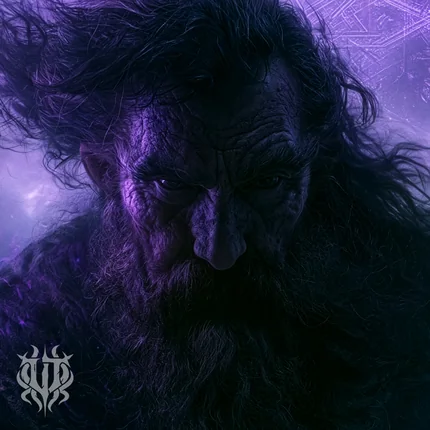
The Key and the Gate is a dark metal retelling of The Dunwich Horror, following Wilbur Whateley’s doomed search for forbidden knowledge and the power of Yog-Sothoth.
References
- Alan Moore — Bloomsbury author profile
- The Courtyard — Avatar Press original announcement and credits
- Avatar Press — Neonomicon collected edition, 19 October 2011
- Pádraig Ó Méalóid — Alan Moore on Providence, Jerusalem and League, 2013
- Pádraig Ó Méalóid — Alan Moore Interview Part II, 2015
- Nick Talbot — All About Alienation: Alan Moore on Lovecraft and Providence, 2014
The ten-issue prediction in the introduction is superseded; the completed Providence has twelve issues.
- Illuminations — Bloomsbury first US hardback
- The Great When — Bloomsbury first US hardback
At a glance
Born 1953
Modern reinterpretation
The Courtyard; Neonomicon; Providence
Jacen Burrows
Antony Johnston and Alan Moore
Illuminations (2022); The Great When (2024)