

Essential salts
Essential salts are the prepared residues from which dead organisms can be restored in The Case of Charles Dexter Ward. Curwen and his associates use the process to recover people whose knowledge they want to extract. The powders, their containers and the paired operations of summoning and dissolution connect the novel’s historical investigation with its final exposure of an impostor.
5 min read · 886 words

The idea introduced by the epigraph
The novel opens with an attributed passage proposing that the form of an organism may be called back from specially prepared remains. That proposition supplies a conceptual key before the reader knows how literally the subsequent case will enact it.
Sources: [1]
The story develops the idea as an operative fictional process. Ward’s research does not end with a belief that ancestors influence descendants symbolically; it produces the physical return of Joseph Curwen.
The term belongs to this literary mechanism. The narrative does not provide a verified chemical theory of identity or a reproducible scientific procedure for restoring a dead person.
Remains as a source of information
Curwen’s project depends on obtaining the remains of people whose memories may be useful. Graves and burial places become targets because their contents can potentially be converted into access to a former mind.
His correspondence treats acquisition, preparation and results as parts of a continuing research system. The dead are valued for what they can be made to disclose.
This gives the salts an ethical role as well as a technical one. They reduce the material basis of a person to a portable resource while leaving open the possibility that the restored person can think, resist or act independently.
Sources: [1]
The powders in the laboratory
Willett finds vessels containing fine, lightweight powders in several muted colors. The material does not adhere to his hand as an ordinary dusty substance might, and differences of color do not immediately reveal the identity or use of the contents.
The containers are arranged under the headings Custodes and Materia and marked through an organized system. The collection is therefore not a random set of alchemical curiosities. It represents classification and repeated handling.
The physician can observe the arrangement without understanding every specimen. That gap becomes important when he applies a formula to material whose full identity he does not know.
Sources: [1]
Calling up and putting down
The laboratory documents preserve complementary formulas. One evokes a presence from prepared material; another reverses the operation and returns the restored body to residue.
Yog-Sothoth’s name appears in the formulas, connecting the procedure with the wider fictional vocabulary. The novel nevertheless concentrates on the particular operation rather than providing a complete independent theology of that entity.
The paired structure matters to the ending. A return that first appears to overcome death can be undone through knowledge acquired inside the same system that made it possible.
Sources: [1]
Identity is not guaranteed by a label
The correspondence warns that old grave markers may be inaccurate. A researcher who believes that a sample belongs to one person can therefore restore something quite different.
The danger is both practical and conceptual. Possessing a container and a procedure does not mean possessing reliable knowledge of the being that will appear.
Willett’s accidental summoning dramatizes that limit. The recovered presence has knowledge and agency beyond what he anticipated, and it acts in ways that alter the outcome of the case.
Sources: [1]
Incomplete results and confinement
The underground complex contains disturbing results of the researchers’ work, including beings whose condition reflects unsuccessful or incomplete restoration. Their continued existence makes the laboratory a place of suffering.
They are not simply discarded notes describing a failed experiment. The physical consequences remain active enough to require confinement and to affect the investigator who enters the site.
The story does not supply a reliable formula connecting every defect with a particular missing ingredient. Its emphasis is on the gap between the experimenters’ technical categories and the condition of the beings those categories conceal.
Sources: [1]
Curwen’s restoration and impersonation
Ward uses the method to restore his ancestor, whose appearance strongly resembles his own. Curwen then acts as an independent person, first under the identity of Dr. Allen and later under Ward’s name.
The salts do not themselves explain the deception. The process supplies a restored body; family resemblance, disguise, murder and social misinterpretation allow that body to replace the descendant in other people’s eyes.
Keeping those steps separate makes the plot clearer. Resurrection is the technical event, while impersonation is the use Curwen makes of its result.
Sources: [1]
The final dissolution
Willett confronts Curwen after establishing the substitution and learning the reverse formula. His use of it reduces the returned ancestor to salts, producing the disappearance that initially looks like an impossible escape from confinement.
The operation does not recover Charles. It removes the person who murdered him and ends that particular continuation of Curwen’s life.
The conclusion turns the laboratory’s method against its principal user. Knowledge can terminate a restoration, but it cannot cancel every consequence of having performed it.
Sources: [1]
Comparison with other forms of survival
The essential-salts process differs from the preservation of a living brain in The Whisperer in Darkness. There, the claimed continuity of mind depends on extraction, storage and artificial connections rather than restoration from an ancient residue.
It also differs from the transfers described in The Thing on the Doorstep, where one consciousness displaces another between already existing bodies. A body can change occupant without being newly reconstructed from salts.
These mechanisms belong to related questions about identity and survival, but their rules come from different stories. Combining them into one universal technology would obscure the particular stakes of each narrative.
Related music
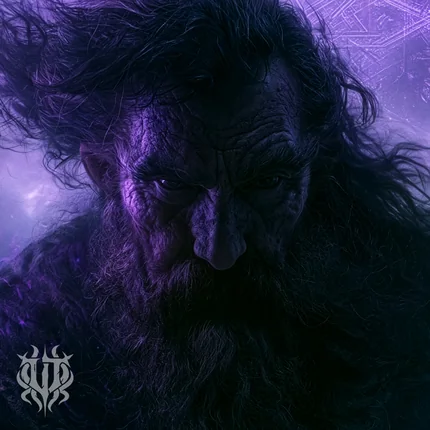
The Key and the Gate is a dark metal retelling of The Dunwich Horror, following Wilbur Whateley’s doomed search for forbidden knowledge and the power of Yog-Sothoth.
References
- The Case of Charles Dexter Ward — original text
The fictional narrative is evidence for what the story says, not proof of events in the real world.
- The Whisperer in Darkness — original text
The fictional narrative is evidence for what the story says, not proof of events in the real world.
- The Thing on the Doorstep — Unspeakable Tales ebook
The fictional narrative is evidence for what the story says, not proof of events in the real world.
At a glance
The Case of Charles Dexter Ward
Material basis for restoring dead organisms
Curwen, his associates and Charles Dexter Ward
Fine, lightweight powders of varied muted colors
Evocation and dissolution
Uncertain identity and independent agency of restored beings