

Joseph Curwen
Joseph Curwen is the merchant, occult researcher and revived ancestor who drives the events of The Case of Charles Dexter Ward. His eighteenth-century activities center on recovering the dead to extract their knowledge. After his descendant restores him, Curwen resumes the project, adopts the name Dr. Allen and eventually replaces Ward himself. His power combines technical knowledge, correspondence, social disguise and a willingness to treat other lives as resources.
6 min read · 1,064 words
Arrival in Providence
Curwen comes from Salem to Providence in 1692. He establishes himself through commerce and property, acquiring both a public position and the means to support private investigations.
His apparent resistance to ordinary aging becomes a source of suspicion over the following decades. The problem is not that he lives outside society altogether, but that his continued presence within it becomes increasingly difficult to explain.
He responds through useful activity, financial influence and social connections. Respectability operates as a protective structure around work that depends on secrecy.
The merchant’s resources
Shipping and trade give Curwen access to money, contacts and unusual cargoes. The novel connects his business with routes through which materials and remains can be acquired from distant places.
His library is another sign of both genuine learning and private purpose. Visitors can recognize substantial collections of scientific, philosophical and literary works without necessarily understanding how the owner combines them.
The public merchant and the hidden researcher are therefore not unrelated identities. Commerce supplies the infrastructure of the experiments, while the appearance of an established businessman helps conceal what that infrastructure supports.
The Pawtuxet farm
The farm provides an isolated setting for work that cannot be conducted openly in town. Neighbors notice lights, unusual movements and sounds suggesting extensive activity below the visible buildings.
The underground organization is central to Curwen’s method. It allows storage, confinement and repeated procedures on a scale that exceeds a single private experiment.
The later modern laboratory returns to this location and its hidden spaces. Place becomes a means of continuity across Curwen’s death: the original operator can be removed without every material condition of the project disappearing.
Marriage and the future lineage
Curwen marries Eliza Tillinghast after her engagement to Ezra Weeden ends. The marriage strengthens his public connections and creates the line through which Charles Dexter Ward will eventually descend.
Weeden’s resentment leads him to investigate Curwen, assisted at times by Eleazar Smith. Their observations turn a personal grievance into evidence of a much larger danger.
The marriage thus has two consequences for Curwen’s story. It helps produce the future descendant who can restore him, while also creating one of the most persistent opponents of his first period of activity.
Knowledge taken from the dead
Curwen’s procedure uses prepared remains or essential salts to restore a being capable of answering questions. The dead become sources from which historical or occult information may be obtained directly.
His correspondence reveals a practical concern with suitable material, reliable results and the dangers of recovering something unexpected. The enterprise is organized as research, but its treatment of unwilling subjects makes the acquisition of knowledge coercive.
This is distinct from simply keeping a collection of bones or communicating with an indistinct ghost. The method produces an embodied presence whose knowledge and resistance must then be confronted.
Orne, Hutchinson and the wider network
Curwen exchanges information with associates who have also survived across unusual spans of time. Their letters preserve methods, warnings and evidence of identities maintained or changed to avoid attention.
The network makes the project larger than one household. It can continue while a particular member is absent, and surviving documents can teach a later investigator how to reopen it.
The correspondents’ confidence also exposes a recurring weakness. Their ability to summon or preserve a mind does not guarantee that the recovered being will remain obedient or less capable than the person who called it.
The raid and the surviving preparations
In 1771, an organized local party attacks Curwen’s property. The participants act on accumulated observations, but the surviving accounts disclose only portions of what occurs inside.
Curwen dies, and those who return attempt to suppress the knowledge of his activities. The deliberate obscuring of records helps explain why Ward later encounters a fragmented historical mystery.
The suppression is incomplete. Curwen’s preparations, papers and remains preserve the possibility of return. The novel’s later events demonstrate that destroying an operator is not necessarily enough when the method allows another person to restore him.
The return as Dr. Allen
Ward reconstructs the necessary process and brings Curwen back. The ancestor uses the identity of Dr. Allen, with a beard and dark glasses concealing the likeness that would otherwise attract immediate notice.
Under this name, he participates in renewed work at Pawtuxet. The activity again depends on secrecy, supplies and the treatment of recovered beings as instruments of inquiry.
Ward’s growing objections threaten the project. Curwen’s response shows that gratitude to the descendant who restored him has no controlling force when that descendant becomes inconvenient.
Taking Ward’s place
Curwen murders Ward and impersonates him. The family resemblance makes the substitution possible, while the disappearance of Allen removes the need to maintain two visible identities.
The deception nevertheless leaves traces. Curwen’s knowledge fits an older world, his writing and speech echo the historical documents, and the scar associated with the portrait helps connect the changed patient with the ancestor.
These details are not random signs of eccentricity. They form a pattern that Willett can read once he considers replacement rather than a single person’s illness.
Defeat by the reverse operation
Willett learns the complementary formula that reverses the restoration. During the final confrontation, he prevents Curwen from controlling the encounter and reduces the revived body to its material residue.
Curwen is therefore defeated through the logic of his own procedure. The knowledge used to restore and exploit the dead also contains a means of undoing a particular return.
The ending does not establish a universal spell that automatically destroys every supernatural being. It resolves this case through a method specifically connected with Curwen’s restoration and the materials from which he was called.
A researcher without ethical restraint
Curwen’s defining trait is not ignorance but the use of learning without regard for the autonomy of its subjects. Graves, ancestors and living descendants become parts of an apparatus for extending his own knowledge and power.
His social performances make that project sustainable. Merchant, husband, colleague, physician and patient are roles through which other people misread him or delay intervention.
The contrast with Willett is consequently more precise than a contrast between knowledge and innocence. Both men learn dangerous procedures. Curwen uses them to perpetuate control; Willett learns enough to end a specific predatory practice.
Related music
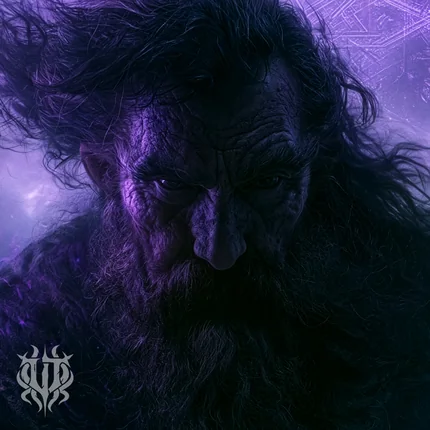
The Key and the Gate is a dark metal retelling of The Dunwich Horror, following Wilbur Whateley’s doomed search for forbidden knowledge and the power of Yog-Sothoth.
References
- The Case of Charles Dexter Ward — original text
The fictional narrative is evidence for what the story says, not proof of events in the real world.
At a glance
The Case of Charles Dexter Ward
1692, from Salem
Merchant
Pawtuxet farm and underground complex
Eliza Tillinghast
Dr. Allen
Charles Dexter Ward
Restoration reversed by Willett