

Yog-Sothoth
Yog-Sothoth is associated with the boundaries of space and time, the opening of gates, forbidden invocation and a form of existence in which separate identities can become aspects of a larger whole. Its role ranges from the Whateleys’ attempted incursion at Dunwich to Randolph Carter’s encounter beyond the Ultimate Gate.
10 min read · 1,986 words

The principal texts and their sequence
Yog-Sothoth occurs in The Case of Charles Dexter Ward, written early in 1927 but published after Lovecraft’s death. The name also appears in the revision The Last Test, published under Adolphe de Castro’s name in November 1928. The Dunwich Horror follows in April 1929 and provides the most consequential early account of its relationship with human beings. These dates distinguish the development of the idea in composition from the order in which the public could encounter it.
Sources: [1], [2], [3], [4], [5], [6], [7]
The Horror in the Museum, revised for Hazel Heald, appeared in July 1933 and supplies an important visual reference. Through the Gates of the Silver Key, written with E. Hoffmann Price and published in July 1934, offers the most elaborate metaphysical setting associated with the name. A record limited to the Dunwich story misses the range of functions, while a record assembled from every later reference can conceal which writer supplied a particular claim.
Gate, key and the conjunction of times
Henry Armitage reads the crucial description while Wilbur Whateley studies the Necronomicon at Miskatonic University. The passage treats Yog-Sothoth as knowing, being and guarding the gate. It joins past, present and future in the same existence and associates that knowledge with places where the Old Ones have crossed into the world. The apparently contradictory descriptions are part of the conception: the being is not simply a traveler standing beside an ordinary door.
The passage presents familiar space as an incomplete account of reality. Beings can exist between its ordinary divisions, affect fields and forests, and remain invisible to the people who suffer the effects. Their traces and offspring may reveal what their full appearance does not. Yog-Sothoth’s relation to access belongs within this larger account of proximity without visibility.
The imagery is often paraphrased as omnipresence or omniscience. Those labels can summarize an aspect of the text, but they should not erase the actual language and setting. The evidence is a translated passage in a fictional book, read during a specific investigation. It gives the characters a model with which to understand the Whateley project; it is not a textbook of established physics or a complete inventory of everything the entity knows.
Sources: [5]
The Whateley household and the attempted opening
Lavinia Whateley lives with her father in an isolated house near Dunwich. The birth of Wilbur is accompanied by disturbances and local speculation, but the family’s concealed activity is not immediately visible to the community. Wilbur develops at an abnormal rate, studies inherited books and helps maintain an expanding hidden space in the house. Repeated purchases of cattle supply an appetite whose scale the neighbors cannot explain.
Old Whateley’s instructions connect the confinement with a future opening to Yog-Sothoth. His warning makes timing important: the hidden creature must not escape before the larger purpose can be fulfilled. Wilbur needs a passage missing from his inherited copy of the Necronomicon and travels in search of another edition. The page number matters within that defective volume, not as a universal page reference shared by every printing and translation.
Armitage becomes suspicious while Wilbur compares the English and Latin texts. A later attempt to obtain the university’s book ends with Wilbur killed by a guard dog and his abnormal body exposed. His death disrupts the human management of the house, but it does not eliminate the being growing within it. The narrative’s second crisis follows from that remaining presence breaking free.
Yog-Sothoth is consequently involved at several levels: in the genealogy suggested by the family, in the incantation Wilbur seeks and in the destination or power to which the planned opening is directed. None of those roles makes the visible Wilbur or his invisible brother identical with the parent. The family is a means by which an outside order can become locally embodied.
Sources: [5]
Wilbur’s brother and the final appeal
The escaped creature leaves tracks, destroys buildings and moves through the landscape without an ordinarily visible body. Armitage’s reading of Wilbur’s diary enables him and his colleagues to understand more of the plan. They prepare an intervention involving learned formulae and material means of temporarily revealing the monster. Its concealment is therefore a problem they can partly overcome, even though its source lies outside familiar biology.
The revealed form combines enormous, incompatible features, while the head retains a likeness that makes the family connection intelligible to witnesses. At the climax, the creature appeals to Yog-Sothoth as father. The identification completes earlier hints about Lavinia’s children and Old Whateley’s expectations. It is a dramatic disclosure rather than an appendix supplying the genealogy of every cosmic entity.
The investigators defeat this incursion. Yog-Sothoth itself does not descend onto the hill in a fully described body and suffer the same fate. The story’s local victory is meaningful because people and communities are saved from the immediate threat; it remains limited because the wider conditions represented by the Necronomicon are not shown to disappear. The distinction is essential to any account of the ending.
Sources: [5]
The Silver Key and the First Gate
Through the Gates of the Silver Key continues Randolph Carter’s disappearance into a return toward childhood and then beyond the familiar categories of place and identity. He carries the Silver Key, an inherited object whose use opens more than a conventional lock. The narrative is reported during a meeting concerned with Carter’s estate, so an apparently practical dispute about a missing person frames an account of existence beyond ordinary human individuality.
Carter first meets the shrouded guide ’Umr at-Tawil and a company of ancient beings. The guide performs a role of explanation and preparation, with a luminous object and a strange ritual helping to direct the passage. Carter is warned about what he is attempting and can choose to go farther. The First Gate is not yet the endpoint of the journey.
The source distinguishes this guide from the informing presence later encountered beyond the Ultimate Gate. Treating ’Umr at-Tawil, the Silver Key, both gates and Yog-Sothoth as five interchangeable names would remove the sequence through which Carter’s experience unfolds. Later interpretations may identify aspects with one another, but the immediate narrative gives them different functions.
Sources: [7]
Beyond the Ultimate Gate: identity and the supreme archetype
Beyond the further threshold, Carter discovers that his accustomed identity is only one expression among many. Versions of himself are separated by time, bodily form and world, yet participate in a larger pattern. The passage uses dimensional comparisons to describe how a limited cross-section can seem complete to the consciousness occupying it. What ordinary experience takes as the whole individual becomes a partial view.
A presence then confronts and pervades Carter without giving him a visual image. It appears coexistent with time and space while also exceeding the particular continuum he knows. The narrative tentatively associates it with what some earthly cults call Yog-Sothoth and emphasizes how incomplete such local names and ideas are. The qualification is significant: the passage communicates an encounter that overwhelms the very scheme by which an entity would normally be named.
The informing being explains the relation between archetypes and their manifestations. Carter’s thirst for forbidden knowledge connects him with an immensely larger identity. The reward is a form of understanding, but understanding also threatens the distinction that allowed him to call one body, one life and one set of memories his own. This is a different use of cosmic horror from the destruction of a farmhouse at Dunwich.
The passage can be discussed in relation to dimensional imagery and philosophical identity without pretending it is a scientific derivation. Its purpose is to make a change in the scale of selfhood imaginable and terrifying. The cross-sections and higher forms function as narrative models; the story does not establish a tested account of additional physical dimensions.
Sources: [7]
Yaddith and the cost of choosing another self
Carter’s desire to investigate a distant manifestation draws him into the life of Zkauba, a wizard on Yaddith. The alien body and its memories do not merely become a costume that Carter can remove at leisure. Two perspectives occupy a condition that each finds disturbing. The human consciousness is horrified by the alien form, while the other perspective regards the human self as equally repellent.
The missing knowledge needed for a secure return turns Carter’s metaphysical choice into a prolonged practical problem. His attempts involve study, travel and the manipulation of the competing consciousness. The narrative eventually brings the consequences back to the meeting over his estate. A supposedly absent person’s identity can no longer be settled simply by recognizing the expected human face.
This result prevents the encounter beyond the gate from becoming a uncomplicated promise of liberation. Access to a larger existence does not automatically supply control over every expression of it. The dangerous part is the mismatch between the scale of what Carter wishes to experience and the incomplete instructions he has carried into that experience.
Sources: [7]
Iridescent globes and other visual descriptions
The Horror in the Museum explicitly associates Yog-Sothoth with a collection of iridescent globes. Stephen Jones imagines the form while spending the night among George Rogers’s disturbing exhibits. The image belongs to a sequence in which fear, remembered representations and possible motion become difficult for Jones to separate. It is a genuine reference in a Lovecraft revision, not simply a visual motif invented later by a game artist.
Its setting still matters. Jones’s frightened imagination of a museum form is different evidence from a direct, calm observation of an unconstrained cosmic body. Through the Gates of the Silver Key emphasizes that the informing presence offers Carter no visual image at that moment. These descriptions can coexist because the texts supply different encounters and different ways of attempting to represent what exceeds normal perception.
An illustration of luminous, interrelated spheres can therefore be tied to the museum passage. It should not claim to show the complete anatomy of the supreme presence beyond every gate. Giving the source and context lets an image be specific and visually rich while keeping the limits of the fictional evidence visible.
Invocations in Charles Dexter Ward and The Last Test
The Case of Charles Dexter Ward places the name within the formulae associated with Joseph Curwen’s work. The investigation involves the recovery of the dead, the handling of remains and the distinction between calling up and putting down what has been summoned. Repeated syllables and the comparison of documents become practical clues for Dr. Willett. Yog-Sothoth belongs to that ritual vocabulary even when no independent physical appearance is staged for the reader.
The Last Test uses the name in a recollection associated with Surama’s knowledge of remote and ancient practices. Its brief reference extends the sense of a hidden network beyond the immediate medical crisis. A passing invocation is enough to connect the story to the shared vocabulary, but it does not justify supplying a new encounter, cult hierarchy or set of powers absent from the text.
Together with the longer Dunwich and Silver Key material, these references show why an occurrence list should distinguish invocation, description, parentage and encounter. The same name can contribute atmosphere in one tale, furnish the operative language of a ritual in another and stand near an account of the ultimate nature of existence in a third.
Relationships and interpretation
Yog-Sothoth’s most securely dramatized family relationship is the one developed through Lavinia, Wilbur and his brother in The Dunwich Horror. The relationship to Carter in Through the Gates is expressed through identity and archetype rather than ordinary human reproduction. Combining those distinct models into a single literal family chart can be visually neat while losing the point of both narratives.
The dominant recurring motif is access. Books, formulae, altered space, inherited objects and unusual ancestry offer possible routes across a boundary. What lies beyond can enter the world, or a human seeker can move outward and discover that the self is not what it seemed. The two directions are different expressions of the same unsettling possibility: the boundaries on which ordinary life depends may be local conditions rather than ultimate facts.
Related music
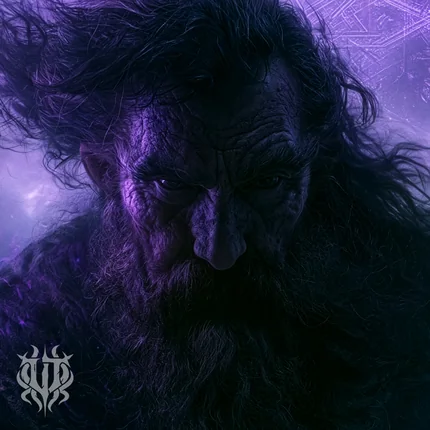
The Key and the Gate is a dark metal retelling of The Dunwich Horror, following Wilbur Whateley’s doomed search for forbidden knowledge and the power of Yog-Sothoth.
References
- H. P. Lovecraft Archive — fiction in publication order
First publication dates and venues; issue dates can differ from actual release dates.
- H. P. Lovecraft Archive — fiction in composition order
Composition dates; question marks and ranges retain the source uncertainty.
- The Case of Charles Dexter Ward — original text
The fictional narrative is evidence for what the story says, not proof of events in the real world.
- The Last Test — original text
The fictional narrative is evidence for what the story says, not proof of events in the real world.
- The Dunwich Horror — Unspeakable Tales ebook
The fictional narrative is evidence for what the story says, not proof of events in the real world.
- The Horror in the Museum — original text
The fictional narrative is evidence for what the story says, not proof of events in the real world.
- Through the Gates of the Silver Key — original text
The fictional narrative is evidence for what the story says, not proof of events in the real world.
At a glance
H. P. Lovecraft
The Case of Charles Dexter Ward · 1927
The Last Test · November 1928
Gates; space and time; invocation; archetypal identity
Father invoked by Lavinia Whateley’s monstrous child
Iridescent globes in The Horror in the Museum
The supreme presence is tentatively identified with the name