

Call of Cthulhu — roleplaying game
Call of Cthulhu is Chaosium’s tabletop roleplaying game of investigation and horror, created by Sandy Petersen and first published in 1981. Players portray people encountering dangerous mysteries, while a Keeper presents the world and adjudicates their actions. Its rules turn vulnerability, discovery and the cost of forbidden knowledge into procedures for collaborative play.
6 min read · 1,053 words
A game of investigators and a Keeper
Most participants control individual investigators. The Keeper describes situations, portrays other people and creatures, and uses either a published scenario or an original investigation. Play develops through a conversation about what the characters try to do and what follows.
This arrangement makes the outcome different from reading a completed story. Participants choose where to go, whom to question and when to take risks. A scenario may provide clues and opposition without fixing every resulting scene.
The literary connection begins with Lovecraft and extends through later Mythos writing. The game is a creative adaptation of that material, with a publication history of its own, rather than a hidden rules system extracted unchanged from the fiction.
Sources: Chaosium — What is Call of Cthulhu?
Skills, uncertainty and the decision to try again
In the public introductory rules, most skill tests use percentile dice. A result at or below the relevant skill succeeds at the ordinary level; harder tasks require a fraction of that value. Characters with different training therefore have different chances of resolving the same immediate difficulty.
A failed skill roll can sometimes be pushed if the player describes a credible renewed effort. That second attempt increases the stakes: failure permits a serious consequence. The procedure turns repetition into a decision rather than allowing unlimited harmless retries.
This matters for horror because the investigator may understand the danger and continue anyway. The drama can lie in deciding whether further access, speed or certainty justifies an additional risk. These are features of the consulted rules, not claims about how all earlier editions handled the same situation.
Sources: Chaosium — The game system
Sanity as a fictional resource
Sanity tracks an investigator's response to disturbing encounters. A test can produce a smaller or larger loss depending on its outcome, and severe shocks can affect behavior and the character's continuing story.
Chaosium explicitly describes the mechanism as a model of responses in horror fiction, not as a clinical account of real mental health conditions. That distinction is essential when discussing the terminology. The resource belongs to the game's dramatic economy: knowledge can expose a character to consequences that physical equipment alone cannot prevent.
An entity's printed Sanity loss is consequently a game value attached to a particular presentation. It should not be copied into a literary entry as though Lovecraft assigned that exact numerical effect to every witness. Fictional encounters can produce varied reactions, while a game needs a procedure participants can apply.
Sources: Chaosium — Sanity
Combat and the possibility of retreat
The combat rules include attacks, evasion and maneuvers, but the publisher's introduction stresses that avoiding or escaping a Mythos confrontation may be wiser than fighting it. Possessing a weapon does not establish an equal contest.
Actions ordinarily follow Dexterity order. Close combat distinguishes fighting back from dodging, and the rules do not allow combat rolls to be pushed in the manner of ordinary skill attempts. Those distinctions make a confrontation more than repeated checks against a single universal attack value.
The effect on play is practical: a group may need information about an opponent, an escape route or a way to disrupt a ritual before committing to force. Such preparation is an interpretation of the rules' emphasis on vulnerability, not a guarantee that every published scenario has the same solution.
Sources: Chaosium — Combat
Injury and the shape of a continuing investigation
Hit points record physical harm, while the major-wound rule distinguishes a severe single injury from an equivalent total accumulated through smaller blows. The introductory rules attach different consequences to unconsciousness, dying and recovery, rather than treating every reduction to zero as identical.
Recovery from a major wound can require time and assistance. In a continuing campaign, that creates a reason to consider the cost of a successful encounter after its immediate danger has passed. An investigator may survive while losing freedom of movement or the ability to participate in the next urgent event.
These mechanics are abstractions for fictional play. The useful encyclopedic point is their relation to dramatic stakes: bodily survival is not necessarily the same as escaping without lasting consequences.
Sources: Chaosium — Wounds and healing
Magic is access with a cost
The game presents Mythos magic as contact with powers whose principles exceed human understanding. Spells have specified effects, requirements and costs, allowing the Keeper to resolve their use without inventing every result from nothing.
In the consulted introductory rules, magic points usually power a spell, and exhausting them can make further expenditure come from hit points. The first successful use of a newly learned spell also has a distinct casting procedure. The combination makes acquiring a ritual different from safely mastering it.
A literary book may suggest knowledge without providing a complete reproducible operation. A game supplement often has to fill that gap so a player can choose whether to attempt the act. The resulting procedure belongs to the supplement's interpretation, even when its title or ingredients refer to a familiar story.
Sources: Chaosium — Magic
Experience without guaranteed safety
The public rules permit improvement in skills successfully used during play. At the appropriate development stage, an investigator tests a marked skill; already high ratings become harder to improve further. Surviving a mystery can thus make a continuing character more capable.
That progression coexists with injury and exposure to horror. It does not mean that every campaign follows a steady ascent toward dominance over cosmic beings. As a reading of the combined mechanics, experience can increase competence while leaving the investigator vulnerable in other respects.
A successful session may therefore have several measures: obtaining an answer, preventing an immediate disaster, protecting another person or simply returning with enough evidence to act later. The particular scenario and the group's choices determine which of those outcomes is available.
Sources: Chaosium — Rewards of success, Chaosium — Wounds and healing, Chaosium — Sanity
The story, the game and later interpretations
The title is shared with Lovecraft's The Call of Cthulhu, but the game is not limited to reenacting that plot. The story assembles a sculptor's dreams, a police account and a sailor's experience through a later investigation of papers. Its reader receives the evidence in an authored sequence; a roleplaying group participates in deciding how an investigation proceeds.
That difference explains why a tabletop book may provide statistics, locations and optional solutions that no single literary work contains. Such additions can be important to the history of the Mythos without becoming statements originally made by Lovecraft. Cross-references should identify the relevant medium and edition whenever a difference matters.
Sources: The Call of Cthulhu — Unspeakable Tales ebook, Chaosium — What is Call of Cthulhu?
Related music
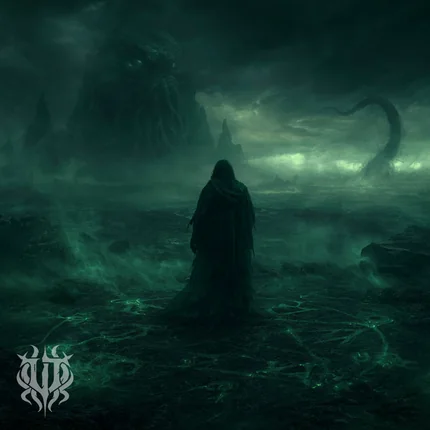
The Dead But Dreaming is a dark folk metal song inspired by The Call of Cthulhu, evoking R’lyeh, forbidden worship and the ancient dream beneath the sea.
References
- Chaosium — What is Call of Cthulhu?
- Chaosium — The game system
Describes the public introductory rules consulted in September 2026, not every edition or optional subsystem.
- Chaosium — Sanity
Describes the public introductory rules consulted in September 2026, not every edition or optional subsystem.
- Chaosium — Combat
Describes the public introductory rules consulted in September 2026, not every edition or optional subsystem.
- Chaosium — Wounds and healing
Describes the public introductory rules consulted in September 2026, not every edition or optional subsystem.
- Chaosium — Magic
Describes the public introductory rules consulted in September 2026, not every edition or optional subsystem.
- Chaosium — Rewards of success
Describes the public introductory rules consulted in September 2026, not every edition or optional subsystem.
- The Call of Cthulhu — Unspeakable Tales ebook
The fictional narrative is evidence for what the story says, not proof of events in the real world.
At a glance
Sandy Petersen
Chaosium
1981
Tabletop roleplaying game
Public introductory rules consulted 24 September 2026; editions and supplements can differ