

Robert Bloch
Robert Bloch was an American writer of horror, fantasy, crime and screen drama whose career began with encouragement from H. P. Lovecraft and developed far beyond imitation of him. His contributions to the Mythos include fictional books, an exchange of stories with Lovecraft and later returns to cosmic horror, while Psycho made him internationally associated with psychological suspense.
8 min read · 1,508 words
Early life and the beginning of a career
Born in Chicago on 5 April 1917, Bloch grew up with a strong interest in cinema and popular fiction. His family moved to Milwaukee after financial difficulty during the Depression. Reading Weird Tales introduced him to writers whose work would shape his own ambitions.
His first published story was Lilies in the Winter 1934 Marvel Tales. Sales to Weird Tales followed, and the magazine became an important home for his early fiction. The chronology distinguishes first publication from the first story sold to a particular editor; those events need not involve the same title.
Bloch married Marion Ruth Holcomb in 1940, and their daughter Sally was born in 1943. Alongside fiction he worked in advertising. In 1953 he left the agency and moved to Weyauwega, Wisconsin. His later marriage to Eleanor Alexander followed the end of the first marriage. He died in Los Angeles on 23 September 1994.
What Lovecraft’s encouragement meant
Bloch recalled writing to Lovecraft because he wanted access to stories whose original magazine appearances he had missed. Lovecraft offered to lend material and then encouraged him to try writing fiction himself. The correspondence supplied attention and encouragement at an age when publication still seemed remote.
They never met in person. Their relationship depended on letters, shared reading and the circulation of work through a wider network. Bloch later described his own efforts to answer and encourage younger writers as a way of acknowledging what he had received.
That history makes him an unusually direct link between Lovecraft’s correspondence circle and later professional horror writing. It does not make every mature Bloch story a continuation of his mentor’s worldview. The relationship helped initiate a career whose interests and techniques continued to change.
Sources: [3]
The correspondence as an exchange of imagination
Brown University’s display of Lovecraft’s 1933 letter to Bloch includes discussion of dreams and possible story material. It also places Bloch’s drawing in the context of that exchange. The younger writer was participating in an active conversation about imagined scenes, not simply receiving a fixed set of Mythos rules.
Sources: [4]
The exchange of fictional deaths
Bloch’s The Shambler from the Stars uses a character modeled on Lovecraft and subjects him to a monstrous fate. Lovecraft responds in The Haunter of the Dark with Robert Blake, a young writer associated with Milwaukee. Bloch later returns to the sequence in The Shadow from the Steeple.
The exchange combines affection, parody and serious horror. A friend can be recognizable inside a story without the events becoming a biography. The sequence also shows how the shared mythology developed through writers answering one another, rather than through compliance with a centrally maintained continuity.
Sources: [5]
Robert Blake as Lovecraft’s fictional tribute
The opening of The Haunter of the Dark presents Blake as both writer and painter. He returns to Providence, rents rooms near the Brown campus and becomes fascinated by a distant abandoned church. His creative work concerns strange landscapes and beings, establishing a temperament receptive to the building’s mystery.
The story lists fictional titles among Blake’s achievements and gives him habits that serve its own plot. These details should not be mistaken for a bibliography or residence history of Robert Bloch. Lovecraft combines an identifiable personal gesture with an invented protagonist whose circumstances are arranged for the narrative.
The church draws Blake first as an image seen from afar and then as a place he enters. That movement turns the artist’s appetite for unusual material into exposure to an actual threat within the fiction. The tribute therefore works through the kinds of curiosity the correspondents shared, while exaggerating their possible consequences into horror.
Its framing also resists a single uncomplicated explanation. Skeptical investigators and believers interpret the diary, church records and circumstances of death differently. Bloch’s fictional counterpart becomes the center of a dispute about evidence. Recognizing that narrative structure is more useful than treating the story solely as a private joke about killing a friend.
Sources: [6]
Books and Egyptian Mythos fiction
Bloch contributed Mysteries of the Worm, associated with the fictional Ludvig Prinn; Lovecraft supplied the Latin form De Vermis Mysteriis. The borrowed book could then appear in other writers’ stories as part of a shared occult library.
His Egyptian stories, including The Faceless God and Fane of the Black Pharaoh, also helped develop the use of Nyarlathotep. These contributions show that participation involved creating new objects and settings as well as repeating Cthulhu’s name. Their specific revelations belong to Bloch’s stories and require attribution when compared with Lovecraft’s portrayals.
Sources: [5]
From supernatural apprenticeship to psychological suspense
Bloch’s developing fiction increasingly located danger within apparently ordinary human behavior. The Scarf, published in 1947, uses the perspective of its murderous central character. The Will to Kill and The Kidnaper, both from 1954, continue his interest in unstable narration and criminal psychology.
This expansion did not eliminate fantasy, humor or science fiction. It gave him a larger range of ways to disturb the reader, including protagonists whose explanations conceal the danger they represent. The unreliable account could become a source of suspense without requiring a supernatural revelation.
Later novels ranged across crime, speculative fiction and historical horror. American Gothic uses material associated with H. H. Holmes, while The Night of the Ripper returns to another recurring subject. His collaboration with Andre Norton, The Jekyll Legacy, connects his mature career to a different nineteenth-century tradition of divided identity.
Sources: [7]
Psycho and the difference between situation and biography
Psycho appeared in 1959, and Alfred Hitchcock’s film followed in 1960. Bloch repeatedly explained that the initial stimulus was the discovery of terrible crimes concealed within a small Wisconsin community. He was interested in how someone could live among neighbors without their recognizing the danger.
Norman Bates was an invented character, not a documentary reconstruction of Ed Gein. Bloch said that he developed the plot with little detailed knowledge of the case and learned of some parallels later. That distinction preserves the author’s stated process without turning a crime novel into an authoritative account of a real person.
Screenwriting and the attraction of the villain
Bloch’s screen work included original scripts such as Strait-Jacket and The Night Walker, television episodes and adaptations of his own stories for Amicus anthology films. His relationship with cinema therefore extended well beyond the adaptation of Psycho.
In Matthew R. Bradley’s interview, Bloch describes the formative appeal of older horror films whose villains commanded more attention than their passive or unconvincing heroes. He also distinguishes adapting one’s own material from translating another writer’s work into visual form.
The same interview records that he had not been commissioned to adapt a Lovecraft story for film. His personal link with Lovecraft should consequently not be used to attach his name to unrelated Lovecraft adaptations. Credits must be established film by film, even where themes or professional circles overlap.
Sources: [9]
Working method and humor
In his 1971 interview with Randall D. Larson, Bloch describes often beginning with an ending, making notes and writing forward through the story. Revision largely occurred during that process. He also emphasizes sustained reading and regular work over the idea that a writer arrives fully formed.
His humor is visible even in discussions of frightening material. It operates through timing, reversals and an awareness of the audience. The career’s comic and horrific elements are therefore not separate compartments; both depend on managing expectation and controlling when a concealed implication becomes clear.
Sources: [8]
Fandom, conversation and collaboration
Bloch remained an active participant in conventions and fan culture. In his 1991 conversation with David J. Schow, he describes conventions as opportunities to meet readers, artists, editors and fellow writers. His recollections repeatedly turn professional history into a comic performance shared with the audience.
He also explains the alternating-chapter collaboration with Andre Norton on The Jekyll Legacy. Each writer could revise the other’s contribution before adding the next section, while Norton supplied extensive historical research. The account gives a concrete example of collaboration as exchange and revision rather than the attachment of two names to a book.
These activities extend the social dimension of his career beyond the early Lovecraft letters. They show a writer continuing to participate in a community as reader, colleague, speaker and collaborator.
Sources: [10]
Collections, recognition and reading the career
Arkham House published The Opener of the Way in 1945, gathering early horror and fantasy. Mysteries of the Worm later provided a focused collection of Mythos stories, with expanded editions that changed its contents. A reader should therefore identify the edition rather than assume every volume bearing that title contains exactly the same selection.
The wider career also includes the comic Lefty Feep stories, science fiction and extensive short fiction collected under several overlapping titles. Once Around the Bloch, published in 1993, offers his retrospective account of that life.
His 1959 Hugo for That Hell-Bound Train recognizes a story published in the September 1958 Magazine of Fantasy and Science Fiction. It is a separate achievement from Psycho, although the shared award and novel year can encourage the two to be conflated. Bloch’s significance to this wiki rests on both his direct Mythos contributions and the broader development that followed his early apprenticeship.
Related music
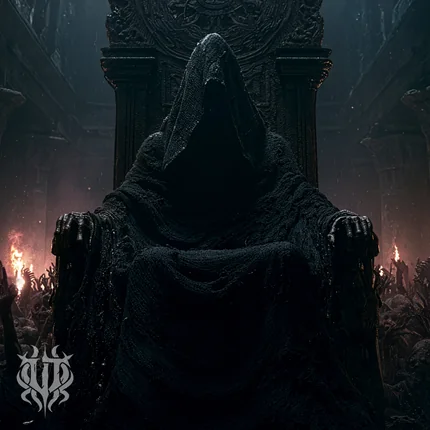
A Thousand Masks is a dark metal song inspired by Nyarlathotep, the Crawling Chaos who walks among humanity, hiding behind countless faces and whispered lies.
References
- Robert Bloch official website — biography
- Robert Bloch — biographical reference
- Randy and Jean-Marc Lofficier — Robert Bloch interview
- Brown University Library — Lovecraft’s letter to Robert Bloch about dreams
The exhibit dates the letter 4 August 1933 and notes Arkham House’s September dating.
- Randall D. Larson — The Cthulhu Mythos Fiction of Robert Bloch
- The Haunter of the Dark — Unspeakable Tales ebook
The fictional narrative is evidence for what the story says, not proof of events in the real world.
- Robert Bloch official website — novels
- Randall D. Larson — interview with Robert Bloch, 1971
- Matthew R. Bradley — The Heart of a Small Boy, interview with Bloch
- David J. Schow — conversation with Robert Bloch at the 1991 World Horror Convention
- The Hugo Awards — 1959 winners and nominees
At a glance
Robert Albert Bloch
5 April 1917, Chicago, Illinois
23 September 1994, Los Angeles, California
Correspondent and younger writer encouraged by him; never met in person
Lilies, Winter 1934 Marvel Tales
The Scarf (1947)
Psycho (1959)
De Vermis Mysteriis / Mysteries of the Worm
Once Around the Bloch (1993)