

Robert Blake
Robert Harrison Blake is the writer and painter whose curiosity about a deserted Providence church leads to the catastrophe in The Haunter of the Dark. His diary, art and surviving effects become evidence in a dispute over whether he died from an electrical event or through contact with the presence he awakened.
5 min read · 908 words
An artist from Milwaukee
Blake comes from Milwaukee and returns to Providence in the winter of 1934–1935. He rents the upper floor of an old house off College Street, near Brown University and the John Hay Library, and lives alone.
Sources: [1]
His interests include strange fiction, painting and occult books. The narrative lists five stories completed during the winter, among them The Burrower Beneath and Shaggai, as well as seven paintings of alien beings and landscapes. These are works attributed to the fictional character, not a bibliography to merge with Robert Bloch’s publications.
The dedication to Bloch supplies a personal literary connection, but Blake’s full name, rooms and fate remain parts of the story’s construction.
The view that becomes an obsession
From his western study windows Blake sees Federal Hill across the lower city. Smoke, distance and sunset make the roofs and spires appear almost fantastic. A large dark church becomes the focus of his observations.
He uses field glasses, notices the unlit windows and believes birds avoid the building. The initial fascination resembles the selection of material for a painting or story: he imagines possibilities behind an unusual visible form.
By spring, work on his novel has stalled while attention to the church increases. His eventual journey is an attempt to enter a landscape first encountered as an image.
Sources: [1]
Knowledge that encourages entry
Blake hears warnings from neighborhood residents and a policeman but continues into the fenced grounds and through a basement window. He is not wholly unaware of the possibility of danger; rather, the warnings intensify his sense that the site contains the unusual history he seeks.
Inside, his familiarity with forbidden books helps him recognize the vestry library’s significance. He takes the encrypted record for later study and climbs into the tower, where he examines the stone and identifies the remains of Edwin Lillibridge.
Expertise therefore has a double role. It allows him to recognize important evidence, but it also encourages him to pursue it farther than an uninformed visitor might.
Sources: [1]
Research after the first visit
Blake searches newspaper files and works to decipher the record. In June he identifies its language as Aklo, which he knows imperfectly through earlier study. The resulting diary entries discuss the Haunter, the Trapezohedron and a long chain of possessors extending beyond human history.
The work does not leave him detached from its subject. He believes gazing into the object has established a connection with something capable of locating him. The church remains visible from his home, turning a previously pleasing view into a reminder of exposure.
His desire to return also persists. The diary records responsibility and fear alongside renewed fascination with the stone’s revelations.
Sources: [1]
Sleepwalking and physical traces
As the connection intensifies, Blake reports disturbed dreams and involuntary movement toward Federal Hill. The most severe episode leaves him apparently inside the church, near the ladder to the dark steeple.
He escapes after a sudden noise interrupts the experience. The next morning brings dirt, cobwebs, bruises and scorched hair. These physical traces distinguish the episode from a dream that leaves no material consequence, although the framing narrative still permits skeptical explanations.
He begins tying his ankles at night and remains largely indoors in a dressing gown. The precautions show him attempting to manage his own behavior while lacking a means of removing the connection he fears.
Sources: [1]
Dependence on the city’s lights
Blake believes electric street lighting prevents the presence from traveling between the church and his rooms. Reports of an earlier blackout strengthen that fear. He calls the electricity company during storms to urge precautions against another failure.
During the final storm he keeps his own rooms dark so that he can watch the distant lights more clearly. That choice expresses the narrowing of his attention: visibility across the city takes precedence over comfort within his immediate room.
When the lights fail, his diary begins recording altered perception, confused memory and a loss of ordinary distance. He repeatedly tries to reaffirm his identity, including his full name and Milwaukee address.
Sources: [1]
The final identification
Blake’s last entries describe an increasingly unstable boundary between himself and the thing in the tower. He seems to perceive through unfamiliar senses and imagines himself simultaneously at his desk and within the church.
He calls the presence an avatar of Nyarlathotep. The account culminates in approaching darkness, wings and a three-lobed burning eye. These statements belong to the final diary, written under extreme distress, rather than to a later interview with a surviving Blake.
Students discover his motionless figure the following day, and the apartment is opened that evening. He remains seated at the desk with the pencil in his hand.
Sources: [1]
A character judged through his work
The official interpretation treats Blake’s imaginative interests as evidence that the diary cannot be trusted. His paintings and books become grounds for explaining the horror on his face as the reaction of an unusually suggestible person.
Other investigators read the same material alongside the cult record, Lillibridge’s disappearance and observations during the storm. The dispute concerns how a creative person’s testimony should be evaluated when it intersects with independent but incomplete evidence.
In this encyclopedia’s reading, Blake’s artistic imagination both draws him toward the danger and makes it easier for others to discount his account. The story leaves that tension active instead of providing a detached narrator who settles every disputed observation.
Sources: [1]
Related music
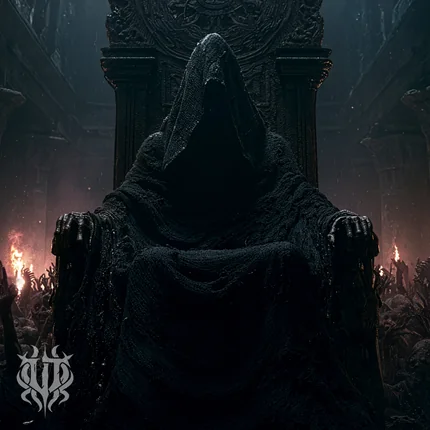
A Thousand Masks is a dark metal song inspired by Nyarlathotep, the Crawling Chaos who walks among humanity, hiding behind countless faces and whispered lies.
References
- The Haunter of the Dark — Unspeakable Tales ebook
The fictional narrative is evidence for what the story says, not proof of events in the real world.
At a glance
Robert Harrison Blake
Milwaukee, Wisconsin
Upper-floor rooms off College Street
Writer; painter
The Haunter of the Dark
Federal Hill church and the Shining Trapezohedron
During the storm of 8–9 August 1935
Electrical shock or nervous shock associated with an electrical discharge