

The Unnamable
The Unnamable begins as an argument between a writer called Carter and his skeptical friend Joel Manton about whether a horror can exist beyond adequate description. Their debate in an Arkham cemetery becomes an encounter with the very local history Carter has used in his fiction. The ending forces Manton to adopt the word he had dismissed.
5 min read · 875 words
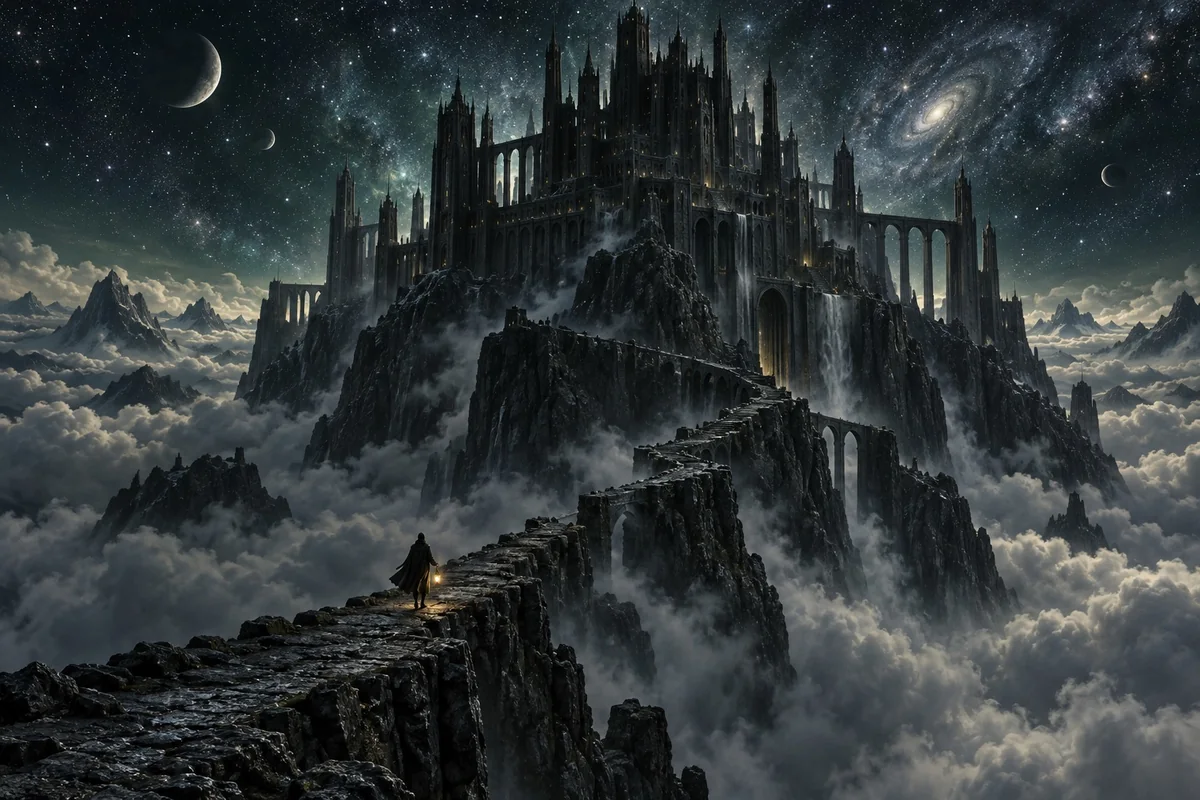
The literary disagreement
Carter and Manton sit on an old tomb during an autumn afternoon. Carter makes an unsettling imaginative remark about a nearby tree, and Manton criticizes his habit of ending stories with experiences the characters cannot describe.
Manton, a school principal, favors clear definitions and recognizable everyday experience. He nevertheless accepts religious and supernatural possibilities of his own. Carter uses those beliefs to question why a spirit should remain confined to ordinary bodily form and therefore ordinary description.
The disagreement is about the scope of literature as much as the existence of ghosts. Carter defends the pleasure of imaginative escape and recombination, while his friend treats the limits of common experience as reasonable limits for art.
The story within the story
Carter recalls The Attic Window, a fictional tale he says appeared in Whispers in January 1922. That title, magazine and publication history belong to the narrative’s invented literary setting, not to Lovecraft’s actual bibliography.
He tells Manton that the story developed from material associated with Cotton Mather and from an ancestral diary. Reports describe an unnatural creature, a blemished eye, a locked attic, attacks and a house left deserted after its owner’s death.
The account combines documents, local tradition and Carter’s elaboration. It should not be presented as verified history of a real Massachusetts creature. Its function is to provide the disputed evidence behind the fiction Manton considers implausible.
Ancestral injuries and the abandoned attic
The diary describes an attack on Carter’s ancestor that left horn-like wounds in front and claw marks behind. Mixed tracks suggest something that ordinary categories do not comfortably explain. Later stories concern the abandoned house and a boy who entered it in 1793 and returned profoundly disturbed.
Manton concedes that an unusual organism might have existed but argues that even a malformed body could still be described. Carter therefore shifts the argument toward what such a creature’s surviving psychic impression might become.
The distinction matters to the eventual encounter. Carter is not simply claiming that nobody can describe a horned skull. He argues that a spectral continuation of an already anomalous being might no longer possess one stable form.
Carter’s own intervention
Carter has visited the house and found bones beneath the eaves. He says that the skull combines substantial horns with a face and jaw partly resembling a human being’s. He removes the remains and places them through an opening into the tomb behind the house.
The action makes him more than a collector of stories. He has moved the material evidence into the space where the conversation is taking place. His account of the attic windows also notes the absence of glass and, in one case, the entire frame.
When Manton asks to see the site, Carter reveals that it has been beside them all along. The theatrical disclosure turns a detached argument into an immediate confrontation with place. Darkness now prevents the clear inspection Manton might have preferred.
The attack
Manton’s startled cry is answered by the sound of the old attic window opening. Cold, foul air rushes from the house. An unseen force strikes Carter from the tomb, while sounds and movement suggest something of great size and uncertain nature.
Carter loses consciousness before he can assemble a full account. The narrative therefore enacts the very kind of ending Manton criticized: an experience overwhelms a character’s ability to report its object adequately.
The later hospital scene prevents that gap from being the last word. A second survivor retains a different portion of the encounter, creating another opportunity to ask what was present.
The hospital and Manton’s admission
A farmer finds the injured men in a field beyond Meadow Hill, about a mile from the cemetery. Manton has wounds in his chest and cuts on his back; Carter has bruises, welts and an impression resembling a split hoof.
Manton tells the medical staff that a bull attacked them. In private, however, he rejects Carter’s suggestion that the assailant simply resembled the reconstructed creature. He describes something diffuse and gelatinous with many horrific shapes, eyes and a blemish, then calls it the unnamable.
The conclusion does not give a scientific species or a single definitive anatomy. It supplies an altered witness’s attempt to describe an experience while acknowledging the failure of the fixed category he had demanded. The irony rests on Manton’s change of language as well as on the injuries.
The narrator and the Carter sequence
The text calls its narrator Carter but does not explicitly give Randolph as his first name. He is a writer interested in imaginative literature, with ancestry and experiences around Arkham that make the tale a natural companion to the named Carter stories.
That association should preserve the actual wording. The story does not mention the silver key, Yaddith or a previous reign in a dream city. Its primary concerns are literary argument, local testimony and the limits of description.
The narration also reflects harsh period attitudes toward bodily difference and imagined hybrid ancestry. A critical synopsis can identify those assumptions without adopting them as a factual classification of people or bodies.
References
- The Unnamable — Unspeakable Tales ebook
The fictional narrative is evidence for what the story says, not proof of events in the real world.
At a glance
H. P. Lovecraft
September 1923
1925, July
Weird Tales, 6, No. 1
Fiction