

Randolph Carter
Randolph Carter is a recurring dreamer, writer and seeker in Lovecraft’s fiction. His stories move from testimony about a missing companion to extensive journeys through dream and a confrontation with the instability of individual identity. The sequence repeatedly tests whether knowledge, memory and imaginative freedom can restore what he longs for—or carry him beyond the conditions that made the longing human.
9 min read · 1,833 words
A recurring figure across different kinds of tale
Carter first appears in The Statement of Randolph Carter as the survivor of an expedition he cannot fully explain. The Dream-Quest of Unknown Kadath makes him an experienced traveler whose knowledge and friendships allow a much more active role. The Silver Key gives him a history of disappointment and recovery, and the collaboration Through the Gates of the Silver Key turns that recovery into a more dangerous cosmic journey.
Sources: [1], [2], [3], [4], [5], [6], [7]
These are related works, but their order of publication is not a simple chronology of Carter’s life. Dream-Quest, for example, was written before its posthumous publication. The later stories also add details and alter the interpretation of earlier endings.
A writer called Carter narrates The Unnamable. The text itself gives the surname without explicitly naming him Randolph, so that story should be discussed with that limit visible. Its defense of imaginative literature and its Arkham setting make it a useful companion to the more explicitly named Carter works.
Ancestral New England and childhood
The Silver Key locates Carter’s imaginative attachments in family landscapes, remembered rooms and visits to Uncle Christopher and Aunt Martha. The country near Arkham includes woods, orchards, stone walls, the Miskatonic and distant views toward Kingsport.
The Snake-Den is a forbidden childhood place with a hidden inner chamber. Carter’s familiarity with it exceeds the knowledge of adults who warn him away. That private geography later becomes important when an inherited key brings his adult longing into contact with the boy he once was.
The family history also contains earlier seekers and disturbing disappearances. These stories make ancestry a source of access and attraction, not solely the source of a biological secret. The past offers routes the present has forgotten how to recognize.
The friend who waits above the vault
In The Statement, Carter describes Harley Warren as his closest friend and a commanding influence. He is fascinated by Warren’s researches but admits reluctance and fear. Much of Warren’s library remains unreadable to him, including the book associated with the final expedition.
Warren insists on descending alone because he considers Carter’s nerves inadequate to what awaits. Carter argues and later offers to attempt rescue. His inability to act should not be mistaken for indifference: the statement emphasizes his horror at abandoning a companion in danger.
The telephone leaves him connected yet powerless. He hears confidence turn into panic and finally receives the declaration that Warren is dead. The story gives him neither the sight that would answer his questions nor the continuous memory that would satisfy investigators afterward.
Sources: [3]
The seeker of the sunset city
Dream-Quest begins with repeated glimpses of a magnificent city that Carter cannot reach. He attempts to approach the gods of Earth at Kadath because he believes they can grant access. The apparent destination is therefore a means to another desired place.
His experience as a dreamer supplies languages, customs and contacts, but does not make him invulnerable. He can be deceived by merchants, taken to the moon, abducted by night-gaunts and forced into journeys he did not choose. Knowledge changes his chances without giving him control of the whole world.
The long quest also makes him a reader of faces, architecture, histories and local reports. The image carved on Ngranek becomes a clue to the gods’ descendants; northern sailors point toward another stage. He repeatedly turns partial evidence into a new route.
Sources: [4]
Friendships that make the quest possible
Carter’s relationship with cats becomes practically important when they intervene during the moon episode. His ability to communicate and his previous regard for them produce help at a moment when the merchants’ promises have become a trap.
Pickman, now a ghoul, provides another crucial connection. The ghouls’ assistance lets Carter cross regions he could not safely navigate alone. Later he interrupts his private quest to seek help for ghouls who have been captured.
That reciprocity leads to a larger alliance involving ghouls and night-gaunts. Creatures that initially frighten or abduct Carter can become allies under different circumstances. The story’s practical distinctions between groups matter more than a single division into humanity and interchangeable monsters.
His agency is consequently social as well as individual. He survives through promises, debts, knowledge and the willingness to act for companions. The final approach to Kadath depends on that network.
Sources: [4]
Kuranes and the problem of an ideal home
Carter encounters Kuranes, a dreamer who has achieved immense authority in Celephaïs yet still longs for the English world of his childhood. The meeting complicates the assumption that perfect command of an imagined kingdom must satisfy desire.
Kuranes’s experience anticipates the eventual explanation of Carter’s own city. A place can possess extraordinary beauty and still draw its emotional power from memories formed elsewhere. The dreamer may not understand the source of the longing that directs him.
Carter continues, but the warning remains part of the story’s structure. Reaching a greater or stranger place does not automatically answer what it means to feel at home.
Sources: [4]
Nyarlathotep, truth and the deceptive route
At Kadath, Nyarlathotep explains that the sunset city was formed from Carter’s memories and impressions of New England. The gods have abandoned their own home because they are drawn to his creation. Carter is thus the source of what he has been seeking without recognizing it.
Nyarlathotep combines that explanation with a false promise of transport. The shantak carries Carter toward the central chaos associated with Azathoth rather than safely toward the desired city. Accurate knowledge becomes part of a deception.
Carter ultimately recognizes the danger and leaps from the creature. His return depends on choosing an uncertain escape rather than accepting the route offered by a far more powerful being. The ending in Boston restores the familiar world as the source of the beauty he had imagined beyond it.
Sources: [4]
The loss of dream in adulthood
The Silver Key describes Carter losing access to his dream worlds after thirty. Social pressure, intellectual explanation and the demand to treat everyday concerns as inherently important erode his confidence in imaginative experience.
He tries religion, travel, friendship, writing, carefully arranged surroundings and occult research. None provides the desired restoration. Even his commercially successful books seem to him compromised by irony and conventional expectations.
The account includes service in the French Foreign Legion and a near-fatal wound in 1916. It also recalls the cemetery disaster through a southern scholar, though it gives seven years of association where The Statement gives five. These variations caution against presenting the whole sequence as a perfectly consistent biographical file.
The inherited key and the boy of 1883
A dream of his grandfather directs Carter to an old box containing a silver key and an unread parchment. Renewed childhood memories draw him back toward the ancestral country. There the adult perspective gives way to that of a boy returning late to his relatives’ house.
The key remains with him. He takes it into the Snake-Den, after which relatives remember an unusual increase in imagination and apparent foreknowledge. The boy’s reactions to future events suggest that the adult life has somehow entered his childhood.
From the perspective of the later present, Carter has disappeared. His car, box and parchment remain; the key is gone. The final sympathetic narrator interprets rumors of a new king in Ilek-Vad as evidence that Carter has reached the dream life he wanted.
Sources: [5]
Beyond a recovered childhood
Through the Gates identifies Carter’s disappearance as 7 October 1928 and makes the earlier account’s narrator Ward Phillips. The estate meeting four years later introduces another explanation through Swami Chandraputra.
Carter’s use of the key carries him past the childhood return and into an extension of Earth outside ordinary time. ’Umr at-Tawil welcomes him, offers retreat and helps prepare the Ultimate Gate. Carter continues from curiosity rather than being forced across it.
The journey changes the desire at its center. What began as recovery of beloved dream places becomes a wish for the most fundamental secrets of existence. Carter’s appetite for knowledge grows as his ability to measure its consequences diminishes.
Sources: [6]
The self as one of countless manifestations
Beyond the Ultimate Gate, Carter recognizes innumerable beings as equally himself. They occupy different times, worlds and forms of life. His familiar identity becomes one partial manifestation rather than the secure center from which everything else can be observed.
An encompassing Being, tentatively related to Yog-Sothoth, explains this through higher-dimensional archetypes and changing angles of consciousness. The distinction between child and adult, ancestor and descendant, or human and alien can be understood as different manifestations of a larger reality.
This is the story’s constructed metaphysics. It does not establish a scientific theory of personal identity or justify turning the relationship into a simple biological genealogy. Its immediate narrative consequence is terror: Carter remains conscious while losing confidence that there is a single individual to whom the consciousness belongs.
Sources: [6]
Zkauba and the wish that cannot be easily reversed
Carter asks to experience Yaddith and arrives in the body of the wizard Zkauba. Both perspectives become active, and each recoils from the other. The alien has his own work, memories and wish to remove the intrusive human identity.
The key alone cannot restore Carter’s human form. The supplementary instructions remained on the parchment he left in his car. His earlier assurance that he possessed the necessary symbols proves premature.
After immense periods of struggle and study, Carter suppresses Zkauba with a drug while retaining the alien knowledge. He prepares a voyage to Earth in the same body, planning to retrieve and decipher the missing document. The escape gains him a route home at the cost of continuing conflict within the traveler.
Sources: [6]
Returning home without a recognizable human body
Carter reaches Earth in 1930. A wax face, turban, clothing and mittens allow him to pass as the supposed Swami, while altered speech and bodily needs make ordinary life difficult. He lives in Boston and pursues the parchment’s meaning through correspondence and further books.
The estate conference makes legal identity urgent. He cannot wait for full bodily restoration before others distribute the property. His account, key and papers are offered as proof, but Aspinwall sees the disguise as evidence of fraud.
The confrontation exposes the limits of recognition. Familiar style, private knowledge and possession of an artifact compete with the absence of a familiar face. The problem of who Carter is becomes practical and social as well as metaphysical.
Sources: [6]
The final disappearance and what remains unresolved
When Aspinwall removes the mask, he dies from shock. The other witnesses see only partial signs of the alien body. The figure’s speech and behavior change, apparently as Zkauba becomes dominant, and it vanishes into de Marigny’s clock.
The story does not show Carter regaining human form or returning to a secure dream kingdom. A year later he remains missing. Some details of the visitor’s history are corroborated, but the survivors acknowledge that they cannot conclusively prove the entire account.
Carter’s continuing importance lies in that range of outcomes. He can be a frightened witness, a resourceful ally, an aesthete longing for childhood and a seeker who makes a disastrous choice. The recurring name joins these roles without erasing the different structures and uncertainties of the stories that contain them.
Related music
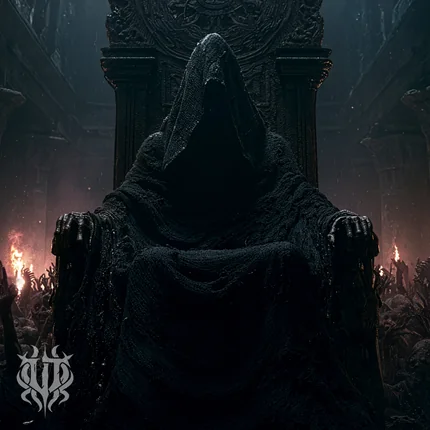
A Thousand Masks is a dark metal song inspired by Nyarlathotep, the Crawling Chaos who walks among humanity, hiding behind countless faces and whispered lies.
References
- H. P. Lovecraft Archive — fiction in publication order
First publication dates and venues; issue dates can differ from actual release dates.
- H. P. Lovecraft Archive — fiction in composition order
Composition dates; question marks and ranges retain the source uncertainty.
- The Statement of Randolph Carter — Unspeakable Tales ebook
The fictional narrative is evidence for what the story says, not proof of events in the real world.
- The Dream-Quest of Unknown Kadath — original text
The fictional narrative is evidence for what the story says, not proof of events in the real world.
- The Silver Key — Unspeakable Tales ebook
The fictional narrative is evidence for what the story says, not proof of events in the real world.
- Through the Gates of the Silver Key — original text
The fictional narrative is evidence for what the story says, not proof of events in the real world.
- The Unnamable — Unspeakable Tales ebook
The fictional narrative is evidence for what the story says, not proof of events in the real world.
At a glance
The Statement of Randolph Carter, published May 1920
Writer, dreamer and occult student
Boston
Country near Arkham
French Foreign Legion, as described in The Silver Key and its sequel
7 October 1928, aged fifty-four
Zkauba of Yaddith
Swami Chandraputra
Missing after entering de Marigny’s clock