

Arthur Machen
Arthur Machen was a Welsh author whose fiction makes ordinary landscapes and human lives open onto terrifying or transformative realities. The Great God Pan is a central predecessor of Lovecraft’s horror, but Machen’s achievement also encompasses mystical fiction, literary criticism, translation, autobiography and journalism. His search for wonder belongs to an independent imaginative and religious tradition, rather than to an early version of a fixed Cthulhu Mythos.
8 min read · 1,501 words
Life dates and background
Machen was born on 3 March 1863 and died on 15 December 1947. He grew up near Caerleon in the household of the clergyman John Edward Jones and Janet Robina Jones, whose family name was Machen. His early environment brought parish life, countryside and the remains of Roman Britain into close proximity.
Sources: [1]
Wales, solitude and the imaginative landscape
William Francis Gekle’s study describes an only child whose walks and family surroundings gave particular force to the landscape of Gwent. Journeys through lanes and villages became a store of impressions to which the later author repeatedly returned.
The importance of that landscape exceeds the provision of picturesque settings. In Machen’s fiction, an ordinary road or wooded slope can stand beside something much older and less easily interpreted. The physical environment offers continuity between present inhabitants and traces of a past that has not become imaginatively inert.
The Great God Pan makes this relation particularly visible. A Roman road leads into the terrain of Helen Vaughan’s childhood encounters, and a museum inscription later becomes part of the attempt to understand her origin. The archaeological elements are literary constructions shaped into evidence, even where they draw on real names or kinds of antiquities.
Gekle writes as a devoted admirer rather than a detached modern biographer. His account is useful for the recurrence of Welsh places and memories, but its judgments about Machen’s greatness remain the critic’s evaluations.
Schooling and the move toward writing
Machen attended Hereford Cathedral School. Gekle describes an unsuccessful attempt to enter medical training, with difficulty in mathematics helping to end that prospective career. Literary interests offered a different direction, though not an immediately secure livelihood.
His early poem Eleusinia announced an interest in ancient mysteries. The beginning of his career did not yet resemble the modern urban horror for which he became famous. Classical subjects, antiquarian habits and deliberately old-fashioned literary voices were important parts of his apprenticeship.
London brought precarious work and periods of poverty. Gekle recounts editorial labor, tutoring and the practical difficulties of obtaining a dependable income. The later writer’s criticism of ordinary commercial existence developed alongside direct experience of its demands, rather than from uninterrupted financial independence.
Sources: [2]
London as a second imaginative country
Machen’s long walks through London made the city another source of strangeness. Gekle repeatedly connects the old villages, expanding suburbs and unexpected transitions of the capital with the author’s ways of seeing.
The resulting literary city is not confined to famous monuments or sensational slums. Unremarkable streets, marginal districts and changes between built space and remaining countryside can become the thresholds of an unfamiliar experience. Distance is psychological and imaginative as well as geographical.
The Great God Pan gives this wandering a darker investigative form. Villiers moves among clubs, rented rooms, deserted houses and fashionable addresses, gradually realizing that separate parts of London contain fragments of one life. Socially distinct neighborhoods conceal connections that their inhabitants do not recognize.
This treatment of place helps explain why Machen matters beyond any list of monsters. His characteristic problem is how a familiar world can suddenly disclose a different order without first changing all of its visible furniture.
Translation and the early books
Translation was a substantial part of Machen’s working life. Gekle describes his demanding engagement with Casanova’s memoirs, undertaken alongside other literary employment. The task required sustained attention to narrative voice and to a very different social world.
These activities place the later horror writer within a broader profession of reading, rewriting and publishing. His prose developed through contact with older literary idioms and elaborate narratives as well as through personal experiences of place.
The Anatomy of Tobacco appeared in 1884, followed by The Chronicle of Clemendy in 1888. Their learned comedy and archaizing prose differ from the contemporary idiom of his best-known horror. The change in style is one reason his career should not be described as a single uninterrupted sequence of occult thrillers.
The Great God Pan and the 1890s
The Great God Pan developed from an early periodical version into the expanded 1894 work. The Three Impostors followed in 1895. These books established a powerful association between Machen’s name and disturbing survivals beneath contemporary civilization.
Sources: [5]
What Pan contributes to the weird tale
The Great God Pan opens with a scientific intervention but explains its consequences through a reality beyond the investigator’s material assumptions. Raymond successfully reaches something while disastrously misunderstanding what success will cost.
The story subsequently replaces a continuous view of Helen Vaughan with a series of partial records. Its letters, testimony, pictures and interrupted disclosures make knowledge itself an unstable object. Characters can become convinced before they can adequately describe what convinces them.
That combination gives the novella a durable place in the history of weird fiction: forbidden perception, inhuman parentage, the transformation of the body and documentary reconstruction act together. None requires the author to invent a detailed cosmic bureaucracy or a complete taxonomy of supernatural beings.
Its ethical tensions also remain visible. Mary’s dependence on Raymond makes the initial experiment coercive in its circumstances, while Helen’s final confrontation gives the male investigators a power the narrative itself briefly questions through Austin’s objection.
Sources: [3]
Grief, friendship and the theatre
Machen married Amy Hogg in 1887. Her death in 1899 was a profound crisis. His friend A. E. Waite helped him through this period; Machen joined the Golden Dawn but did not make its activities the center of his life. He entered Frank Benson’s touring company in 1901 and married Dorothie Purefoy Hudleston in 1903. His religious commitments were associated with Anglican mysticism, not a straightforward identity as a practicing fictional sorcerer.
Sources: [6]
Hieroglyphics and the purpose of literature
Gekle places the composition of Hieroglyphics after Machen’s release from uncongenial editorial employment. The book articulates a literary creed in which imaginative transformation matters more than an efficient report of ordinary facts.
Its central concern is the experience Machen calls ecstasy. In this context, that does not mean merely excitement, happiness or a spectacular event in a plot. It names literature’s capacity to carry the reader beyond the habitual limits of daily experience.
Gekle strongly endorses this position and uses it to argue against reducing Machen to a supplier of uncanny incidents. The critic’s enthusiasm should not be mistaken for universal agreement about literary value, but it identifies a genuine distinction in the author’s own ambitions.
For a reader approaching from Lovecraft, the distinction is useful. A revelation in Machen may be terrifying, spiritually significant or both. The importance of the unseen is not exhausted by the proposition that humanity is biologically insignificant in a vast indifferent universe.
Sources: [2]
A wider range of fiction and memoir
Hieroglyphics was published in 1902; The House of Souls in 1906 gathered important earlier fiction, including The White People and A Fragment of Life. The Hill of Dreams followed in 1907. The Secret Glory and the autobiographical Far Off Things appeared in 1922. Things Near and Far followed in 1923 and The London Adventure in 1924.
Sources: [4]
The Bowmen and the problem of believed fiction
Machen’s wartime story The Bowmen, published in 1914, became entangled with the Angels of Mons legend. Readers sought factual sources for its supernatural intervention even as the author insisted that he had invented the story. The episode gave him an unusual position: a writer committed to spiritual possibilities was required to defend the fictional status of his own narrative.
Sources: [6]
Lovecraft’s explicit acknowledgment
The clearest connection within Lovecraft’s fiction occurs in The Dunwich Horror. Henry Armitage invokes The Great God Pan while rejecting an inadequate local explanation of Wilbur Whateley’s parentage. The reference asks readers to imagine a much more disturbing origin than ordinary family scandal.
This is an explicit literary acknowledgment. The comparison between the stories can then be developed from their actual structures: vulnerable human mothers, offspring who cannot be understood as wholly human, evidence gathered by investigators and the eventual disclosure of a larger order.
Lovecraft’s use of Nodens also makes Machen a useful point of comparison. The Great God Pan includes the name in invented archaeological evidence; Lovecraft’s Dreamlands fiction assigns Nodens an active role. The common name does not make every detail from one writer automatically true in the other’s work.
Reading Machen as an independent author
Machen’s place in this encyclopedia is that of a major predecessor with a distinctive body of work. Following the links from Lovecraft is a useful beginning, but judging every Machen story by its contribution to a later mythology would obscure the range of his interests.
The contrast between country and city, the difficult relation between perception and reality, the experience of literary ecstasy and the transformation of the everyday all extend beyond the shared vocabulary of horror. His imagined world includes the possibility of revelation as well as the danger of encountering what should remain concealed.
A productive comparison therefore preserves both resemblance and difference. The opening of forbidden knowledge in The Great God Pan can be read beside From Beyond, while the specific spiritual interpretation, documentary method and treatment of its human subjects remain Machen’s own.
Related music
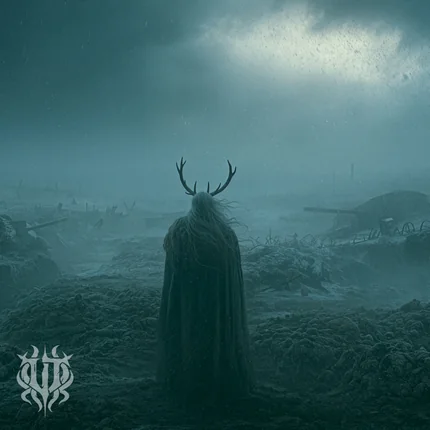
The Dreamkeeper is a dark metal journey into the Dreamlands, inspired by Nodens, the ancient guardian who watches over the boundary between dreams and the unknown.
References
- Dictionary of Welsh Biography — Machen, Arthur (1863–1947)
Used for basic life dates and family identification; not for the disputed characterization of his religious affiliation.
- William Francis Gekle — Arthur Machen: Weaver of Fantasy (1949)
Public-domain US edition. An openly admiring critical study, used with later bibliographical and biographical checks.
- Arthur Machen — The Great God Pan, full text
The 1894 literary work is public domain in the United States. Its museum inscription is part of the fiction.
- The Friends of Arthur Machen — Works and annotated bibliography
- Arthur Machen — biographical reference
- The Friends of Arthur Machen — Biography
- The Dunwich Horror — Unspeakable Tales ebook
The fictional narrative is evidence for what the story says, not proof of events in the real world.
- The Dream-Quest of Unknown Kadath — original text
The fictional narrative is evidence for what the story says, not proof of events in the real world.
- The Strange High House in the Mist — original text
The fictional narrative is evidence for what the story says, not proof of events in the real world.
- From Beyond — Unspeakable Tales ebook
The fictional narrative is evidence for what the story says, not proof of events in the real world.
At a glance
3 March 1863, near Caerleon, Wales
15 December 1947
Fiction; criticism; autobiography; journalism; translation; acting
Major literary predecessor
The Great God Pan; The Three Impostors; The White People; The Hill of Dreams; Hieroglyphics