

The Great God Pan
Arthur Machen’s novella connects an experiment on human perception with a series of deaths and disappearances in Victorian society. Its central figure, Helen Vaughan, is reconstructed through reports, portraits, aliases and frightened witnesses. The final documents connect her birth to a breach between ordinary existence and an overwhelming spiritual reality. The work is a major predecessor of Lovecraft’s horror of forbidden knowledge and inhuman parentage.
11 min read · 2,117 words
Publication and literary position
An early version appeared in The Whirlwind on 13 December 1890. The expanded work was published in 1894 with The Inmost Light. The distinction matters: the early appearance and the familiar book-length presentation belong to different stages of the text’s development.
The 1894 volume appeared in John Lane’s Keynotes series. Its combination of experimental medicine, sexuality and pagan horror helped establish Machen’s association with the literature of the 1890s decadence.
Sources: Arthur Machen — biographical reference, The Friends of Arthur Machen — Biography
The experiment on Mary
Dr. Raymond believes that everyday perception conceals a deeper reality. He has spent years trying to make the brain perceive what normally remains inaccessible. He explains his project to Clarke by treating the visible world as a partial appearance and identifying the hidden reality with the ancient idea of seeing Pan.
His intended subject is Mary, a girl of about seventeen whom he took in when she was a starving child. Raymond presents his rescue of her as a claim upon her life. Although she expresses trust in him, the scene gives that trust a disturbing setting: the adult who controls her circumstances also defines the risks and decides the value of the experiment.
Clarke is uneasy but stays to witness the procedure. While Mary is under anesthesia, he drifts into a childhood memory whose peaceful landscape becomes charged with a presence outside familiar categories. The incident anticipates the experiment’s result without becoming an independent scientific explanation of it.
Mary wakes in apparent wonder, then falls into extreme terror and collapse. Three days later, Raymond acknowledges that her mental faculties have been permanently damaged. His explanation is that she has perceived Pan. The revelation has therefore been achieved at the cost of the person required to receive it.
Clarke’s private archive
Years afterward, Clarke continues pursuing unusual experiences through reports and occult investigations. He is repeatedly disappointed or disgusted, yet remains unable to abandon the possibility that some extraordinary evidence will prove authentic. His private collection of cases becomes one of the novella’s frames.
A report associated with Dr. Phillips concerns Helen Vaughan, who had been placed in a rural household as a child. The arrangement includes generous payment and instructions allowing her unusual independence. Her long solitary walks lead into woods close to a Roman road.
The village boy Trevor sees Helen with a strange unclothed figure in the wood. He cannot adequately describe what he has witnessed and suffers lasting distress. Later, the sight of an excavated Roman faun or satyr head provokes another severe reaction. This links the encounter with pagan imagery, but the reader receives that link through a frightened child and the adults interpreting him.
Helen also becomes close to Rachel, a girl nearer her own age. After accompanying her into the woods, Rachel returns deeply disturbed. The account breaks off before stating the substance of her disclosure. Later documents refer to Rachel’s tragic death. The omission is deliberate: the story supplies consequences while withholding the event that would make them fully intelligible.
Charles Herbert’s marriage and ruin
The narrative next follows Villiers, who recognizes an impoverished stranger as Charles Herbert, an acquaintance from Oxford. Herbert once inherited a comfortable estate. He now describes a marriage that exhausted his fortune and destroyed his sense of safety in the world.
His wife was Helen Vaughan. The account of her background that he received included an English father, an Italian mother and residence in Florence, but the later investigation gives no reason to accept that social biography at face value. What matters immediately is Herbert’s claim that the marriage exposed him to experiences he cannot bear to explain.
Helen eventually left him. Villiers supplies food and money, but cannot reverse the damage. He later learns that Herbert has died in poverty. The narrative offers neither a complete confession nor a recoverable sequence of the acts that ruined him; the transformation from privileged young man to terrified beggar is the principal evidence.
The death in Paul Street
Austin tells Villiers about an earlier scandal involving the Herberts’ London house at 20 Paul Street. A wealthy man was found dead outside it. The reported investigation discovered no ordinary injury or poison sufficient to explain his death. The physician’s interpretation made extreme fear central to the case.
The Herberts denied knowledge of the incident, and the inquiry failed to establish a prosecutable explanation. Public suspicion consequently survives in the form of rumor. The novella differentiates the inadequacy of legal evidence from the growing pattern perceived by its private investigators.
Villiers later enters the deserted house. One room produces a powerful sense of physical and emotional oppression. He finds a portrait of Helen among papers there and is subsequently ill for days. When Clarke sees the drawing, he recognizes a disturbing resemblance to Mary and connects it with the name in the earlier rural report.
The portrait thus does more than identify a missing woman. It joins material that had previously belonged to separate stories: Raymond’s experiment, the childhood disturbances and Herbert’s marriage.
Meyrick’s drawings and Mrs. Beaumont
Another evidentiary thread concerns the artist Arthur Meyrick, who has died in Buenos Aires. His surviving drawings depict disturbing pagan figures and culminate in a recognizable image of Helen. The pictures imply that his artistic imagination has encountered something comparable to the experiences already described, though the reader does not receive a complete illustrated record.
Meanwhile, a wealthy woman calling herself Mrs. Beaumont has become an admired London hostess. Her supposed South American background helps make her mysterious without excluding her from fashionable society. Austin initially describes her in ordinary social terms.
The coexistence of those impressions is essential to the plot. The woman associated with terror and ruin can also appear charming, prosperous and socially acceptable. Recognition depends on comparing records rather than on detecting a visibly monstrous body at a dinner table.
The deaths of the fashionable men
Lord Argentine dies by suicide after an evening associated with Mrs. Beaumont’s circle. Reports describe no convincing ordinary motive. Further deaths follow, including those of Lord Swanleigh, Collier-Stuart and Herries. The press turns the incidents into a public mystery.
The account emphasizes the victims’ status, apparent pleasures and lack of obvious deprivation. That social framing makes their deaths surprising to the surrounding world while also exposing how differently society attends to wealthy men and to anonymous suffering elsewhere in the city.
Villiers has seen Sidney Crashaw leaving Mrs. Beaumont’s house in a state of extraordinary horror. When Crashaw becomes another reported death, the private sighting gives the investigator a concrete link between a particular residence and the public series.
The text does not reproduce a clear account of what happened inside the house. It makes the contrast between sociable appearance and the departing visitor’s face do the explanatory work that explicit description would otherwise perform.
The aliases converge
Villiers uses informal contacts in London to trace a young woman once known as Miss Raymond. Reports connect her with lodgings, scandal and the period around the Paul Street affair. He watches a woman associated with those rooms and follows her to Mrs. Beaumont’s address.
This establishes the convergence of names: Helen Vaughan, the woman in Herbert’s history, Miss Raymond and the fashionable hostess are parts of one reconstructed life. The change of name has allowed separate communities to know different versions of the same figure.
A surviving account of experiences at Mrs. Beaumont’s house gives Villiers and Clarke additional evidence. Austin can scarcely begin reading it before refusing to continue. Again, the narrative shows the document’s effect rather than providing its contents.
A letter concerning Meyrick supplies a further connection. A woman called Mrs. Vaughan had been associated with his final illness. The scattered documents increasingly confirm one another without producing a conventional detective’s demonstration of a single physical method of murder.
Confrontation and Helen’s death
Villiers and Clarke decide to confront Helen. Their plan is to threaten exposure to the police unless she ends her life. Austin objects to their assumption of lethal authority. The scene therefore includes an ethical challenge inside the investigation itself: fear of an extraordinary danger does not make the investigators’ coercion disappear.
The death is subsequently presented through the notes of Dr. Robert Matheson. He describes Helen’s body undergoing an impossible succession of changes. Human distinctions of sex and bodily form dissolve, animal forms and an apparently primitive substance appear, and the sequence moves through transformations ordinary anatomy cannot accommodate.
Parts of the record are missing or unreadable. The visible body ultimately returns to human form and dies. The manuscript’s broken condition makes even this apparent eyewitness account incomplete.
The ending is not a duel in which a hero kills a clearly defined creature. It combines coercion, a medically framed witness and an unstable body whose nature exceeds the categories used to describe it.
Mary, Pan and the final correspondence
Clarke’s later investigation returns to the Welsh setting and its Roman remains. A fictional museum inscription connects Nodens with a mysterious union beneath a shadow. The inscription belongs to Machen’s invented evidence; it should not be confused with an authentic archaeological record.
Raymond’s reply finally supplies the genealogical link. Mary gave birth to Helen nine months after the experiment and died shortly afterward, without recovering from its effects. Raymond had watched the child and eventually sent her away when he could no longer endure what her presence involved.
He interprets Helen’s existence as the result of opening the boundary between the visible world and what lies behind it. Pan’s role is conveyed through this account and the work’s pagan imagery rather than through a conventional scene introducing a god as a speaking character.
A concluding note gives Helen’s birth as 5 August 1865 and her death as 25 July 1888. The novella’s reports do not all express age and elapsed time with perfect consistency. Those documentary dates are best retained as textual particulars instead of silently adjusting them into a harmonized fictional chronology.
How the documentary structure creates horror
The story advances through conversations, private notes, press accounts, letters, pictures and medical testimony. Each item is partial. A name becomes meaningful only when it can be compared with another document; an image becomes alarming when someone recognizes a face.
This structure gives readers the experience of assembling a case while repeatedly denying access to its decisive contents. Rachel’s words, the experiences within Helen’s marriages and entertainments, the most dreadful drawings and parts of the final medical report remain inaccessible or indirect.
The result is a distinctive combination of accumulation and absence. There is enough agreement to suggest a real pattern within the fiction, but insufficient specification to reduce that pattern to an ordinary criminal mechanism or a complete supernatural rulebook.
The apparent neatness of the final parentage revelation does not remove this uncertainty. It tells readers how the separate narratives are connected, while leaving the nature of Pan and the participants’ most terrible experiences beyond sustained description.
Bodies, power and the limits of the investigators
The opening experiment places a vulnerable girl under a man’s assumed authority. The ending places her daughter under the authority of men who demand her death. Between those scenes, most of Helen’s life is transmitted through frightened or condemnatory male witnesses.
Helen is associated with destructive events, and the novella ultimately supplies extraordinary bodily evidence. At the same time, its pattern of withheld testimony leaves her own account almost entirely absent. An interpretation of the work can recognize its supernatural plot without treating every investigator’s judgment as morally neutral.
The repeated instability of bodily categories turns contemporary fears about degeneration into a supernatural spectacle. This is a feature of the fiction’s imagery, not a valid biological account of women, sexuality or human development.
Mary’s fate also prevents the story from being reduced to a warning against a dangerous woman. The catastrophe begins with a doctor’s confident decision to use another person as the instrument of revelation.
The connection with Lovecraft
The Dunwich Horror explicitly names Machen’s novella when Henry Armitage considers Wilbur Whateley’s parentage. The reference directs attention away from local gossip toward the possibility of a human mother and an influence outside familiar earthly existence.
The two works also invite comparison through their investigative forms: troubling births, apparently human offspring, documents, hidden knowledge and a final explanation that changes the meaning of earlier evidence. These are connections visible in the texts, rather than proof that their supernatural beings inhabit one shared universe.
Nodens offers a different point of contact. Machen places the name in an invented archaeological clue; Lovecraft uses it in The Strange High House in the Mist and The Dream-Quest of Unknown Kadath. Those later appearances give the figure functions and relationships particular to Lovecraft’s own fiction.
Sources: Arthur Machen — The Great God Pan, full text, The Dunwich Horror — Unspeakable Tales ebook, The Strange High House in the Mist — original text, The Dream-Quest of Unknown Kadath — original text
Related music
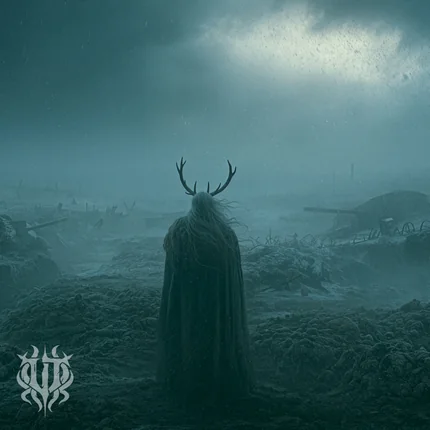
The Dreamkeeper is a dark metal journey into the Dreamlands, inspired by Nodens, the ancient guardian who watches over the boundary between dreams and the unknown.
References
- Arthur Machen — The Great God Pan, full text
The 1894 literary work is public domain in the United States. Its museum inscription is part of the fiction.
- Arthur Machen — biographical reference
- The Friends of Arthur Machen — Biography
- The Dunwich Horror — Unspeakable Tales ebook
The fictional narrative is evidence for what the story says, not proof of events in the real world.
- The Strange High House in the Mist — original text
The fictional narrative is evidence for what the story says, not proof of events in the real world.
- The Dream-Quest of Unknown Kadath — original text
The fictional narrative is evidence for what the story says, not proof of events in the real world.
At a glance
Arthur Machen
13 December 1890, early version
1894, with The Inmost Light
Novella
Wales; London; reports from Buenos Aires
Helen Vaughan