

Helen Vaughan
Helen Vaughan is the central figure of Arthur Machen’s The Great God Pan. Her apparently human life is assembled from childhood reports, marriages, aliases and deaths associated with her presence. The concluding correspondence identifies Mary as her mother and connects her birth to Dr. Raymond’s experiment in forbidden perception. Helen belongs to Machen’s fiction; her role as a precursor does not make her a member of Lovecraft’s own pantheon.
6 min read · 1,055 words
Birth and the experiment
Raymond operates on Mary in an attempt to expose the reality concealed behind normal perception. Mary survives with devastating mental injury. In the final correspondence, the doctor states that she gave birth to Helen nine months later and died soon afterward.
This account makes Helen the living consequence of the experiment. Her relationship to Pan is expressed through Raymond’s explanation and the novella’s recurring pagan evidence. No ordinary father is identified, and the story does not show a conventional encounter with a separately described divine parent.
The concluding note supplies a birth date of 5 August 1865 at the Red House in Breconshire. Because other reports are less consistent in their age references, that date should be understood as the explicit final notation rather than the solution to every chronological detail.
Childhood in the country
After a period under Raymond’s observation, Helen is placed in a rural household. Her guardian’s arrangements allow her freedom from ordinary schooling and extensive time alone. She regularly visits woods near a Roman road.
Trevor, a younger boy, sees her in the company of an unfamiliar figure whose appearance he cannot explain. The encounter frightens him profoundly. A later sighting of a carved pagan head causes another crisis, giving the adults an indirect clue to what he may have seen.
Her friendship with Rachel leads to another disturbing incident in the woods. The report interrupts Rachel’s disclosure before explaining it, and later correspondence refers to her death. The surviving account consequently supports the existence of a destructive association while withholding the precise experience involved.
These childhood episodes are reported by others. Helen does not narrate them herself or provide a competing explanation of what happened.
Helen Herbert and the Paul Street household
Charles Herbert marries Helen after meeting her in fashionable society. The biographical story supplied to him presents her as an orphan with English and Italian parentage who had lived in Florence. Later revelations undermine any assumption that this was a reliable account.
Herbert tells Villiers that experiences within the marriage ruined him. His wealth disappears, Helen leaves, and he eventually dies in poverty. He cannot bring himself to describe the worst events in detail.
The household at Paul Street is also connected with the unexplained death of a wealthy visitor. The investigation cannot establish a sufficient ordinary cause or prove the Herberts’ responsibility. The abandoned house later yields Helen’s portrait, which allows Clarke to recognize her resemblance to Mary.
The portrait is one of the few objects that carries Helen’s identity between otherwise separate accounts. It makes her face an evidentiary link where names alone have failed.
Miss Raymond, Mrs. Vaughan and Mrs. Beaumont
Villiers traces a young woman known as Miss Raymond through London informants and lodgings. The name connects the adult’s concealed history with the doctor responsible for her birth, although the investigation must still establish that the people described are the same woman.
Mrs. Beaumont is the identity under which Helen enters wealthy London society as a successful hostess. Her reputed South American background accompanies an impression of money, charm and distinction. A person meeting her in that setting need not see anything comparable to the terror described in the earlier reports.
The artist Arthur Meyrick’s final illness in Buenos Aires is associated with a Mrs. Vaughan. His drawings include Helen’s face among disturbing pagan images. Villiers’ observation of her movements eventually joins these separate names into a single history.
The aliases are therefore parts of a documentary mystery. The text does not provide a complete itinerary for every intervening year or authenticate each background story she gives to new acquaintances.
The London deaths
A succession of socially prominent men die by suicide during the period of Mrs. Beaumont’s entertainments. Lord Argentine is followed by other well-known figures, and the deaths become a press sensation.
Villiers sees Sidney Crashaw leave her house in a condition of extreme horror. His later death turns that observation into an important connection between the public mystery and Helen’s private activities.
A surviving written account of events at the house horrifies the investigators, but its contents are not fully disclosed to the reader. Helen’s precise actions and the mechanism by which visitors are affected remain much less explicit than the consequences.
This distinction is central to the character. Her destructive influence is extensively suggested, but many familiar elaborations of her conduct would require adding scenes Machen did not write.
Coerced death and bodily transformation
Villiers and Clarke threaten to expose Helen unless she kills herself. Austin challenges their decision, drawing attention to the violence implicit in their private judgment. Helen’s death is therefore not simply a voluntary disappearance once her identity is discovered.
Dr. Matheson’s notes describe the body passing through forms that dissolve distinctions between human and animal, male and female, organized anatomy and primitive substance. The sequence culminates in a return to human form and death.
The medical record is incomplete, with portions that cannot be recovered or read. It establishes the extraordinary character of the event within the narrative without furnishing a stable description of Helen’s supposedly authentic body.
The final notation places her death on 25 July 1888 in Ashley Street near Piccadilly. Her body’s transformation closes the investigation, while the last letters explain why that body could not remain within ordinary human categories.
Narrative role and later comparison
Helen is simultaneously the novella’s connective center and one of its least directly accessible voices. Almost everything comes through people who fear her, seek her, remember her or interpret her. Her aliases increase this distance, allowing different social circles to construct incompatible pictures of her.
Mary’s exploitation gives the character’s origin a dimension absent from a simple tale of predatory evil. The daughter’s danger emerges from a prior experiment in which a powerful adult used a dependent child to reach hidden knowledge.
Wilbur Whateley provides an explicit Lovecraftian comparison because The Dunwich Horror itself invokes The Great God Pan while considering his parentage. The parallel concerns the consequence of contact between a human mother and an inhuman order. Helen and Wilbur nevertheless retain different histories, behaviors and narrative functions.
Sources: Arthur Machen — The Great God Pan, full text, The Dunwich Horror — Unspeakable Tales ebook
Related music
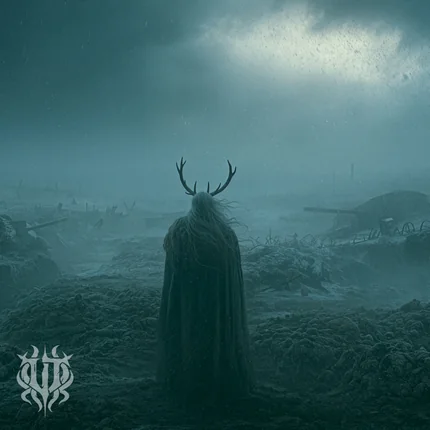
The Dreamkeeper is a dark metal journey into the Dreamlands, inspired by Nodens, the ancient guardian who watches over the boundary between dreams and the unknown.
References
- Arthur Machen — The Great God Pan, full text
The 1894 literary work is public domain in the United States. Its museum inscription is part of the fiction.
- The Dunwich Horror — Unspeakable Tales ebook
The fictional narrative is evidence for what the story says, not proof of events in the real world.
At a glance
Arthur Machen
The Great God Pan
Mary
Helen Vaughan; Helen Herbert; Miss Raymond; Mrs. Vaughan; Mrs. Beaumont
5 August 1865
25 July 1888