

Brian Lumley
Brian Lumley was a British writer of horror, fantasy and science fiction who developed an adventurous branch of the Cthulhu Mythos before achieving wider success with Necroscope. Titus Crow, the Dreamlands books and his contributions of creatures and invented texts form a substantial later tradition, with priorities distinct from Lovecraft’s original fiction.
5 min read · 848 words
Life, military service and first publications
Lumley was born on 2 December 1937 and died on 2 January 2024. His wife's memorial announcement appeared later that month; its publication date is not his date of death.
The author's biographical account traces his interest in weird fiction to Robert Bloch's Notebook Found in a Deserted House. While serving with the Royal Military Police in Germany, he began collecting Lovecraft. Contact with August Derleth initially concerned acquiring books, but Lumley's invented quotations from fictional occult volumes encouraged Derleth to ask for stories.
Arkham House published The Caller of the Black, Beneath the Moors and The Horror at Oakdeene. Lumley completed 22 years in the military and reached warrant-officer rank. His official biography dates his retirement to December 1980, after which fiction became his principal occupation.
Sources: Barbara Ann Lumley — memorial announcement, Brian Lumley — biographical reference
Titus Crow: a hero who can resist
The six Titus Crow novels begin with The Burrowers Beneath (1974) and The Transition of Titus Crow (1975). The Clock of Dreams and Spawn of the Winds followed in 1978, In the Moons of Borea in 1979, and Elysia in 1989. The author's US omnibus page supplies these original copyright years, alongside information about the later combined editions.
Crow and Henri-Laurent de Marigny confront threats across worlds and planes of existence. The clock allows journeys through space and time; The Clock of Dreams uses it in the search for Crow, while the later books broaden the confrontation and bring together other heroes.
That prospect of effective intervention changes the balance of the fiction. The stories retain enormous hostile powers but give exceptional protagonists a means of answering them. Their vocabulary and hierarchy must be attributed to Lumley's branch, rather than imposed retrospectively on every earlier Mythos tale.
Dreamlands and other fantasy settings
Lumley's official Mythos introduction groups Titus Crow and the Dreamlands as related series that can also be read independently. David Hero's predicament involves the possibility of remaining within dreams and choosing between dream and waking existence.
The same catalogue links the Primal Land books The House of Cthulhu, Tarra Khash: Hrossak! and Sorcery in Shad. Their presence beside the Crow novels is a guide to the author's connected interests, not a reason to erase the individual settings and protagonists.
A useful bibliography therefore identifies the series before listing a shared name or creature. The recurrence of Cthulhu does not automatically make every volume a direct sequel to The Burrowers Beneath, and a fantasy adventure set in dreams need not reproduce the emotional trajectory of Lovecraft's Randolph Carter stories.
Sources: Brian Lumley — Cthulhu Mythos and Dreamlands series
Creations that passed into games
In a memorial published by Chaosium, Call of Cthulhu creative director Mike Mason identifies the Chthonians, Shudde M’ell and Yibb-Tstll among Lumley's contributions adopted by the role-playing game. Fictional books and fragments include the Cthaat Aquadingen, G'harne Fragments and Unter Zee Kulten.
Mason also records The Running Man in the licensed Games Workshop supplement Green and Pleasant Land (1987), and The Mirror of Nitocris in issue 13 of Imagine. These are concrete points of contact between the fiction and gaming publications.
The distinction between origin and adaptation matters: a game's organized description of a creature is evidence for that game version. Lumley's authorship should remain visible even when readers first encounter the name in a rulebook rather than a story.
Necroscope and the making of a successful series
Necroscope was published in 1986; the official biography dates its composition to 1984. The novel introduces Harry Keogh's ability to communicate with the dead and begins a separate vampire-centered sequence. Its existence should not be reduced to a late instalment of the Cthulhu Mythos.
In an account preserved on his interview page, Lumley describes a slow initial response, followed by stronger sales after a change of cover. Meeting Tom Doherty at the 1986 World Fantasy Convention helped open the way to US publication by Tor. What had been presented as a trilogy expanded into further novels and the Vampire World books.
He also recalled Derleth advising him against killing Titus Crow in an early, unpublished story. That anecdote connects continuing characters with a practical question for a working writer: how to maintain a series readers want without losing the impulse to invent.
Sources: Brian Lumley — biographical reference, Brian Lumley — interviews reproduced on the author’s site, Mike Mason — Vale Brian Lumley (1937–2024)
Beyond a single label
Lumley's own accounts show how military employment, correspondence, small-press publication, commercial packaging and sustained series writing all contributed to his career. The route from Arkham House to an international readership was neither instantaneous nor confined to imitation of one predecessor.
His significance within this encyclopedia rests especially on three activities: creating new Mythos material, turning cosmic confrontation toward heroic adventure, and extending imaginative settings through substantial sequences. The separate success of Necroscope also demonstrates why a writer with important Lovecraftian beginnings should not be treated as belonging wholly to Lovecraft's fictional universe.
Barbara Ann Lumley's memorial identifies a body of approximately sixty books across several genres. That figure describes a broad career, while individual bibliographical records remain the better basis for dates, sequence order and distinctions between new books and collected editions.
Sources: Brian Lumley — interviews reproduced on the author’s site, Barbara Ann Lumley — memorial announcement
Related music
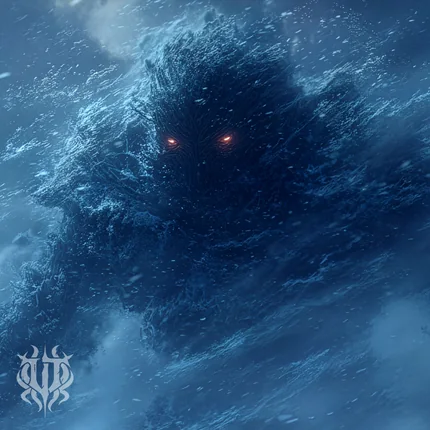
Wind Walker is a dark metal tribute to Ithaqua, the legendary Wind-Walker who haunts frozen wastelands, carrying the lost into the endless white silence.
References
- Barbara Ann Lumley — memorial announcement
Announcement dated 28 January 2024; distinguishes announcement from death date.
- Brian Lumley — biographical reference
- Brian Lumley — Titus Crow omnibus catalogue
- Brian Lumley — Cthulhu Mythos and Dreamlands series
- Mike Mason — Vale Brian Lumley (1937–2024)
- Brian Lumley — interviews reproduced on the author’s site
At a glance
1937–2024
Later Mythos
2 December 1937
2 January 2024
22 years in the Royal Military Police; retired December 1980
Titus Crow; Dreamlands; Necroscope; Primal Lands
Necroscope written 1984; first published 1986