

Ithaqua
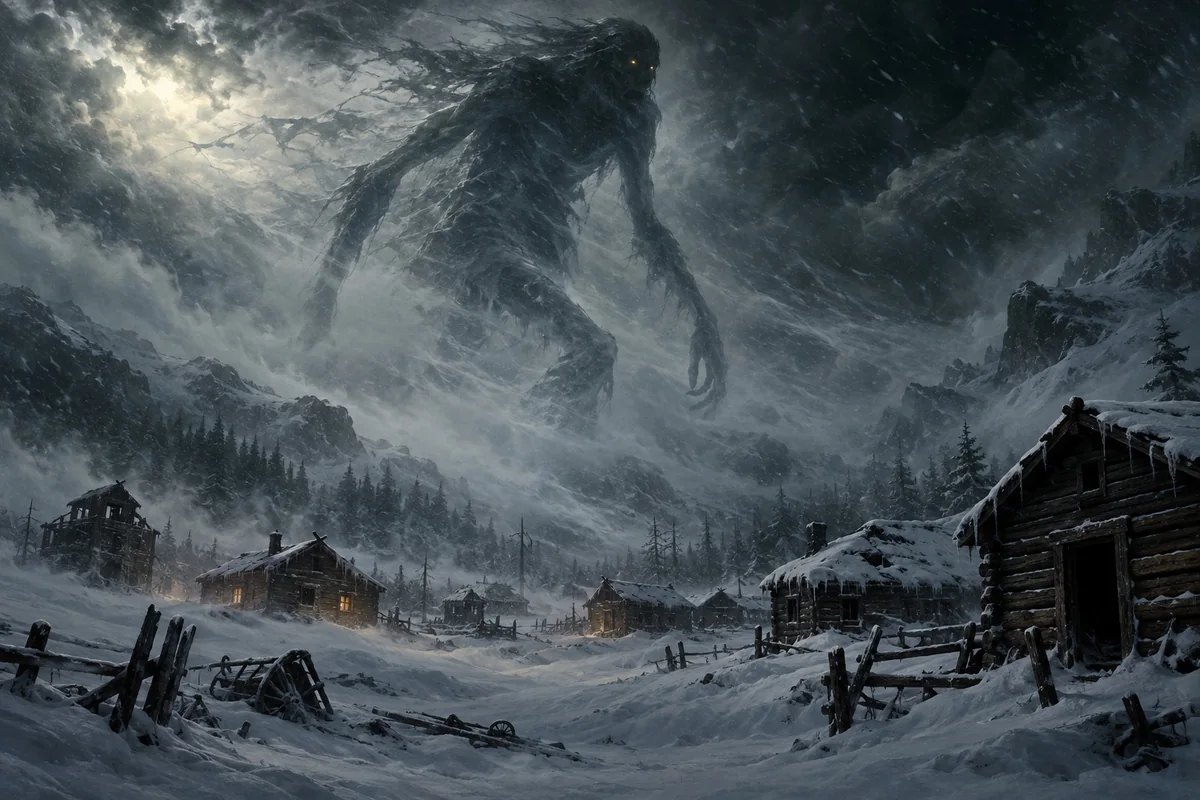
Ithaqua is August Derleth’s Wind-Walker, a colossal presence associated with cold, abduction and travel through the sky. The figure belongs to the later literary Mythos and develops beyond the forest terror of Blackwood’s The Wendigo.
3 min read · 440 words
The Thing That Walked on the Wind
Derleth frames the case through police reports about Stillwater and people returned from the sky. Irene Masitte flees a proposed sacrifice with Wentworth and Macdonald; their attempted escape leads to capture by the worshipped presence. The story links the village's disappearance to the same power.
Sources: [1]
Its witnesses supply partial descriptions of something immense and approximately human-shaped. The name Ithaqua appears in the reproduced text, alongside Wind-Walker and Death-Walker. The frightening effects are scattered across testimony rather than presented as a complete anatomy.
Witnesses and unstable explanations
Officials weigh extraordinary testimony against possible natural explanations. The story's cold and aerial movement do more than create atmosphere: they disturb assumptions about where missing people have been and what conditions they can survive. Its police-document form offers an appearance of order around experiences that resist it.
Sources: [1]
Comparison with Blackwood’s Wendigo
Blackwood's story makes the wilderness a force of attraction as well as fear. Joseph Défago disappears, and his companions debate the possibility that solitude has overwhelmed him. Dr. Cathcart initially tries to explain the reports through psychological strain and suggestion.
Around the campfire, the men discuss a presence whose call draws a victim into extraordinary movement. Their account connects speed with burning feet and eventual bodily change. A cry passes overhead; something falls through the trees, and a figure apparently resembling Défago approaches them.
The scene keeps human recognition under pressure. A familiar guide seems to return, but voice, movement and the later alarm about his feet challenge the identification. These particular literary images provide a useful comparison with the Wind-Walker without making Blackwood's story a full biography of Derleth's deity.
Sources: [2]
Literary fiction and cultural tradition
The Wendigo discussed here is Blackwood's fictional treatment, narrated through his expedition characters and their fears. Cathcart's explanation of the wilderness as a destructive attraction is a character's interpretation inside that treatment. It should not be substituted for the varied traditions of the Indigenous peoples from whom the name originates.
Likewise, comparing two horror stories establishes a literary relationship or resemblance; it does not make either text an authoritative account of living cultural beliefs.
Sources: [2]
Later northern and cosmic adventures
Lumley's catalogue carries the wind-centered strand into Spawn of the Winds, involving psychics imprisoned in an alien frozen world, followed by In the Moons of Borea. Those later adventures belong to Lumley's developing sequence.
Sources: [3]
Related reading
For the closely argued forest encounter, read Blackwood; for the Wind-Walker's police dossier, read Derleth. The distinction keeps the original settings, narrative forms and kinds of uncertainty visible even when later Mythos reference works group them together.
Sources: [2]
Related music
Wind Walker is a dark metal tribute to Ithaqua, the legendary Wind-Walker who haunts frozen wastelands, carrying the lost into the endless white silence.
References
- August Derleth — The Thing That Walked on the Wind
- Algernon Blackwood — The Wendigo
Public-domain literary text; distinct from an ethnographic account.
- Brian Lumley — Titus Crow omnibus catalogue
At a glance
August Derleth
The Thing That Walked on the Wind
Algernon Blackwood’s The Wendigo
Later literary Mythos