

Dagon (2001)
Stuart Gordon’s Dagon moves the nightmare of The Shadow over Innsmouth to a Spanish fishing community. Its title invokes another Lovecraft story, but the pursuit through a decaying town, its bargain with the sea and the protagonist’s family discovery make Innsmouth the principal narrative source.
4 min read · 790 words
Credits, setting and release
The 2001 film was directed by Stuart Gordon from a screenplay by Dennis Paoli. Ezra Godden plays Paul Marsh, Raquel Meroño plays Barbara, Francisco Rabal plays Ezequiel, and Macarena Gómez plays Uxía. The Sitges archive identifies a Spanish production running 98 minutes, with English, Spanish and Galician among its languages.
Its coastal village is Imboca. A sailing accident brings outsiders to a community whose dependence on the sea is more than economic. The festival record places the film in the 2001 edition; that year should remain attached to the work even when a particular country's commercial release came later.
Sources: Sitges Film Festival — Dagon (2001), Dagon (2001) — credits, synopsis and release history
The visit becomes a pursuit
Paul and Barbara seek help after their yacht is damaged, leaving their companions behind. Returning to the boat reveals that rescue has become disappearance. In Imboca, Paul finds a hotel, hostile inhabitants and increasingly visible signs of bodily transformation.
Ezequiel recounts how the community exchanged its earlier religion for a bargain promising prosperity from the sea. Sacrifice and interbreeding followed. Uxía, the woman of Paul's dreams, belongs to the ruling family. He eventually learns that the connection is his own: her father is also his father.
Barbara is offered to Dagon. Paul's attempt to burn himself ends when Uxía pulls him underwater, where his emerging gills reveal that the sea is a possible home. The ending transforms apparent escape into the recognition of an ancestry from which he cannot simply walk away.
Sources: Dagon (2001) — credits, synopsis and release history
Why the title can mislead
Lovecraft's Dagon follows a solitary sailor who encounters a newly exposed marine landscape, a carved monolith and a gigantic being. Its terror is organized around isolation, the scale of the seabed and a witness who cannot recover an ordinary sense of reality. There is no long investigation of a functioning coastal town, no hotel pursuit and no final disclosure of the narrator's descent from its inhabitants.
The Shadow over Innsmouth supplies those kinds of connections. Its visitor pieces together a community's history through local testimony, experiences an attack in his hotel, flees through the streets and later discovers that the apparently external danger implicates his own family. Obed Marsh's maritime dealings connect civic decline with an older supernatural exchange.
Dagon is therefore a useful example of a title and a main literary source pointing in different directions. The name belongs to the film's religious vocabulary, but identifying the 1917 story as its sole plot source would hide most of the adaptation's structure. Both literary works deserve links, with their roles distinguished.
Sources: Dagon — Unspeakable Tales ebook, The Shadow over Innsmouth — Unspeakable Tales ebook, Sitges Film Festival — Dagon (2001)
From retrospective discovery to an immediate ordeal
The literary Innsmouth narrator survives his visit and spends a later interval researching his genealogy. His attitude changes after flight, as documents, dreams and physical signs transform the meaning of what he witnessed. The time between the town and the final decision matters: bodily escape precedes the collapse of his earlier account of himself.
Gordon's film compresses discovery into Paul's encounter with Imboca and Uxía. This comparison concerns narrative construction, not an assertion that either version supplies the missing history of the other. Uxía and Barbara give the film relationships that cannot be recovered by simply assigning film names to Lovecraft's characters.
The change also makes descent visible through an immediate aquatic transformation. Lovecraft lets the narrator anticipate a future under the sea after describing changes already beginning. The film dramatizes that threshold as an event in the present. In both structures, a supposedly separate community turns out to be inseparable from the visitor's identity, but the route to that recognition is different.
Sources: The Shadow over Innsmouth — Unspeakable Tales ebook, Dagon (2001) — credits, synopsis and release history
Gordon’s account of the production
In his 2002 conversation with Wil Forbis, Gordon recalled approximately fifteen years spent trying to get the project financed. He contrasted the difficulty of selling fish-like antagonists with the familiarity of vampires and werewolves. He also discussed a cast working across languages: Rabal learned English dialogue phonetically, while Gómez's dance background helped with underwater work. These are the director's recollections, rather than statements spoken by characters in the film.
Sources: Wil Forbis — Interview with Stuart Gordon (2002), Acid Logic
How to connect this adaptation to the wider wiki
The most direct route leads from the film to The Shadow over Innsmouth, the Deep Ones and the Dagon entry. Those links explain the inherited vocabulary without declaring the screenplay a universal account of the species. Imboca is the screen setting; Innsmouth remains the source story's Massachusetts community.
For comparison, the original Dagon shows how much horror Lovecraft can build around a single witness and a largely inaccessible marine civilization. The Innsmouth story shows how the same broad fear of an older oceanic order can enter commerce, local history and family descent. Reading the two before returning to Gordon clarifies which narrative functions the film combines and which it newly dramatizes.
Sources: Dagon — Unspeakable Tales ebook, The Shadow over Innsmouth — Unspeakable Tales ebook, Sitges Film Festival — Dagon (2001)
Related music
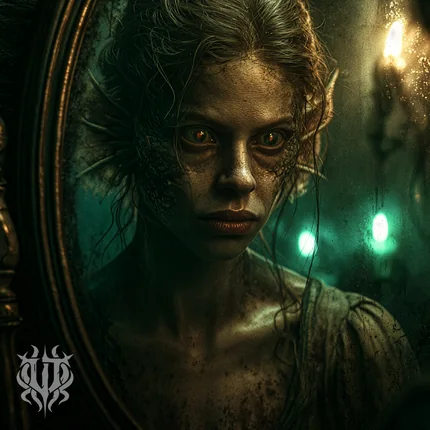
The Esoteric Order of Dagon is a dark metal descent into the world of Innsmouth, where ancient bloodlines, forgotten covenants and the call of the sea endure through countless generations.
References
- Sitges Film Festival — Dagon (2001)
- Dagon (2001) — credits, synopsis and release history
- Dagon — Unspeakable Tales ebook
The fictional narrative is evidence for what the story says, not proof of events in the real world.
- The Shadow over Innsmouth — Unspeakable Tales ebook
The fictional narrative is evidence for what the story says, not proof of events in the real world.
- Wil Forbis — Interview with Stuart Gordon (2002), Acid Logic
- Dagon — IMDb
External identification link; ratings and streaming availability are not fixed in this edition.
At a glance
2001
Stuart Gordon
Ezra Godden; Francisco Rabal; Raquel Meroño; Macarena Gómez
Primarily The Shadow over Innsmouth
Relocated adaptation
Premiered at Sitges in October 2001.
tt0264508
Dennis Paoli
Imboca, Spain
98 minutes (Sitges record)