

The Dunwich Horror (1970)
Daniel Haller’s The Dunwich Horror reorganizes the Whateley story around a student drawn into Wilbur’s ritual plans. The film preserves Miskatonic University, the Necronomicon and the hidden twin while making Wilbur an active seducer and antagonist through the climax.
4 min read · 688 words
Film identification and release
Dean Stockwell plays Wilbur Whateley, Sandra Dee plays Nancy, Ed Begley plays Henry Armitage and Sam Jaffe plays Old Whateley. The screenplay is credited to Curtis Lee Hanson, Henry Rosenbaum and Ronald Silkosky. Les Baxter composed the score.
AFI records a Chicago opening on 14 January 1970, a Los Angeles opening a week later and a New York opening on 8 July. Mendocino, California, supplied the screen town's location work. The film is therefore a 1970 release even though some production activity occurred in 1969.
The literary story first appeared in the April 1929 Weird Tales. A later magazine date appearing in a film catalog should not replace the original publication record of the source.
Sources: American Film Institute Catalog — The Dunwich Horror (1970), H. P. Lovecraft Archive — fiction in publication order, The Dunwich Horror — Unspeakable Tales ebook
Nancy and the Whateley house
Nancy encounters Wilbur through the university's rare book. A drive to his home becomes an enforced stay after he interferes with her car and drugs her. Elizabeth and Armitage investigate her absence and the Whateley family history.
The concealed twin escapes after Elizabeth enters its room. Wilbur obtains the Necronomicon and prepares a ritual involving Nancy. Armitage opposes him with counter-incantations; Wilbur dies, but Nancy's pregnancy undermines the assurance that the family line has ended. The plot's threatened continuation is thus different from the original story's final disclosure of the twins' paternity.
Sources: The Dunwich Horror (1970) — credits, synopsis and release history
Wilbur survives long enough to change the plot
In Lovecraft's narrative, Wilbur dies during his attempted theft from the Miskatonic library. His body reveals the inadequacy of the clothing and outward appearance that had allowed him to move among people. His death precedes the hidden sibling's destructive emergence and leaves a diary that the investigators must decipher.
The film retains Wilbur as an acting opponent through the final confrontation. Nancy gives his plans an immediate human target, and his relation to her supplies a plot that the source does not contain. The change shifts attention from reconstructing a dead man's project to interrupting a living man's ceremony.
Stockwell's Wilbur should consequently be discussed as a screen interpretation with its own dramatic function. The literary character's unnatural growth, unusual anatomy and early death cannot simply be laid over the film's sequence. Conversely, Nancy's pregnancy is not an ending that Lovecraft wrote and later editions removed.
Sources: The Dunwich Horror — Unspeakable Tales ebook, The Dunwich Horror (1970) — credits, synopsis and release history
The twin and the problem of visibility
The source conceals the larger twin in the altered farmhouse, leaving the community to interpret noises, odors, disappearing cattle and architectural changes. When the being escapes, tracks and destruction provide evidence of a body that observers cannot ordinarily see. The scholars' eventual intervention makes visibility itself part of the confrontation.
This sequence gives the house an explanatory history. It is not just an old dwelling with a locked room: its alterations accompany the growth of something whose scale exceeds ordinary domestic life. The hidden sibling is also a relative, and the revelation of that relation matters as much as its dimensions.
The film keeps the dangerous unseen twin but rearranges the human action around it. Readers following links from the film to the creature entry should therefore find the original evidence and the later screen treatment distinguished. Calling both versions the Dunwich Horror does not make every action or family detail identical.
Sources: The Dunwich Horror — Unspeakable Tales ebook, American Film Institute Catalog — The Dunwich Horror (1970)
The book and the countermeasure
Lovecraft's Necronomicon has a specific textual role in the story. Wilbur seeks material his inherited copy does not adequately provide; Armitage recognizes enough of his purpose to become alarmed; later scholarship involves decipherment and preparation. The library is an active barrier to the project, not merely an atmospheric shelf of forbidden volumes.
The response also involves a group: Armitage works with Rice and Morgan. Their knowledge provides an exceptional, limited resistance to a particular threat. It does not establish that all the universe's hostile powers can be defeated by one formula, nor that the Necronomicon is a standardized manual whose powers are unchanged in every adaptation.
Haller's film is best connected to the story, Wilbur, the hidden twin and the book as separate entries. Those routes expose how the screenplay redistributes functions among its characters while retaining a recognizable set of names and objects.
Sources: The Dunwich Horror — Unspeakable Tales ebook, The Dunwich Horror (1970) — credits, synopsis and release history
Related music
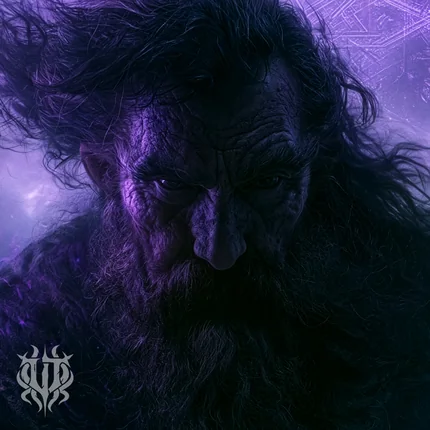
The Key and the Gate is a dark metal retelling of The Dunwich Horror, following Wilbur Whateley’s doomed search for forbidden knowledge and the power of Yog-Sothoth.
References
- American Film Institute Catalog — The Dunwich Horror (1970)
Used for film credits and release history; the literary first-publication date is checked against the Lovecraft Archive instead.
- H. P. Lovecraft Archive — fiction in publication order
First publication dates and venues; issue dates can differ from actual release dates.
- The Dunwich Horror — Unspeakable Tales ebook
The fictional narrative is evidence for what the story says, not proof of events in the real world.
- The Dunwich Horror (1970) — credits, synopsis and release history
- The Dunwich Horror — IMDb
External identification link; ratings and streaming availability are not fixed in this edition.
At a glance
1970
Daniel Haller
Dean Stockwell; Sandra Dee; Ed Begley
The Dunwich Horror
Loose adaptation
Chicago: 14 January 1970; Los Angeles: 21 January; New York: 8 July.
tt0065669
Curtis Lee Hanson, Henry Rosenbaum and Ronald Silkosky
Les Baxter