

Necronomicon
The Necronomicon is Lovecraft’s invented book of dangerous knowledge, attributed within the fiction to Abdul Alhazred. Its authority grows through incomplete translations, suppressed editions, library copies and passages that help characters recognize threats they cannot fully control. It is both an object within particular plots and a shared reference connecting otherwise separate stories.
12 min read · 2,518 words

Creation and literary development
Abdul Alhazred appears before the book does. The Nameless City, written in January 1921, associates him with a disturbing couplet and the thought of beings surviving beyond the limits of ordinary death. The Hound, written in September 1922 and first published in Weird Tales in February 1924, names the Necronomicon and uses it to identify an object brought back from a violated grave. The author, the title and the later bibliographical history therefore entered Lovecraft’s fiction at different stages.
Sources: [1], [2], [3], [4], [5], [6], [7], [8], [9]
The Festival adds a particular Latin translation, an encounter with an old volume and a passage that changes the meaning of the narrator’s ancestral visit. The Call of Cthulhu places Alhazred’s ambiguous language beside cult testimony. The Dunwich Horror gives the book a more sustained practical role: a missing passage motivates Wilbur Whateley’s library visits, while Henry Armitage’s reading helps him oppose the Whateley project.
Lovecraft also wrote History of the Necronomicon in 1927. This short fictional reference text sets out an author’s life, a sequence of translations, suppression and surviving copies. Its apparent scholarly format supplies a background against which the fragmentary appearances in stories seem to belong to a much larger work. The general Archive publication chronology dates its posthumous printing to 1938, whereas the dedicated data page lists November 1937. That bibliographical discrepancy concerns the real short text, not the medieval dates inside its invented history.
Al Azif and the imagined author
Within History of the Necronomicon, the original title is Al Azif. Lovecraft explains it through the nocturnal sound of insects interpreted as the howling of supernatural beings. The title thus joins a natural soundscape to a fearful account of what might be making it. Necronomicon is the name assigned in the later Greek stage of the fictional transmission.
The work is attributed to Abdul Alhazred, a poet of Sana’a in Yemen placed around the period of the Umayyad caliphs. His travels include Babylon, Memphis and a decade in the southern Arabian desert. He claims contact with Irem and the records of a civilization older than humanity. These journeys supply an invented geography of acquisition: the book’s knowledge is said to come from travel, ruins and hidden records rather than from one clearly witnessed revelation.
The chronology places composition at Damascus around 730. Accounts of Alhazred’s death or disappearance in 738 are explicitly conflicting. One gruesome version makes him the victim of an invisible creature in a public place. The history attributes that story to a named biographical authority, creating the impression of documentary support inside the fiction. The uncertain ending also denies later readers a living author who could clarify his contradictions.
Alhazred’s supposed religious affiliations involve Yog-Sothoth and Cthulhu. Those names establish the book’s relation to the larger fictional mythology, but they do not make it a complete catalog of everything subsequently called the Cthulhu Mythos. Individual stories quote or describe particular parts, and many beings receive their own histories elsewhere.
Sources: [6]
Greek and Latin transmission
The imagined Greek translation is made at Constantinople by Theodorus Philetas in 950. Its circulation is associated with dangerous experiments, followed by suppression under Patriarch Michael. The appended chronology assigns the burning to 1050. The narrative thereby gives the title a history of discovery and restriction long before a modern investigator opens a surviving copy.
A Latin translation by Olaus Wormius is dated 1228. The account says that both Latin and Greek versions were banned under Gregory IX in 1232. These dates belong to Lovecraft’s fictional bibliography: attaching a real ecclesiastical name to an invented ban does not turn it into an event established by an independent historical record.
The Arabic original is missing from the later chain. The prose says it had disappeared by the Latin translator’s time, while the compressed chronology places its loss beside the events of 1050. The text does not explain precisely how that loss occurred or supply a recoverable Arabic manuscript. An encyclopedia should preserve the incomplete chain instead of inventing an archive in which the missing original has been securely identified.
Translation is more than decoration here. Readers encounter different languages, omissions and degrees of access. A dangerous statement can survive imperfectly, be mistaken for metaphor or be present in one copy and absent from another. Those differences create the circumstances of investigation in The Dunwich Horror and make possession of a volume less useful than possession of the right text and the ability to understand it.
Printed editions and Dee’s English fragments
History of the Necronomicon describes two Latin printings. One is a fifteenth-century black-letter edition associated with Germany; the other is a seventeenth-century printing probably made in Spain. The places and periods are inferred from typography because the copies lack normal identifying marks. The source offers approximate bibliographical reconstruction rather than exact publication days or a named modern publisher.
It also describes a Greek printing made in Italy between 1500 and 1550. A Greek copy was reportedly lost in the burning of a Salem library in 1692. These details add another route through which a text can survive translation yet vanish in a particular material form. They should not be combined into a claim that every Greek copy is known to have been destroyed at that moment, because the same history preserves a later rumor about the Pickman family.
John Dee’s English version was never printed within this account and survives in fragments of manuscript. The Dunwich Horror gives that incompleteness direct dramatic importance: Wilbur’s precious English copy lacks the necessary passage, so he compares it with the Latin text at Miskatonic. The missing material would fall on page 751 of his defective volume.
No universal modern pagination can be inferred from that number. It belongs to the particular edition or copy discussed by the characters. Similarly, the history does not provide a complete table of contents, an agreed page count for every translation or a single definitive binding. Those gaps are useful distinctions when comparing later physical books, game props and film designs with the literary object.
Libraries, private copies and restricted access
The fictional list of holdings deliberately mixes real institutions with Miskatonic University. A fifteenth-century Latin copy is placed in the British Museum under restriction. Seventeenth-century Latin copies are assigned to the Bibliothèque Nationale in Paris, Harvard’s Widener Library and Miskatonic at Arkham; the University of Buenos Aires is also named among the holders. These are assertions made inside the invented history, not instructions for locating an authentic forbidden book in those institutions’ real catalogs.
Private ownership appears in a less secure form. A celebrated but unnamed American millionaire is rumored to possess a fifteenth-century copy. A more uncertain report links a sixteenth-century Greek text to the Salem Pickman family and says it disappeared with the artist Richard Upton Pickman in early 1926. The artist’s connection makes bibliography intersect with a separate story of disturbing art and hidden nonhuman life.
At Miskatonic, access depends on people who can recognize the consequences of consultation. Armitage does not treat Wilbur’s request as an ordinary loan once he has looked at the relevant material and the visitor together. He also warns other libraries, making professional communication part of the defense. The institution is neither a perfectly sealed vault nor an automatically helpful supplier: the decisions of its librarian matter.
The Festival supplies another setting for reading. Its narrator sees a copy during an ancestral visit and later consults the Miskatonic book while under medical care in Arkham. The repeated text bridges an apparently impossible experience and a setting meant to restore ordinary explanations. Reading can therefore reopen a disturbing interpretation even where the surrounding institution is trying to contain it.
What the book actually tells readers
The stories disclose fragments rather than a finished treatise. In The Hound, the book offers enough information to recognize the jade amulet as connected with a corpse-eating cult of Leng. In The Festival, its account of death, decay and what may emerge from the earth provides a horrifying interpretation of the figures the narrator has followed. Neither use requires the reader to see hundreds of pages.
The Dunwich Horror includes the most substantial cosmological exposition associated with the book. It describes beings whose relation to ordinary space is not captured by the idea of remote physical distance. Yog-Sothoth is identified with the means of passage, and the passage places Cthulhu within a reality larger than the human observer can comprehend. The Whateleys’ practical goal gives that language an immediate local consequence.
Other references connect forbidden reading with forms of travel, alien history and entities outside familiar experience. The knowledge is heterogeneous: a ritual clue in one story, a historical hint in another, a troubling parallel in a third. Treating it as a standardized list of spells, monsters and numerical powers imposes the organizing needs of later games on prose that works by partial disclosure.
The book is also a record mediated by a human author. Alhazred may preserve truths that conventional knowledge excludes, yet his descriptions need interpretation. At the Mountains of Madness explicitly revisits what Dyer and Danforth thought they knew about shoggoths from earlier reading. Material evidence in the Antarctic city forces them to reconsider that understanding. A forbidden text can be valuable without being infallible.
The Hound: recognition after the theft
The collectors in The Hound already cultivate increasingly extreme sensations through art, graves and stolen remains. They remove a green jade amulet from a grave in Holland and recognize its significance through the Necronomicon. Knowledge enters after an appetite for possession has already led them to cross a boundary.
The book’s identification does not supply an uncomplicated escape. Strange sounds and pursuit follow the theft; the narrator eventually tries to return the amulet, but the situation has progressed beyond that simple act. The story makes a gap between recognizing the category of an object and mastering the consequences of taking it.
This is a particularly important early use because the volume’s authority depends on the characters’ recognition. Lovecraft does not pause to provide its full history. One reference is enough to suggest that a frightening artifact belongs to a wider tradition of forbidden learning, and that the collectors have read enough to understand their danger only after helping create it.
Sources: [2]
The Dunwich Horror: an incomplete copy drives the plot
Old Whateley directs Wilbur toward a necessary passage. Wilbur’s abnormal growth, private studies and efforts to obtain books eventually bring him to Miskatonic, where he examines the Latin version beside his incomplete English copy. Armitage reads over his shoulder and begins connecting the text with the visitor and his purposes.
The refusal to lend the book produces further attempts to obtain it. Wilbur contacts other repositories and ultimately breaks into Miskatonic’s library. The watchdog attacks him, and his death exposes the anatomy concealed beneath his clothing. A bibliographical obstacle has led directly to an attempted theft and the first decisive physical revelation of the Whateley secret.
The book subsequently supports the response to the surviving threat. Armitage works with other materials, including Wilbur’s difficult diary, rather than obtaining every answer from one instantly transparent page. His colleagues Francis Morgan and Warren Rice join the effort. Interpretation, preparation and coordinated action are necessary before they confront the invisible being on the hill.
The result is more complex than a rule that everyone who reads the Necronomicon immediately loses sanity. Wilbur uses forbidden knowledge toward a catastrophic opening; Armitage uses knowledge of the same tradition to resist it. The danger remains serious, but motive, understanding and action affect what follows from reading.
Sources: [5]
Evidence, misreading and the limits of scholarship
The Antarctic expedition gives forbidden reading a different role. Dyer and Danforth carry a cultural memory of names and descriptions into a place where actual alien records are visible. They interpret architecture and reliefs, compare successive artistic periods and reconstruct a history of settlement, war and decline. Their evidence is broader than a quotation from Alhazred.
The shoggoths make the limits of inherited description especially sharp. What the explorers had treated as distant or unreal becomes a manufactured organism within the builders’ own history and then an immediate threat. The ancient text contributes recognition, but it has not prepared them adequately for an encounter at close range.
In The Dreams in the Witch House, Gilman’s work combines mathematics with forbidden reading. Miskatonic’s authorities have restricted his access to the most dangerous volumes, but withdrawing a book does not undo the intellectual associations or experiences already developing. Here control of a library is an incomplete defense against knowledge that has become part of a character’s thinking.
Across these uses, scholarship is an activity with consequences. The book can supply a clue, encourage a false confidence, confirm a fear or help structure resistance. Its literary value lies in those different functions, not in one automatic effect applied identically to every reader.
Shared invention and the King in Yellow joke
Lovecraft’s correspondence identifies both Alhazred and the Necronomicon as inventions. In letters to Robert E. Howard, Robert Bloch and others, he discusses the pleasure of letting writers refer to one another’s invented books and beings. Repeated independent-looking references create the impression of a tradition beyond any single tale. His explanations to inquirers distinguish that literary game from a claim to possess a real suppressed manuscript.
History of the Necronomicon ends with an especially playful reversal: it says that rumors of the volume supposedly inspired R. W. Chambers’s The King in Yellow. That statement is part of the fictional history. Chambers’s real collection appeared in 1895, long before Lovecraft introduced the Necronomicon. The invented book cannot serve as a documented historical source for the earlier collection.
The connection nevertheless illuminates a shared device. Chambers also withholds most of the text of a dangerous book: his fictional play reaches the reader through fragments, reports and its effects on characters. Both inventions gain force from the distance between the small amount shown and the larger object imagined. The wiki therefore links the two while keeping the real collection, the fictional play and Lovecraft’s fictional grimoire distinct.
Physical design and a useful route through the fiction
A responsible illustration can show an aged manuscript or printed volume in a restricted collection, choosing a particular language and material setting for the scene. The familiar temptation to give every Necronomicon the same face, eye, lock or occult emblem is a later design choice unless a specified adaptation supplies it. Lovecraft’s several editions and fragments suggest material variety rather than one standardized prop.
For a reading sequence, The Hound introduces the title through an artifact; The Festival develops the experience of reading; History of the Necronomicon supplies the invented transmission; and The Dunwich Horror turns the search for a usable copy into a major plot mechanism. At the Mountains of Madness then shows how a forbidden authority can be overtaken and complicated by direct evidence.
The book remains effective because possession does not eliminate uncertainty. A surviving copy may be incomplete, access may be denied, a translation may obscure the meaning, and an accurate passage may still be interpreted too late. Those concrete obstacles give the Necronomicon its place in the mythology as a dangerous medium of knowledge rather than merely a famous title on a shelf.
Related music
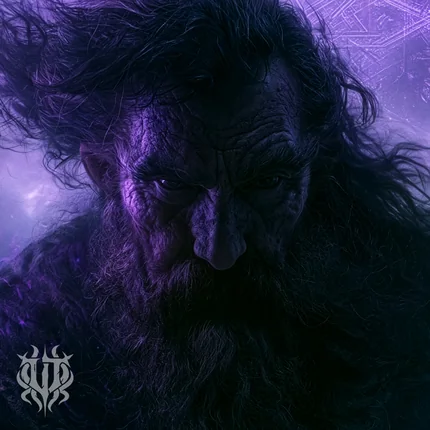
The Key and the Gate is a dark metal retelling of The Dunwich Horror, following Wilbur Whateley’s doomed search for forbidden knowledge and the power of Yog-Sothoth.
References
- The Nameless City — original text
The fictional narrative is evidence for what the story says, not proof of events in the real world.
- The Hound — Unspeakable Tales ebook
The fictional narrative is evidence for what the story says, not proof of events in the real world.
- The Festival — Unspeakable Tales ebook
The fictional narrative is evidence for what the story says, not proof of events in the real world.
- The Call of Cthulhu — Unspeakable Tales ebook
The fictional narrative is evidence for what the story says, not proof of events in the real world.
- The Dunwich Horror — Unspeakable Tales ebook
The fictional narrative is evidence for what the story says, not proof of events in the real world.
- History of the Necronomicon — original text
The fictional narrative is evidence for what the story says, not proof of events in the real world.
- H. P. Lovecraft Archive — fiction in composition order
Composition dates; question marks and ranges retain the source uncertainty.
- H. P. Lovecraft Archive — fiction in publication order
First publication dates and venues; issue dates can differ from actual release dates.
- H. P. Lovecraft Archive — History of the Necronomicon data page
Lists November 1937; the Archive’s general publication chronology instead gives 1938. The discrepancy is retained rather than silently resolved.
- At the Mountains of Madness — original text
The fictional narrative is evidence for what the story says, not proof of events in the real world.
- The Dreams in the Witch House — original text
The fictional narrative is evidence for what the story says, not proof of events in the real world.
- Lovecraft’s letters on the invention of the Necronomicon
Selected letters identifying the invented author, book and shared literary practice.
- Robert W. Chambers — The King in Yellow (1895)
Public-domain transcription of the collection which omits In the Court of the Dragon. For that story and the original contents consult the separately cited 1895 text and Library of Congress scans.
At a glance
H. P. Lovecraft
The Hound · written September 1922; published February 1924
Abdul Alhazred
Al Azif
Circa 730 · Damascus
Arabic → Greek → Latin; fragmentary English version
Miskatonic University Library, Arkham
Invented book; surviving passages occur inside separate stories