

Dunwich
Dunwich is the isolated Massachusetts township in which the Whateley family’s connection with Yog-Sothoth produces the catastrophe of The Dunwich Horror. Its village, scattered farms, stone-crowned hills and concealed routes make the landscape an active part of both the mystery and the effort to stop it.
5 min read · 1,008 words
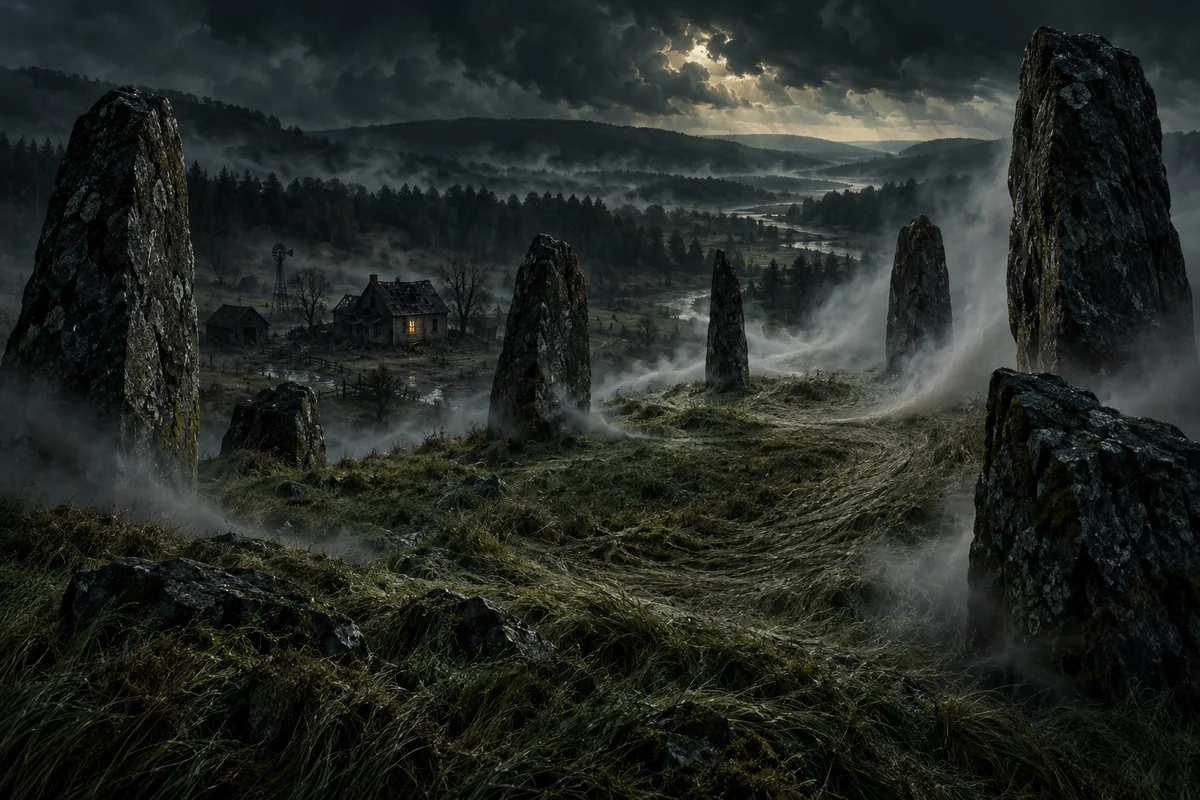
Approach to the township
The story introduces Dunwich through a road that takes a traveler away from more familiar country into a district of unusually steep hills and unsettling vegetation. The upper Miskatonic winds among the heights. A covered bridge leads toward the village below Round Mountain, where old gambrel-roofed houses decay and a former church contains the local store.
Sources: [1]
The route establishes isolation through experience rather than a precise coordinate. Roads narrow, hills enclose the traveler and signs of ordinary habitation become sparse. The opening narrator also speaks from after the 1928 catastrophe, when information has been suppressed. The reader enters a place already described through the effects of a history not yet fully told.
Families and the rhetoric of decline
Whateleys and Bishops are among the district’s old families. Some branches retain social standing and send sons to Harvard or Miskatonic; others are represented as living in poverty and disrepute. The story does not make the township a single household or give every person the same role in the Whateley scheme.
The opening description uses the language of degeneration, heredity and contempt for rural inhabitants. Those are features of Lovecraft’s narrative perspective and historical prejudices, not neutral measurements of an actual population. Within the plot, residents nevertheless possess useful local knowledge, communicate warnings and help the visiting scholars understand movements through the countryside.
Local observation is especially important because the danger initially appears in indirect forms: cattle disappear, buildings change, dogs react and noises come from hidden spaces. People who know the ordinary rhythms of the farms can recognize departures from them even without understanding their cause.
Sources: [1]
Hills, stone circles and earlier traditions
Stone formations crown several heights, and Sentinel Hill carries a large table-like stone associated with disturbing reports. Deposits of bones and conflicting explanations of their origin contribute to the district’s reputation. Accounts of subterranean noises and ceremonies make the landscape seem to preserve more than one period of hidden activity.
The Reverend Abijah Hoadley’s sermon of 1747 is one piece of this invented local record. It warns of malign presences close to the village. Such details precede Wilbur’s birth and place the later Whateley activity within a much older atmosphere of rumor and religious fear.
The narrative’s references to Indigenous rites belong to that fictional and prejudiced construction of the region. They should not be mistaken for a documented account of real Pocumtuck religious practice. The story uses competing explanations of the stones and remains to make the township’s past unstable.
Sources: [1]
The Whateley farm
Wilbur Whateley is born on 2 February 1913 in a partly occupied farmhouse four miles from the village and a mile and a half from the nearest dwelling. Lavinia Whateley and her father conceal the circumstances of his paternity. Wilbur grows with extraordinary speed, while the old man supervises his education through unusual books and diagrams.
The house changes as the hidden second child grows. Large sections are altered or closed off, the human inhabitants occupy less space and cattle disappear despite repeated purchases. The family’s repairs are therefore part of the mystery: the building is being adapted to contain a body whose existence the neighbors do not understand.
Old Whateley’s death in 1924 and Lavinia’s later disappearance leave Wilbur responsible for the concealed being. His trips to Arkham and elsewhere in search of a usable Necronomicon formula connect the secluded farm with the wider scholarly world. The township’s isolation does not prevent information from moving across its boundaries.
Sources: [1]
The invisible devastation of 1928
Wilbur dies while attempting to enter the Miskatonic library in August 1928. Without his care, the concealed creature eventually breaks out of the farmhouse. The ensuing destruction moves across fields, vegetation and occupied homes. Its passage can be followed through crushed terrain, enormous tracks, odors and sounds even when the body itself is unseen.
The landscape becomes an evidential surface. Flattened plants show direction, damaged structures show force and telephone reports establish where the catastrophe has reached. Local people are frightened, but their observations are essential to locating the threat. The Horror is not merely a distant rumor by this stage; its physical effects reorganize daily life across the township.
The Bishop household’s destruction makes the danger extend beyond the family that produced it. Whatever private ambitions motivated Old Whateley and Wilbur, other residents now bear the consequences. That expansion from a sealed farmhouse to a threatened district gives the scholars’ intervention its urgency.
Sources: [1]
Armitage’s expedition and Sentinel Hill
Henry Armitage arrives with Warren Rice and Francis Morgan after interpreting Wilbur’s diary. Their preparations combine textual research with equipment needed to make the creature perceptible and to act against it. They follow the evidence through the country toward Sentinel Hill.
The confrontation briefly reveals the being’s appearance to observers and confirms its relationship to the Whateley family. The invocation and response end the immediate threat. Armitage then explains that Wilbur and the creature were twins, with the hidden child inheriting more strongly from their nonhuman father.
The hill is therefore both a place associated with older rites and the site of an effective counteraction. Dunwich’s landscape does not determine that every intervention must fail. Local knowledge, scholarly interpretation and coordinated action produce a limited success, even though they cannot restore the people already killed.
Sources: [1]
Aftermath and relation to the wider Mythos
The opening frame says the incident was suppressed by people concerned with the town and the wider world. Dunwich remains shunned, but outsiders no longer necessarily know why. The gap between a continuing reputation and a concealed explanation is part of the township’s identity after the catastrophe.
Yog-Sothoth is the crucial cosmic connection in this narrative. Dunwich should not be treated as a branch of the Innsmouth cult merely because both stories involve nonhuman ancestry. The Whateley scheme, its books, its fatherhood and the form of the final confrontation are specific to The Dunwich Horror. Linking the two towns thematically is useful; giving them a single invented religious administration would be an unsupported addition.
Sources: [1]
Related music
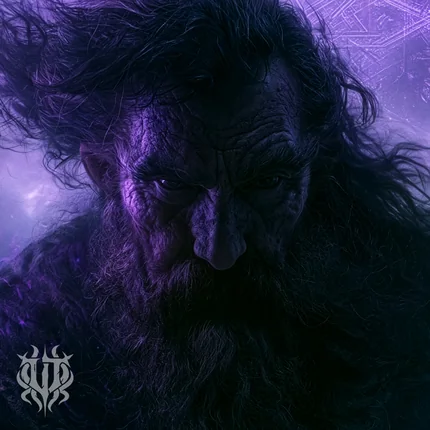
The Key and the Gate is a dark metal retelling of The Dunwich Horror, following Wilbur Whateley’s doomed search for forbidden knowledge and the power of Yog-Sothoth.
References
- The Dunwich Horror — Unspeakable Tales ebook
The fictional narrative is evidence for what the story says, not proof of events in the real world.
At a glance
Fictional Massachusetts township
Upper Miskatonic
Round Mountain
Sentinel Hill
The Whateleys
2 February 1913
1928