

Henry Anthony Wilcox
Henry Anthony Wilcox is the young sculptor whose dreams and clay relief draw Professor Angell back to the Cthulhu material in The Call of Cthulhu. He experiences the influence as an artist rather than as a known cult member. The images he makes become evidence because they correspond with objects and testimony whose history he apparently does not know.
5 min read · 858 words
The artist in Providence
Wilcox studies sculpture at the Rhode Island School of Design and lives in the Fleur-de-Lys Building on Thomas Street. He comes from a family known to Angell but has become socially isolated through his eccentricity and unconventional artistic interests.
The narrative describes him through observers who find his manner affected or difficult. Those judgments should be distinguished from the more important question of whether his account is sincere.
Thurston eventually accepts his artistic ability and honesty even while retaining personal reservations about him. The story does not require the witness to become socially agreeable before his evidence can matter.
The first dream and the clay relief
Following an earthquake tremor, Wilcox dreams of enormous stone cities with unfamiliar inscriptions and a disturbing mental call. He finds himself working on a relief that gives physical form to part of the experience.
The clay object is small and unmistakably recent. It depicts a strange winged, tentacled figure against a suggestion of immense architecture, with signs that Angell cannot identify through ordinary comparison.
Its freshness is significant. The object is not offered as an ancient artifact found in the ground. It becomes puzzling because a new work appears to reproduce features associated with an older and hidden tradition.
The approach to Angell
Wilcox visits the professor on March 1, 1925, seeking help with the unfamiliar signs. Angell initially responds skeptically, then becomes intensely interested when the dream’s sounds and forms recall Legrasse’s earlier material.
The professor questions him about secret cults and offers assurances of silence. Wilcox does not understand why his account has prompted those questions.
Once Angell accepts that the sculptor is ignorant of the tradition, he asks for continuing dream reports. The relationship shifts from attempted identification of an object to observation of a recurring experience.
The recurring city
Subsequent dreams return to immense, wet stone architecture and an insistent communication that is difficult to describe as ordinary speech. The names Cthulhu and R’lyeh recur in the attempt to render its sounds.
Wilcox later tells Thurston that the city’s geometry feels wrong. This impression becomes especially important when compared with Johansen’s independent account of physical structures at sea.
The parallel does not mean Wilcox consciously understands the city’s history. His role is to receive and represent impressions whose wider meaning must be assembled by others.
Illness from March 23 to April 2
Wilcox’s condition intensifies into an episode treated as illness. He alternates between unconsciousness and delirium, and his speech includes references to an enormous moving being.
Angell follows the case through Dr. Tobey. The reports contribute details to the professor’s archive, but they are filtered through medical observation and later recollection rather than written by Wilcox during the episode.
The abrupt recovery on April 2 removes the strange dreams as well. Wilcox cannot explain what happened during the interval, leaving the dates more useful to the investigation than any coherent retrospective account from him.
Thurston’s suspicion and visit
When Thurston first reads Angell’s papers, he suspects that Wilcox has manipulated an elderly scholar. He travels to Providence intending to test or rebuke the artist.
Conversation changes that judgment. Wilcox appears genuinely ignorant of the cult’s history, and the disturbing imagery continues to shape his work without a clear conscious source.
Thurston still considers an ordinary explanation through forgotten reading or indirect exposure. The visit removes deliberate fraud as his preferred account without immediately making him accept a supernatural cause.
Art as surviving evidence
The relief and later sculpture preserve impressions that Wilcox can no longer fully recover through memory. They turn a passing dream into something another person can examine and compare.
This is a distinctive form of evidence. The work remains an artistic representation, with stylization and incomplete detail, yet its recurring features can be set beside the Louisiana image and the maritime account.
The story’s investigation depends on that intermediate status. The sculpture is neither a photograph of R’lyeh nor a meaningless invention detached from the other records.
Sensitivity without initiation
Angell’s broader inquiry finds the most suggestive dream reports among artists and poets. Wilcox is the most developed individual example, but he is not presented as the only person affected.
The narrative connects sensitivity with reception of the disturbance, not with proven moral corruption or voluntary worship. Wilcox’s ignorance of the cult is essential to the correspondence’s evidentiary force.
His story consequently belongs beside the cult’s history without being absorbed into its membership. The same influence can reach a deliberate worshipper and an uninformed dreamer in different ways.
What is known of his later fate
Thurston leaves the artist on friendly terms and expresses confidence in his future work. The original tale does not narrate Wilcox’s eventual death, a later initiation or a return to R’lyeh.
His continuing importance lies in the object and reports already preserved. They remain part of the archive through which the narrator reaches his final understanding.
A biography should stop at that evidentiary boundary rather than turning the character into a participant in later events supplied by unrelated adaptations.
Related music
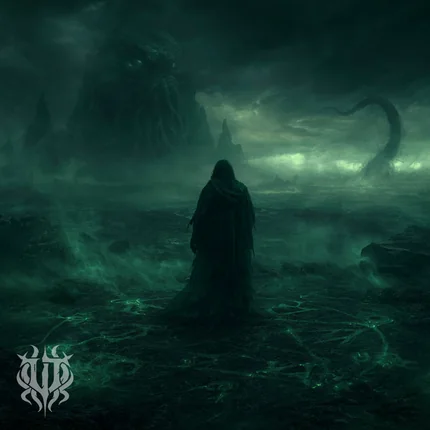
The Dead But Dreaming is a dark folk metal song inspired by The Call of Cthulhu, evoking R’lyeh, forbidden worship and the ancient dream beneath the sea.
References
- The Call of Cthulhu — Unspeakable Tales ebook
The fictional narrative is evidence for what the story says, not proof of events in the real world.
At a glance
The Call of Cthulhu
Sculptor; Rhode Island School of Design
Fleur-de-Lys Building, Thomas Street, Providence
March 1, 1925
March 23–April 2, 1925
Not established; Angell and Thurston accept his ignorance of its lore
Dream-inspired clay bas-relief