

Francis Wayland Thurston
Francis Wayland Thurston is the Boston narrator who assembles the evidence in The Call of Cthulhu. His investigation begins with the papers of his grand-uncle George Gammell Angell and expands through interviews, travel and Johansen’s maritime manuscript. He does not directly see Cthulhu. His terror comes from recognizing that independent records appear to describe different parts of the same event.
5 min read · 1,035 words
Heir and executor
Angell’s death gives Thurston responsibility for sorting a substantial scholarly archive. He moves the papers to Boston and expects to prepare useful material for eventual publication.
A locked box interrupts that routine task. Inside are a clay relief, notes about the Cthulhu cult and records of dreams and unusual events.
Thurston initially regards this material as a possible lapse in an elderly scholar’s judgment. The investigation begins with an attempt to protect an intellectual reputation and explain an anomaly within a familiar body of work.
The skeptical explanation
The connection between Wilcox’s sculpture and the earlier cult account seems too extraordinary to accept immediately. Thurston suspects that the artist learned the story indirectly and used it to manipulate Angell.
He also questions the professor’s dream survey because the original responses have not survived in the box. A digest could reflect selective reporting or leading questions.
These objections are part of the narrative’s evidentiary structure. The final conclusion is reached against alternatives that Thurston explicitly considers, rather than through unqualified belief from the first page.
The visit to Wilcox
In Providence, Thurston finds an artist whose sincerity changes his estimate of the case. Wilcox seems genuinely unaware of the cult’s history, even though its forms continue to affect his work.
Thurston still considers forgotten exposure as a possible ordinary explanation. Accepting honesty does not immediately mean accepting supernatural transmission.
The interview nevertheless preserves an important independence between the dream material and the earlier police evidence. That independence becomes harder to dismiss as the inquiry expands.
New Orleans and the historical investigation
Thurston interviews Legrasse, other participants in the raid and surviving prisoners. He examines the seized image and confirms details preserved in Angell’s notes.
At this stage, he imagines that discovering the origins of an unknown religion could establish his scholarly reputation. Curiosity and ambition remain stronger than fear.
Castro is already dead, so the principal doctrinal account cannot be tested through a fresh interview. The investigation is cumulative, but it also repeatedly arrives too late to recover a key witness.
The accidental newspaper discovery
While visiting a museum contact in Paterson, New Jersey, Thurston notices an old Australian newspaper used beneath stored mineral specimens. An image in the report resembles the object from Legrasse’s case.
The article describes the rescue of the Alert and identifies Johansen as the surviving sailor. What had become a largely historical investigation suddenly acquires a recent maritime connection.
The discovery is accidental, but its importance depends on prior work. Someone unfamiliar with the earlier images could have overlooked the same piece of shelf paper. Correlation makes the ordinary fragment consequential.
Following the maritime trail
Thurston travels through New Zealand and Australia, seeking the yacht, the image and Johansen. He examines the maritime idol in Sydney and learns that the sailor has returned to Norway.
The journey establishes material correspondences without giving him direct access to the island. He sees a vessel that has resumed ordinary commercial existence and an object preserved by a museum, both detached from the event he is trying to reconstruct.
These encounters intensify the difference between public normality and private interpretation. Objects can return to familiar settings while retaining implications that only the investigator’s assembled evidence makes visible.
Johansen’s widow and manuscript
In Norway, Thurston learns that Johansen has died. He persuades the widow to let him take the English manuscript her husband left, presenting himself as connected with its supposed technical subject.
Reading it supplies the missing direct encounter. The city, the emergence of the being and the desperate escape make the dreams, images and doctrine appear mutually confirming.
Thurston’s method is now almost entirely comparative. He has traveled widely, but the central event remains something experienced by another person and known through a document.
Dates as the final connection
The timing of the voyage aligns with Angell’s dream records. The disturbance intensifies when the sailors encounter the emerged city and ends around the storm associated with its disappearance.
For Thurston, these correspondences transform the case from a strange cult history into evidence of a cosmic event affecting people at great distances.
The inference remains his reconstruction from separate sources. It is stronger within the story because the participants did not all possess the same information, but it is not presented as a controlled experiment conducted by a single observer.
Suspicion of deliberate deaths
Thurston reconsiders both Angell’s death and Johansen’s. He fears that each man was removed because of knowledge that might expose the cult or the beings it serves.
His account draws attention to disturbing circumstances and parallels, but does not demonstrate a precise murder method. It also notes that Legrasse and his men have apparently survived without interference.
The suspicion makes him anticipate his own death. The story’s framing identifies him as deceased, while leaving the cause unstated. It would be inaccurate to supply a fully narrated assassination where the text gives a fearful prediction and a later absence.
The archive he hopes will remain unread
Thurston places Johansen’s manuscript with Angell’s notes and adds his own account. He hopes that future executors will prevent the material from reaching another reader.
This decision repeats the problem he attributes to Angell: the desire to preserve or explain knowledge conflicts with the fear that linking it may endanger someone else.
The found-document structure makes the contradiction unavoidable. The story exists because the record survives, even though its narrator wishes that no one would repeat the act of synthesis that produced it.
The narrator’s limits and prejudices
Thurston’s account is shaped by class, racial and cultural assumptions that repeatedly distort his descriptions of other people. Those attitudes are part of the text’s historical construction, not neutral evidence that unfamiliar communities are dangerous.
His distinctive narrative role is the act of connection. Unlike Johansen, he does not escape a pursuing body; unlike Wilcox, he does not chiefly receive dreams. He makes scattered information meaningful and discovers that the meaning changes his relation to the world.
The result is an investigator whose final knowledge is broader than that of any one source, but whose account still contains inference, selective testimony and unresolved questions.
Related music
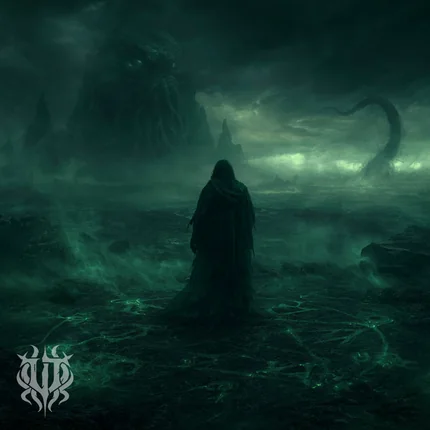
The Dead But Dreaming is a dark folk metal song inspired by The Call of Cthulhu, evoking R’lyeh, forbidden worship and the ancient dream beneath the sea.
References
- The Call of Cthulhu — Unspeakable Tales ebook
The fictional narrative is evidence for what the story says, not proof of events in the real world.
At a glance
The Call of Cthulhu
Boston
Grand-nephew, heir and executor of George Gammell Angell
Compiler, traveler and first-person investigator
None
Gustaf Johansen’s manuscript
Deceased when the papers are presented; cause not stated