

Elder Gods
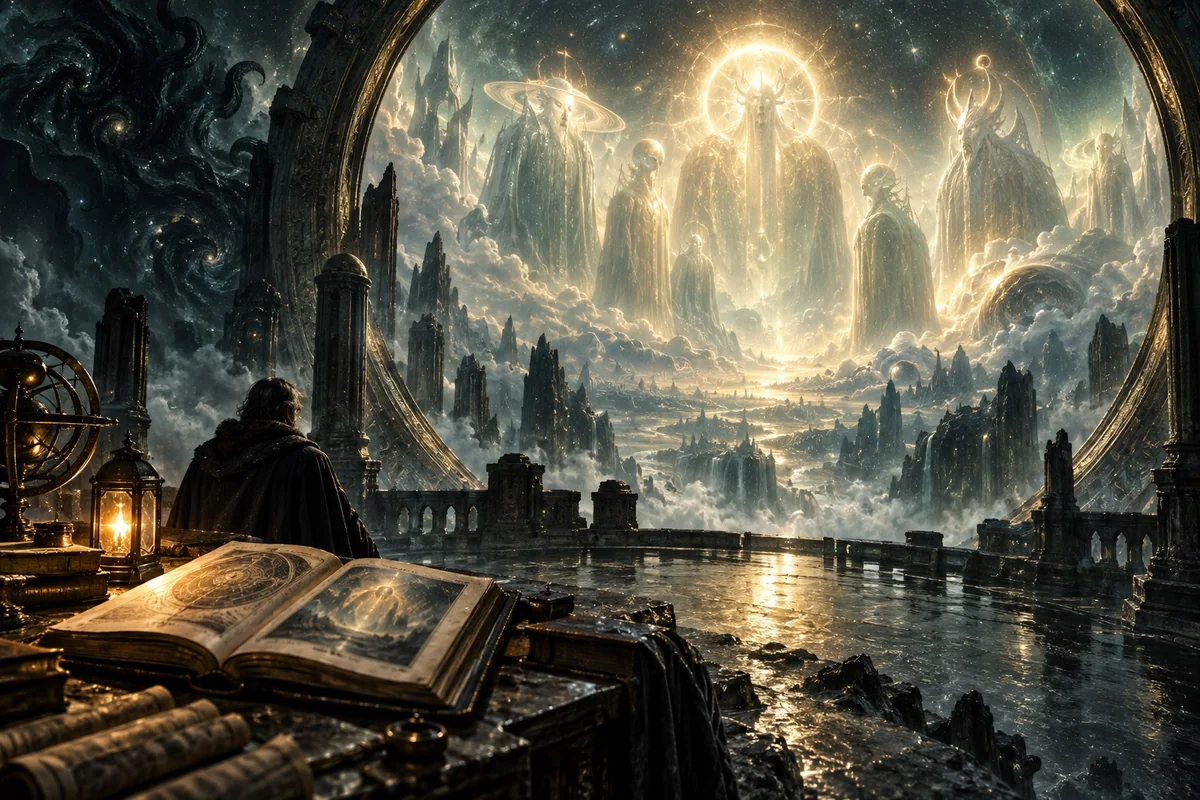
The Elder Gods are especially important in August Derleth’s version of the Mythos, where they oppose and restrain destructive cosmic powers. The term should be read through its individual sources: it is not interchangeable with Lovecraft’s Elder Things, the Dreamlands’ Great Ones, or every ancient being who occasionally helps a human. The Horror from the Depths gives a particularly explicit example of divine conflict and intervention.
5 min read · 981 words
A tradition with changing names
Derleth's stories repeatedly distinguish powers hostile to humanity from older opponents capable of containing them. The labels are less consistent than that broad opposition. Joseph Morales's comparison records shifts in the meanings of Elder Gods, Great Old Ones and Ancient Ones across the stories.
For example, Great Old Ones can designate the protective side in The Lair of the Star-Spawn and The Seal of R'lyeh, although other stories use it for hostile beings. A name by itself is therefore insufficient to assign an entity to a fixed moral class.
The account found by Professor Holmes
In The Horror from the Depths, preparations for Chicago's World's Fair disturb remains at the bottom of Lake Michigan. Professor Jordan Holmes examines pieces of a supposedly fossilized organism, which revive and escape from the museum.
His search through old books leads him to a history of conflict between cosmic evil and the Elder Gods. The Necronomicon, as used in this Derleth–Schorer story, helps organize references scattered through other volumes. Hostile powers had come to Earth, been defeated and been confined in distant regions or beneath the waters.
The narrative names powers such as Cthulhu, Hastur and Yog-Sothoth in the hostile tradition. That account belongs to this particular story's fictional scholarship. Its presence in a book called the Necronomicon does not establish that Lovecraft supplied the same passage in his own fiction.
Sources: August Derleth and Mark Schorer — The Horror from the Depths (1940)
The testimony of Clithanus
A second important source within the story is a volume of confessions attributed to the monk Clithanus. It describes an earlier release of destructive beings and a response by holy men who employed power originating with the Elder Gods.
The creatures spread both bodily destruction and an influence that induces violence and moral degradation among people. Their defeat depends on sacred star-shaped objects and an invocation, rather than on ordinary weapons alone.
This combination gives the conflict a strongly moral form. The hostile beings do not merely occupy a habitat humans happen to enter; their presence corrupts human conduct. The opposing power can be called upon to defend the world.
Sources: August Derleth and Mark Schorer — The Horror from the Depths (1940)
The star-shaped stones
Holmes and the narrator initially fail to identify the objects described in the old account. The clue arrives after chief engineer Tennant survives an attack that kills the men accompanying him. A pale green stone cut into a five-pointed star is found in his pocket.
Tennant had taken it from a group brought up by the dredge. The stones had apparently lain in an arrangement on the lake floor. Holmes concludes that dredging broke the pattern that had kept the creatures confined.
The investigators recover the other stones and find no inscriptions. Their power is associated with their form and arrangement, together with the invocation. This particular description should be preserved instead of automatically adding an eye design, rune or symbol from a different version of the Elder Sign.
Sources: August Derleth and Mark Schorer — The Horror from the Depths (1940)
The intervention over Lake Michigan
Holmes and the narrator arrange the stones into a large five-pointed figure on a barge over the disturbed location. The largest stones mark its points. Holmes recites words that command the hostile beings to return below the waters in the name of their old adversaries.
The stones begin to glow, wind and strange sounds arise, and the narrator loses consciousness. Holmes later describes enormous fiery columns and destructive rays descending upon the lake. The narrative ultimately identifies this intervention with the Elder Gods.
The outcome exceeds the investigators' original plan. Instead of merely restoring imprisonment, the power destroys the local brood. The conclusion presents an actual intervention within the story, even though the narrator's immediate experience of its full manifestation is incomplete.
Sources: August Derleth and Mark Schorer — The Horror from the Depths (1940)
Human action and divine assistance
The episode does not reduce the human protagonists to passive spectators. They compare sources, recognize the significance of the stone, recover the scattered objects and carry out a dangerous operation on the lake.
Their success nevertheless depends on a power beyond their own means. A machine-gun attack has already failed, while the invocation and stones create a connection to the beings capable of defeating the threat.
This structure offers a form of rescue that differs from the more limited survivals in many Lovecraft stories. Its rules should be attributed to the Derleth–Schorer narrative rather than used to guarantee salvation throughout the entire Mythos.
Sources: August Derleth and Mark Schorer — The Horror from the Depths (1940)
Elder Gods and Elder Things
At the Mountains of Madness describes the star-headed organisms now commonly called Elder Things through anatomy, archaeological records and a long history of civilization. They build cities, create or develop forms of life, struggle with rival beings and experience decline.
Their name and antiquity do not make them members of the rescuing group in The Horror from the Depths. Dyer's eventual recognition of them as fellow rational beings is a response to their circumstances and actions, not a revelation that they are benevolent guardians of humanity.
Keeping the terms separate avoids one of the most consequential confusions in a Mythos reference work: a described civilization should not acquire the powers and moral office of a differently named divine coalition merely through a shared adjective.
Sources: At the Mountains of Madness — original text, August Derleth and Mark Schorer — The Horror from the Depths (1940)
Nodens and the Dreamlands
The Dream-Quest of Unknown Kadath gives Nodens a role in the struggle involving Randolph Carter, night-gaunts and the powers associated with Nyarlathotep. The Great Ones and the Other Gods also occupy distinct roles in that dream narrative.
An act of assistance or a conflict with a hostile power can invite later classification, but it does not by itself reproduce the system of sacred stones, imprisonment and divine rescue found in the Chicago story.
This encyclopedia consequently keeps Nodens's original appearances, the Dreamlands' terminology and later moral classifications visible as separate layers. Readers can follow the connections while still seeing which text supports each claim.
Sources: The Dream-Quest of Unknown Kadath — original text, August Derleth and Mark Schorer — The Horror from the Depths (1940)
Related music
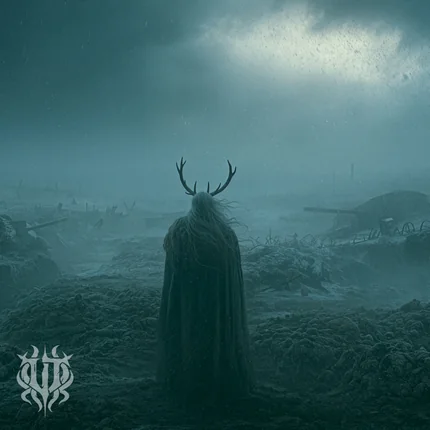
The Dreamkeeper is a dark metal journey into the Dreamlands, inspired by Nodens, the ancient guardian who watches over the boundary between dreams and the unknown.
References
- Joseph Morales — Elder Gods and Great Old Ones
Comparison of terminology in individual Derleth stories; distinguishes dates of writing from publication.
- August Derleth and Mark Schorer — The Horror from the Depths (1940)
The story’s moral cosmology is attributed to Derleth and Schorer, not retroactively to Lovecraft.
- At the Mountains of Madness — original text
The fictional narrative is evidence for what the story says, not proof of events in the real world.
- The Dream-Quest of Unknown Kadath — original text
The fictional narrative is evidence for what the story says, not proof of events in the real world.
At a glance
August Derleth and collaborators
The Horror from the Depths, with Mark Schorer
Strange Stories, October 1940
Opponents of destructive cosmic powers
Varies by story and author
Elder Things; Great Ones; Other Gods