

Lavinia Whateley
Lavinia Whateley is the mother of Wilbur and his concealed twin in The Dunwich Horror. Her early involvement in the family’s inherited lore gives way to fear and exclusion as Wilbur takes control, ending in an unexplained disappearance in 1926.
4 min read · 801 words
Family and isolation
Lavinia lives with her father in a decaying farmhouse several miles from Dunwich village. She is thirty-five when Wilbur is born in February 1913. The account describes her as a woman with albinism and a physical disability, but embeds those features in a vocabulary of disgust and hereditary decline. A factual account of the character needs to distinguish her circumstances from the narrator’s prejudicial judgments about them.
Her childhood has included violence: her mother died under unexplained violent circumstances when Lavinia was twelve. The text does not identify the killer or provide a resolved investigation. The death contributes to the farmhouse’s reputation and to the atmosphere in which she grows up, without licensing a detailed invented account of the event.
She has never attended school. Her knowledge comes from fragments of lore taught by her father and her attempts to read the deteriorating books inherited by the family. Lack of formal education therefore does not mean complete absence of learning. Her intellectual world is narrow, secretive and shaped by the household rather than by public institutions.
The hills and inherited knowledge
Lavinia wanders in the hills, including during thunderstorms, and occupies herself with imaginative speculation and unusual pursuits. After Wilbur’s birth she carries him on these excursions. Later observations place mother and child near the ritual landscape around Sentinel Hill.
Her father claims that she has read and witnessed things the neighbors know only through stories. His remarks about her relationship and the child’s father suggest that the family understands the birth through its own ritual framework. They are not a complete eyewitness account of a marriage ceremony or of contact with Yog-Sothoth.
The distinction matters because Lavinia is neither fully explained by the villagers’ gossip nor given a sustained narrative in her own voice. Readers receive her through hostile description, a few observations and brief reported speech. Her precise understanding of each stage of the project remains incompletely documented.
Motherhood and the concealed twin
At Wilbur’s birth Lavinia appears proud of him and speaks of exceptional powers and a significant future. The child develops with impossible speed. She accompanies him during his early years while her father provides books and instruction and enlarges the spaces used for the household’s secret work.
Armitage’s final explanation establishes that the invisible being is another child from the same birth. Lavinia is therefore the mother of both Wilbur and the creature whose escape devastates Dunwich. This is a retrospective disclosure: the village does not initially know that a second child is being raised out of sight.
The primary story does not narrate the circumstances of conception directly or give Lavinia’s full account of them. A biography should not add a detailed scene of courtship, coercion or a ritual encounter merely because later retellings may choose to dramatize one. The established relationship and the missing experience are separate questions.
Fear and exclusion
As Wilbur grows, his treatment of Lavinia becomes contemptuous. Eventually he forbids her to accompany him to the hills on the traditional ritual nights. A person who had carried him through that landscape is now excluded from activities occurring there.
In 1926 she tells Mamie Bishop that she fears him. Her statement distinguishes things she already knows from things he is now doing beyond her understanding. That distinction is one of the strongest indications of change within the household: she is no longer simply the proud mother predicting his future at the beginning of the account.
The scene also limits interpretations that describe every Whateley as pursuing an identical, continuously informed plan. Lavinia has participated in the family’s occult life, but the later evidence includes uncertainty and fear. The narrative does not establish how much she knows about the final intended catastrophe or whether she would have supported every step toward it.
Disappearance at Halloween 1926
On Halloween the hill noises intensify and a fire appears on Sentinel Hill. Unseasonably late whippoorwills gather around the dark farmhouse and produce a prolonged disturbance before leaving at dawn. Lavinia is never seen again.
The timing and the story’s associations between birds and dying people make the event ominous. Neighbors later suspect that Wilbur knows something about her disappearance. However, the account supplies neither a recovered body nor an eyewitness identification of a murderer. Saying that Wilbur or his brother definitely kills her would convert suspicion into a fact the narrative has not shown.
Afterward Wilbur moves his belongings into outbuildings and makes further room inside the farmhouse. Lavinia’s absence leaves him as the visible human-presenting member of the household, while the other child continues to grow in concealment. Her disappearance thus changes the domestic arrangement even though its exact circumstances remain unresolved.
Related music
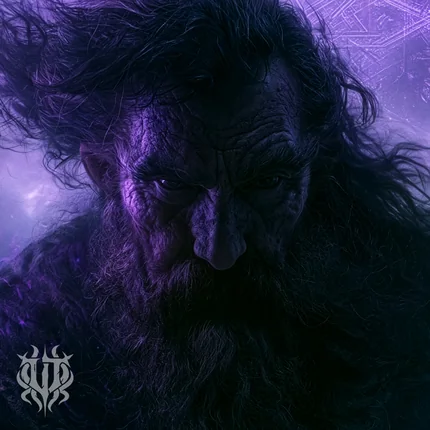
The Key and the Gate is a dark metal retelling of The Dunwich Horror, following Wilbur Whateley’s doomed search for forbidden knowledge and the power of Yog-Sothoth.
References
- The Dunwich Horror — Unspeakable Tales ebook
The fictional narrative is evidence for what the story says, not proof of events in the real world.
At a glance
The Whateley farmhouse near Dunwich
35
Wilbur Whateley and his unnamed twin
No formal schooling; inherited lore and family books
Halloween 1926
Disappears; exact circumstances are not witnessed in the story