

Robert M. Price
Robert M. Price, born in 1954, is an American writer, critic and editor associated with Crypt of Cthulhu and numerous Mythos anthologies. His literary work combines historical inquiry, interpretation, humor and new fiction. He is also a writer on religion; he must not be confused with E. Hoffmann Price, Lovecraft’s contemporary and collaborator.
4 min read · 807 words
Religious study and a parallel literary career
Price's autobiographical account describes an early religious commitment followed by sustained study and changing beliefs. He received doctorates from Drew University in systematic theology in 1981 and New Testament in 1993. These are part of the background of the same person who edited Lovecraftian fiction, not a second writer sharing his name.
His literary and religious publications nevertheless require separate evaluation. Training in textual interpretation can inform a critical approach without making an argument about a fictional mythology equivalent to a historical finding about an actual religion. The distinction is particularly relevant to work that deliberately plays with theological language.
Sources: Robert M. Price — Biography
Discovering Lovecraft through the paperback revival
In a 2004 retrospective, Price placed his discovery of Lovecraft in 1967, amid enthusiastic reading of revived pulp fiction. He remembered Lancer paperbacks leading to Arkham House collections and then to associated writers. Tales of the Cthulhu Mythos became a formative reading experience.
He later submitted work to Lovecraft Studies and entered the circle of researchers and fans associated with Providence. This account describes a movement from reader to participant: collecting books, corresponding, attending gatherings and eventually producing publications for other readers.
Sources: Robert M. Price — The Hyde Side Biography, September 2004
Crypt of Cthulhu and the small-press conversation
Crypt of Cthulhu began in 1981. The Lovecraft Archive records its original run through 2001 and its relaunch in 2017. Its seasonal issue dates use an ecclesiastical calendar, with labels such as Candlemas, Lammas and Hallowmas rather than a straightforward monthly sequence.
The Archive's index distinguishes articles, contributors, issue themes and other bibliographic information. It also identifies collections that reprinted material from the journal, including The Horror of It All and Black Forbidden Things.
The magazine matters as a meeting place for different forms of engagement. A journal can sustain short arguments, recoveries and exchanges that do not fit a conventional monograph. Its issue-level record is consequently important when tracing an idea that later appears in a book.
From fan publication to thematic anthology
Price recalled that fiction issues of Crypt helped lead to anthology commissions. Phil Rahman's invitation at the Lovecraft centennial gathering developed into Tales of the Lovecraft Mythos. A subsequent Chaosium project addressed readers arriving at the fiction through roleplaying games.
The proposed organizing units included a deity, a forbidden book or a location. That approach gave readers a route from a familiar game reference back through the literary material associated with it. It also made the editor's choice of connections central to the reading experience.
Sources: Robert M. Price — The Hyde Side Biography, September 2004
The Hastur Cycle and the history of a name
The Hastur Cycle, published by Chaosium in 1993, is an early example of Price's thematic editorial work. Its organizing subject is the development of a Mythos element across stories, rather than a single author's complete output.
The format is useful precisely because shared names can change meaning. A sequence of texts can show the movement from an earlier usage to a later interpretation, including connections that were never present in the first work. An anthology can make that history readable without establishing that every contributor intended one consistent fictional cosmology.
For reference purposes, the collection is an editorial pathway. The individual story still supplies the evidence for what its author wrote. The category on the cover tells us why the editor brought those texts together.
The range of the editorial bibliography
Price's own list records The Shub-Niggurath Cycle in 1994, The Azathoth Cycle and The Dunwich Cycle in 1995, and The Cthulhu Cycle and The Necronomicon in 1996. It also lists author-centered collections, including Robert Bloch's Mysteries of the Worm and Henry Kuttner's The Book of Iod.
These two methods of organization serve different interests. One follows a recurring subject across authors; the other makes a writer's contribution easier to survey. Price also published criticism addressing such topics as the relation between Lovecraft and Derleth, fictional books and the sources of particular motifs.
The online bibliography is explicitly incomplete. Its listed publications are useful evidence, but its endpoint should not be mistaken for the end of his activity.
Fiction and posthumous collaboration
Price is also a fiction writer. His bibliography includes stories, collaborations and continuations alongside criticism, while his publisher biography identifies work in both horror and heroic fantasy. The categories overlap in interests without being the same kind of writing.
The Xothic Legend Cycle credits him as editor and, with Lin Carter, as a contributor to The Strange Doom of Enos Harker. That example shows why a name on a collected volume can indicate more than one role. Selection, explanatory material and the completion of a fictional text are separate contributions, even when undertaken by the same person.
His place in the Mythos is therefore both interpretive and creative. The most informative reading follows the particular essay, anthology or story instead of assigning every activity a single label.
Sources: Cushing Publishing — Robert M. Price, Chaosium — The Xothic Legend Cycle, authorized preview
Related music
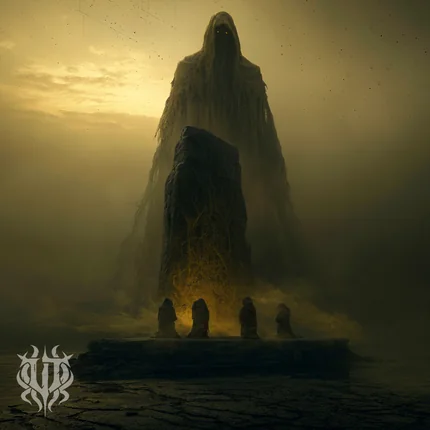
The King In Yellow is a dark metal journey into Carcosa, where Hastur’s influence spreads through dreams, madness and the cursed symbol that can never be forgotten.
References
- Robert M. Price — Biography
Historical autobiographical account; dated references to current positions are not treated as current appointments.
- Robert M. Price — The Hyde Side Biography, September 2004
- H. P. Lovecraft Archive — Crypt of Cthulhu
- The Hastur Cycle — publication history
- Robert M. Price — Literary Publications
The page explicitly notes that the list is not current; used for listed works, not a complete career total.
- Cushing Publishing — Robert M. Price
- Chaosium — The Xothic Legend Cycle, authorized preview
Six-page sample: title, credits, copyright history and contents; not the complete stories.
At a glance
Born 1954
Scholarship
1954
Crypt of Cthulhu, founded 1981
The Hastur Cycle (1993)
Not E. Hoffmann Price (1898–1988)