

Adolphe de Castro
Adolphe de Castro (1859–1959), also known as Adolphe Danziger, was an author and correspondent whose literary connections included both Ambrose Bierce and H. P. Lovecraft. The Last Test and The Electric Executioner grew from earlier de Castro stories revised by Lovecraft. Their surviving antecedents make his case especially useful for studying how revision changes a story’s scale, vocabulary and authorship.
6 min read · 1,228 words
A career connecting two literary generations
De Castro's long career included poetry, fiction, journalism and writing on religious history. His several forms of name can complicate catalog searches: material appears under Danziger as well as de Castro.
His connection with Ambrose Bierce preceded the Lovecraft revisions. De Castro translated Richard Voss's German story that became The Monk and the Hangman's Daughter; Bierce revised the English rendering. The work appeared serially in 1891 and as a book in 1892. De Castro later published Portrait of Ambrose Bierce in 1929.
This background places him within an existing history of translation, revision and literary reminiscence. He did not begin writing when he approached Lovecraft. The later collaborations joined another experienced author's material to Lovecraft's distinctive manner of developing weird fiction.
The earlier stories and the revised texts
Two antecedents are central: A Sacrifice to Science became The Last Test, while The Automatic Executioner became The Electric Executioner. Robert M. Price included the earlier stories in Black Forbidden Things (1992), explicitly presenting them as material for comparison with Lovecraft's revisions.
That availability changes the question of authorship. Readers need not rely solely on whether a passage sounds Lovecraftian; they can compare the earlier narrative with the later text. A title, plot premise, setting and particular sentence may have different histories within the same published work.
The distinction also prevents two opposite mistakes. Calling the revisions wholly independent Lovecraft inventions erases their starting points, while treating them as unchanged de Castro stories obscures the work of rewriting. The paired versions are evidence of a process, not interchangeable editions of an untouched manuscript.
Sources: Robert M. Price — introduction to Black Forbidden Things
The Last Test: public science and private violence
The Last Test appeared in Weird Tales in November 1928. Its central figure, Dr. Alfred Schuyler Clarendon, gains a medical appointment at San Quentin through James Dalton, an old acquaintance who has become governor. Clarendon's sister Georgina and Dalton retain an affection damaged by the earlier dealings of their families.
The public story concerns a distinguished physician struggling against political interference and misunderstanding. Inside the household, however, experiments consume animals, servants and other unwilling subjects. Surama, Clarendon's sinister assistant and instructor, connects the laboratory with much older knowledge.
The tension between those two accounts gives the tale more than one scale. A prison's administration, a broken engagement and a researcher's reputation remain consequential even as the experiments reveal a threat beyond ordinary terrestrial disease. The cosmic element enters a social and emotional narrative already full of obligations and injuries.
Georgina's recognition of danger also matters. Her loyalty to her brother cannot indefinitely protect the privacy of his work. Seeking outside help becomes a necessary response to a household in which scientific authority has been used to conceal harm.
Sources: The Last Test — original text, The Last Test — publication data
The final experiment and its concealed aftermath
Clarendon prepares to inject Georgina but is interrupted by Dalton and a medical article describing another researcher's achievements. The article breaks through his self-deception. He admits that he never possessed the cure others believed he was developing and injects himself with the substance intended for his sister.
His confession identifies the real black fever as a disease brought from elsewhere by Surama. Clarendon has deliberately spread it while presenting his activity as research. Surama's past remains only partly explained, connected with ancient survivals and knowledge outside ordinary human history.
A fire destroys the clinic, and its remains include Clarendon's skeleton and another that does not fit accepted anatomical expectations. The public continues to honor Clarendon as a medical pioneer, while Dalton and Georgina preserve much of the truth privately.
The ending therefore preserves a gap between commemoration and knowledge. A surviving scientific reputation can be built from selected notes and incomplete testimony. The reader receives an account more terrible than the one available to most people within the story.
Sources: The Last Test — original text
Mythos references within The Last Test
The revised story invokes Nyarlathotep, Alhazred's Azif, Shub-Niggurath, Nug and Yeb, and traditions surrounding Irem and other ancient places. These references expand the background against which Clarendon's experiments are understood.
They do not all have the same narrative status. Surama acts, speaks and participates in the events; several greater powers are named in conversation or recalled through forbidden traditions. A reference to a being is not automatically an appearance by that being.
The story's elaborate medical and geographical language also belongs to fiction. Its imaginary disease and concealed ancient history are part of a supernatural explanation, not a factual account of infection or the cultures mentioned. Their role is to connect a modern research scandal with a much older and less comprehensible order.
Sources: The Last Test — original text
The Electric Executioner: survival through delay
The Electric Executioner, published in Weird Tales in August 1930, follows a company investigator sent to recover papers taken by Arthur Feldon. A railway journey through Mexico places the narrator in a compartment with a stranger who intends to demonstrate a portable electrical execution device on him.
The narrator survives for a time by managing the stranger's attention. Requests to write messages, discuss recognition for the invention and draw the apparatus create small delays. The antagonist's wish to kill competes with his wish to be understood and celebrated.
An improvised appeal to religious language produces a more dangerous response. The stranger, wearing the headpiece himself, becomes entangled with the apparatus, and the device activates. The narrator loses consciousness after witnessing what appears to be a fatal accident.
This middle section works as an enclosed suspense narrative. Its details involve attention, timing and the use of speech under pressure, even before the conclusion makes the physical location of the encounter uncertain.
Sources: The Electric Executioner — original text, The Electric Executioner — publication data
The cave, the carriage and the untested evidence
After awakening, the narrator is told he traveled alone. Feldon has nevertheless died in a mountain cave in circumstances closely resembling the scene in the compartment. Clothes and equipment connect the dead man with the apparent fellow passenger.
Other clues might settle whether objects crossed between the two locations. The narrator instead burns papers without inspecting their writing and avoids asking whether a recovered revolver is his missing weapon. His pencil's altered sharpening remains another uncomfortable trace.
The story does not conclusively choose between the stranger appearing on the train and the narrator's consciousness reaching the cave. Fear helps preserve that uncertainty because the witness refuses the very checks that might reduce it.
Its invented ritual vocabulary includes forms resembling familiar Mythos names. These belong to the tale's fictional occult construction; they should not be treated as reliable accounts of Indigenous Mexican religion. The narrator's prejudices are likewise part of the historical text's perspective.
Correspondence beyond revision work
Letters to Alfred Galpin and Others, edited by S. T. Joshi and David E. Schultz and published in 2020, includes a substantial de Castro correspondence section. The edition's description identifies discussion of revisions, Bierce reminiscence and de Castro's work on early Christianity.
Its appendices also preserve de Castro material and a group of Poe-related acrostics by several writers. These contents place the relationship within conversation, scholarship, memory and occasional verse as well as paid literary work.
The letters are thus a complementary source to the paired stories. Comparing versions reveals textual change; correspondence can illuminate negotiation and intention. Neither should automatically substitute for the other. De Castro's place in the Lovecraft circle is most intelligible when his older literary connections, independent writing and specific revision transactions remain visible together.
Sources: Letters to Alfred Galpin and Others — edition record and contents
Related music
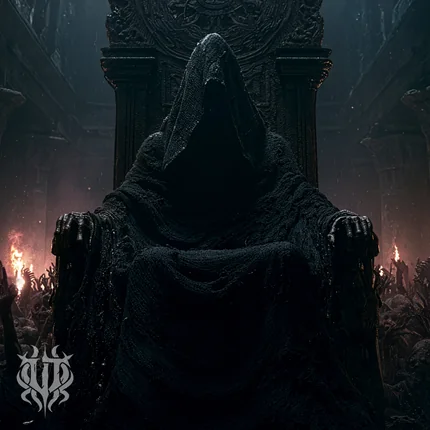
A Thousand Masks is a dark metal song inspired by Nyarlathotep, the Crawling Chaos who walks among humanity, hiding behind countless faces and whispered lies.
References
- Adolphe de Castro — biographical context
- Robert M. Price — introduction to Black Forbidden Things
- The Last Test — original text
The fictional narrative is evidence for what the story says, not proof of events in the real world.
- The Last Test — publication data
- The Electric Executioner — original text
The fictional narrative is evidence for what the story says, not proof of events in the real world.
- The Electric Executioner — publication data
- Letters to Alfred Galpin and Others — edition record and contents
At a glance
Collaborator
1859–1959
A Sacrifice to Science; The Automatic Executioner
The Last Test (1928); The Electric Executioner (1930)
Letters to Alfred Galpin and Others (2020)
Black Forbidden Things (1992), edited by Robert M. Price