

Ambrose Bierce
Ambrose Bierce (1842–probably 1914) was an American writer, journalist, satirist and Civil War veteran whose fiction explores violent death, unreliable perception and the failure of reassuring explanations. His Carcosa and Hastur entered later weird fiction through new uses by Chambers and others, but his own stories range well beyond those borrowed names.
7 min read · 1,396 words
War, journalism and books
Bierce was born in 1842 and served in the Union Army during the American Civil War. He enlisted in 1861 and experienced several years of campaigning. The war became a major subject of his fiction and recollections, alongside the supernatural and his work as a satirist.
A period in Britain in the 1870s produced books under the name Dod Grile. His later reputation includes the fiction collections Tales of Soldiers and Civilians and Can Such Things Be?, as well as the satirical definitions collected as The Cynic’s Word Book in 1906 and The Devil’s Dictionary in 1911. These different forms belong to the same professional career, rather than to a brief preliminary life before the invention of a few Mythos names.
The working journalist
Bierce worked for William Randolph Hearst for twenty-two years. Hired as chief editorial writer at the San Francisco Examiner, he published 469 Prattle columns there between 1887 and 1899. The topical writing made him a powerful and contentious public voice.
After moving to Washington in 1899, he continued to submit work to Hearst newspapers but disagreed with editors about treatment and priorities. Hearst’s purchase of Cosmopolitan in 1905 brought an opportunity for magazine work. The difference between immediate newspaper commentary and a magazine’s slower publication schedule troubled Bierce, who also used the space for fiction.
This publishing history matters because the short stories emerged within a working writer’s varied output. They were not the only activity around which his professional life was organized.
Carcosa and the reversal of perspective
An Inhabitant of Carcosa begins with a narrator who believes his recent illness explains why he is wandering in a strange landscape. He gradually discovers that the apparent wilderness is the remains of his own civilization and that he himself is dead.
The effect depends on a precise division between observation and interpretation. He can see old graves, encounter an unresponsive traveler and notice stars, yet continues to fit those details into a story of recent escape from a sickbed. Recognition comes only when a grave bears his name and he casts no shadow at sunrise.
The ruin of the city enlarges the personal revelation. His death has not simply removed him from familiar society; familiar society has also vanished over a span he cannot measure. A final mediumistic frame identifies the source of the account, changing the reader’s understanding of how it could have been told.
Sources: Ambrose Bierce — Can Such Things Be?
Haïta and the unstable promise of happiness
Haïta the Shepherd offers a different use of the fantastic. A young man tends sheep and worships Hastur until questions about his origin and death unsettle his contentment. A radiant maiden arrives when he turns toward duty, then leaves whenever he tries to question or secure her.
An elderly hermit identifies her as Happiness. His concluding response refuses the consolation of a simple formula: even without Haïta’s mistakes, she might have remained only another instant. The fable values care for others while denying that such care guarantees permanent emotional reward.
Its Hastur is a responsive pastoral deity who protects cities after the shepherd intercedes. The god is not physically described and does not become a hidden monster in the conclusion. The later name’s associations should therefore remain separate from Bierce’s own narrative function.
Sources: Ambrose Bierce — Can Such Things Be?
The Damned Thing and the evidence nobody accepts
The Damned Thing is organized around an inquest into Hugh Morgan’s violent death. William Harker describes hunting with him, observing vegetation move under an unseen presence and then seeing Morgan struggle against an attacker that cannot be clearly seen. The body and clothing bear severe injuries.
The jury rejects Harker’s extraordinary testimony and returns an ordinary animal explanation. Morgan’s diary, which the coroner has withheld from the formal evidence, then gives the reader a longer record of unexplained footprints, obstructed stars and increasing fear. The ending proposes that the creature has a color beyond human vision.
The story does not merely hide a monster. It sets different standards of credibility against one another. Harker has sent his account to a newspaper as fiction because he knows it will seem incredible, yet maintains its truth under oath. The coroner’s management of evidence and the jury’s ridicule prevent the official conclusion from exhausting what the reader has learned.
Sources: Ambrose Bierce — Can Such Things Be?
Invisible presence and the limits of perception
Morgan’s last explanation in The Damned Thing compares the limits of vision with those of hearing. The creature’s invisibility is framed as a limitation of the observer’s senses rather than proof that no material body exists. Its weight, movement and violence remain detectable through effects.
This premise offers a useful comparison with Lovecraft’s From Beyond and The Colour out of Space. Tillinghast proposes senses inadequate to perceive surrounding realities; the colour frustrates attempts to classify an unfamiliar phenomenon through ordinary observation. The stories share a concern with the gap between reality and the human equipment used to know it.
Comparison is not identity. Bierce’s attacker is not named as a shoggoth or the same entity as Lovecraft’s colour. Its speculative explanation also should not be presented as a demonstration that an unseen color would make a real animal invisible in the way the fiction describes.
Sources: Ambrose Bierce — Can Such Things Be?, From Beyond — Unspeakable Tales ebook, The Colour Out of Space — Unspeakable Tales ebook
Lovecraft’s assessment
Supernatural Horror in Literature treats Bierce as an important American writer of the weird while also criticizing what Lovecraft considers unevenness and excessive reliance on journalistic manner. He recognizes both physical and psychological horror within nature and stories that admit the supernatural.
Lovecraft gives particular attention to the atmosphere of The Death of Halpin Frayser, the invisible threat of The Damned Thing and the dangerous act of reading in The Suitable Surroundings. His discussion also notices sardonic humor and the cruelty of disappointed expectation.
These judgments help explain why Bierce mattered to a later horror writer whose style could be very different. Lovecraft was not responding only to invented names. He was also reading methods of withholding, reversal, suggestive evidence and the collision between ordinary presentation and intolerable events.
What Chambers borrowed and transformed
Chambers takes names from more than one Bierce story and places them around The King in Yellow. Carcosa becomes associated with a forbidden play and visionary towers. Hali changes from a cited speaker into the name of a lake. Hastur enters an ambiguous network of references and also appears as a falconer’s name in The Demoiselle d’Ys.
The changes demonstrate why retrospective canon building can be misleading. Bierce’s original Carcosa story contains no Yellow Sign, and his pastoral fable does not describe the city. Their later conjunction belongs to another writer’s imaginative arrangement.
Reading Bierce first therefore does more than identify early references. It restores the different purposes for which those words were originally used: the belated recognition of death in one case, and the briefness of happiness in the other.
Sources: Ambrose Bierce — Can Such Things Be?, Robert W. Chambers — The King in Yellow, Standard Ebooks text
The disappearance and the surviving evidence
Bierce disappeared late in 1913. A letter to Blanche Partington sent from Chihuahua on 26 December discusses his journey through Mexico and ends with an uncertain destination ahead. The Library of America’s account distinguishes that surviving letter from earlier reliance on a secretary’s summary of correspondence.
His subsequent fate is unknown. Death in 1914 is widely considered probable, but neither an exact date nor a demonstrated manner of death can be supplied. Accounts involving a particular battle, execution or suicide remain hypotheses.
The uncertainty is part of his biography, but it should not displace the substantial record of his work. Treating the disappearance as the explanation of every story would replace literary reading with a legend about the author.
Sources: Library of America — An Occurrence at Owl Creek Bridge: biographical introduction
A reading path through the work
An Inhabitant of Carcosa and Haïta the Shepherd make a concise starting pair because their later borrowed names conceal very different original effects. The Damned Thing then adds testimony, institutional judgment and speculation about sensory limits. Together they show several ways in which a brief narrative can make certainty fail.
Bierce’s economy does not make every story simple. The closing disclosure often changes the status of earlier details, encouraging a second reading in which the evidence has become clearer but less comforting. Humor may sharpen that result instead of relieving it.
His place in this encyclopedia is therefore both historical and formal: he supplies words later authors reuse, and he demonstrates narrative structures that remain effective without any shared pantheon. Preserving those two contributions gives a fuller account than treating him only as the inventor of Carcosa and Hastur.
Sources: Ambrose Bierce — Can Such Things Be?
Related music
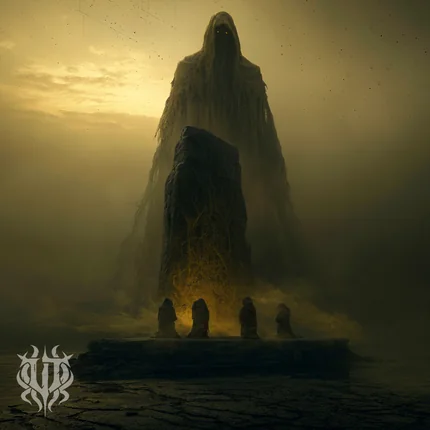
The King In Yellow is a dark metal journey into Carcosa, where Hastur’s influence spreads through dreams, madness and the cursed symbol that can never be forgotten.
References
- Ambrose Bierce — biographical reference
- Library of America — Soldiers and Ghosts
Overview of Hearst employment, Prattle, Washington and the transition to magazine writing.
- Ambrose Bierce — Can Such Things Be?
Public-domain collection, including An Inhabitant of Carcosa, Haïta the Shepherd, The Damned Thing and Moxon’s Master.
- From Beyond — Unspeakable Tales ebook
The fictional narrative is evidence for what the story says, not proof of events in the real world.
- The Colour Out of Space — Unspeakable Tales ebook
The fictional narrative is evidence for what the story says, not proof of events in the real world.
- Supernatural Horror in Literature — original essay
- Robert W. Chambers — The King in Yellow, Standard Ebooks text
Public-domain transcription. Its contents omit In the Court of the Dragon; this wiki uses a separate verified text for that story.
- Library of America — An Occurrence at Owl Creek Bridge: biographical introduction
Introduction discusses the surviving 26 December 1913 letter from Chihuahua and the uncertainty of Bierce’s death.
At a glance
1842
Uncertain; probably 1914
Union Army service in the American Civil War
Journalism, satire, fiction and memoir
The Devil’s Dictionary, 1911
26 December 1913, Chihuahua, Mexico
Carcosa; Hali; Hastur
Earlier writer discussed in Supernatural Horror in Literature