

Other Gods
The Other Gods are the powers beyond earth’s familiar gods whose intervention defeats Barzai and threatens Randolph Carter. Their portrayal develops from an unseen force recognized in a climber’s final cries into the mindless, shapeless powers of the outer void, represented by Nyarlathotep. The sources emphasize overwhelming agency without supplying a complete named membership list.
4 min read · 759 words
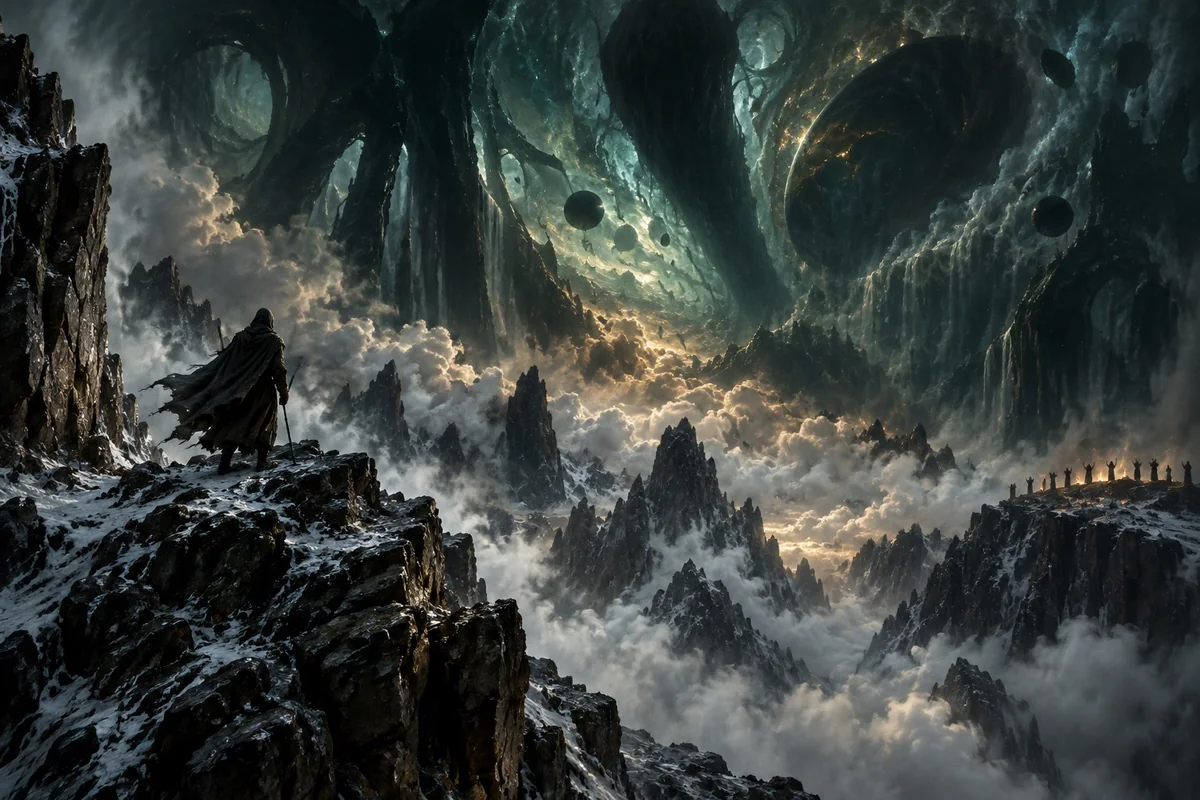
The revelation on Hatheg-Kla
In The Other Gods, Barzai climbs to see the gods of earth and believes his learning has made him their superior. His final discovery is that those comparatively weak beings have protectors he did not adequately anticipate.
Atal hears his identification of the Other Gods and experiences an unnatural pull upward. He does not look at them. Barzai disappears, a strange eclipse is seen from the surrounding settlements, and a huge symbol is later found on the summit.
The story’s evidence is therefore distributed among cries, bodily experience, public celestial signs and a surviving mark. It never interrupts the action to present a definitive visible form for the beings themselves.
Power beyond the earth gods
The distinction explains the tale’s reversal. The earth gods can retreat before human climbers and appear frightened by Barzai, while their guardians impose consequences beyond the scholar’s expectations.
Atal later repeats the warning in The Dream-Quest. Seeking Kadath is dangerous even if the Great Ones themselves can sometimes be surpassed by a clever mortal, because the Other Gods protect them.
The accounts do not describe this protection as the enforcement of a universal moral law. The powers secure particular gods and punish intrusion; their actions should not automatically be read as justice on behalf of all living beings.
Sources: The Other Gods — Unspeakable Tales ebook, The Dream-Quest of Unknown Kadath — original text
The outer void and Nyarlathotep
The Dream-Quest describes the Other Gods as mindless and shapeless powers associated with regions beyond ordinary matter and earthly dreaming. Nyarlathotep is their soul and messenger, able to speak, plan, deceive and assume recognizable forms.
This pairing is significant. The surrounding powers are repeatedly described through lack of mind or stable shape, while the messenger gives their intervention a personal intelligence. His treatment of Carter supplies a humanly legible cruelty that the cosmic background does not express through ordinary dialogue.
Azathoth occupies the central void toward which Carter is ultimately carried. The narrative’s shifting descriptions of that environment do not amount to a neatly enumerated pantheon with a complete administrative hierarchy.
Larvae and the spaces between worlds
During the black galley’s journey and the final shantak flight, Carter encounters or passes among entities described as larvae of the Other Gods. They are blind, mindless and driven by strange hungers, groping in the darkness beyond ordinary terrestrial space.
The word suggests a relationship without explaining a complete reproductive cycle. The text gives no sequence of eggs, larval maturation and adult transformation, and no reliable method of assigning each drifting entity to a named parent.
These passages make the intervening space inhabited and predatory. Travel beyond the familiar world is dangerous not only because of the destination but because of what lies along the route.
The capture of Carter’s expedition
Carter hopes his company of ghouls and night-gaunts can strengthen his position at Kadath. The ghouls have no acknowledged masters, and the night-gaunts serve Nodens rather than Nyarlathotep.
Nevertheless a force captures the whole company and sweeps it into the castle. The narrator explicitly distinguishes lack of lordship from the ability to control beings when required. The expedition’s political independence does not prevent physical subjection.
Once inside, the disappearance of the escort leaves Carter exposed to Nyarlathotep’s performance of authority and apparent assistance. Cosmic power and personal deception work together.
The trap and the limits revealed by escape
Nyarlathotep claims he will spare Carter so that the dreamer can return the truant earth gods to Kadath. His directions instead place Carter on a shantak bound for Azathoth’s realm. The narration identifies the promise as deliberate mockery.
Carter escapes by recognizing the dream and recalling his home. S’ngac points the way, Nodens offers guidance, and the returning light frustrates the pursuing horrors. The incident shows a successful escape in this story, not a generally available formula for defeating the Other Gods.
Nor does Nyarlathotep’s failure imply that the cosmic powers cease to exist. The ending returns him to Kadath and restores the earth gods there, leaving the wider order intact.
Terminology and later classifications
Other Gods is a source-specific expression in these narratives. Later reference systems often organize Mythos beings into more rigid categories, but those systems should not be silently inserted into Lovecraft’s scenes.
In particular, the Great Ones protected on earth are distinguishable from their guardians, and the phrase Great Old Ones should not be treated as an interchangeable label for every divine group. An entry can map later terminology separately while retaining the relationships the cited stories actually establish.
Sources: The Other Gods — Unspeakable Tales ebook, The Dream-Quest of Unknown Kadath — original text
Related music
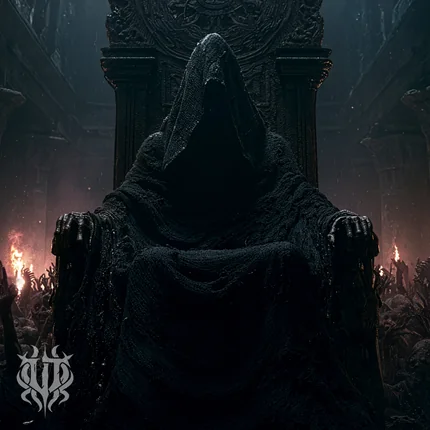
A Thousand Masks is a dark metal song inspired by Nyarlathotep, the Crawling Chaos who walks among humanity, hiding behind countless faces and whispered lies.
References
- The Other Gods — Unspeakable Tales ebook
The fictional narrative is evidence for what the story says, not proof of events in the real world.
- The Dream-Quest of Unknown Kadath — original text
The fictional narrative is evidence for what the story says, not proof of events in the real world.
At a glance
The Other Gods
The Dream-Quest of Unknown Kadath
Protectors of the gods of earth
Nyarlathotep, described as soul and messenger
Outer voids beyond familiar earthly dreaming
Not supplied in these stories