

The Call of Cthulhu (2005)
The Call of Cthulhu is a 2005 American independent adaptation directed by Andrew Leman from Sean Branney’s screenplay. Its 47-minute, black-and-white silent-film form uses the language of early cinema to follow Lovecraft’s geographically dispersed investigation into a submerged city and its surviving cult.
5 min read · 943 words
Film identity and principal credits
The H. P. Lovecraft Historical Society produced and distributed the film. Leman and Branney produced it together, while David Robertson photographed and edited it. Matt Foyer plays the central investigator, credited by the production as the Man, opposite John Bolen’s Listener. Ralph Lucas plays Professor Angell, Chad Fifer plays Henry Wilcox, David Mersault plays Inspector Legrasse and Patrick O’Day plays Johansen.
The original music is credited to Troy Sterling Nies, Ben Holbrook, Nicholas Pavkovic and Chad Fifer. The film’s designation as silent concerns its use of intertitles and the absence of ordinary synchronized spoken dialogue; its musical score is central to the viewing experience.
Sources: HPLHS — The Call of Cthulhu: production credits and journal
Synopsis and the framing listener
The investigator inherits Professor Angell’s papers and begins assembling a connection between disturbing dreams, an unfamiliar sculpted image and an old inquiry into a secret cult. Records of the Louisiana investigation lead outward into a history whose reach exceeds the professor’s original collection. The man continues the inquiry himself, following surviving documents and the fate of sailors who encountered the risen city.
The film frames the investigation as an account delivered to a listener. The burden of understanding passes beyond the original investigator, giving the story’s transmission a visible dramatic setting. The screen narrative also simplifies the maritime encounter: the sailors find the Alert abandoned, rather than reproducing the original story’s armed exchange between two crews. These alterations sit within an adaptation that otherwise follows the central accumulation of evidence.
Sources: The Call of Cthulhu (2005) — credits, synopsis and release history
The literary structure behind the adaptation
Lovecraft’s story is built from documents and testimony that were not originally gathered for the same purpose. Angell’s notes about Wilcox do not begin as a record of Johansen’s voyage. Legrasse’s earlier police work does not initially depend on either of them. The narrator’s discovery consists in recognizing connections across those separated bodies of evidence.
That structure creates an unusual screen problem: the central investigator is often learning about actions that other people have already performed. The most spectacular event belongs to a recovered seaman’s account, while the surrounding narrative concerns the danger of understanding it afterward. The viewer must follow both the historical sequence and the later sequence in which its significance becomes apparent.
The prose also distinguishes cult doctrine from direct observation. Castro gives an account of the Great Old Ones, but Johansen supplies the encounter with the emerging being. Their evidence is related without being interchangeable. Cthulhu’s appearance therefore has consequences beyond a single monster scene: it changes how the earlier stories, objects and dreams can be read.
For comparison with the film, the source article records the details of the Emma and Alert, the dates of the 1925 disturbances and the narrator’s final fear. The 2005 film should be approached as an interpretation of that documentary construction, while its performances, frame and visual designs remain particular to the adaptation.
Why a silent film?
In Robert Hood’s interview, Branney explains that the production sought a period form capable of preserving the story’s atmosphere without building a conventional modern action plot around it. Leman similarly describes early cinema as a way to reconcile Lovecraft’s indirect storytelling with the demands of a watchable film.
Their professional theatre background helped supply performers and practical production experience. The project used friends and collaborators, but that description should not be confused with an entirely untrained cast. Branney also notes a useful consequence of shooting without synchronized dialogue: the director could guide actors during takes.
The resulting formal choice affects gesture, pacing, written information and composition. It makes the historical style part of how the story communicates, rather than a filter applied after an otherwise conventional dialogue film has been completed.
Sources: Robert Hood — interview with Sean Branney and Andrew Leman (2007)
Mythoscope and constructed locations
The filmmakers call their combination of modern and older techniques Mythoscope. Their production journal describes a Louisiana swamp assembled on a Los Angeles soundstage and a large R’lyeh set built around scaffolding and theatrical platforms in a borrowed backyard. Cardboard, fabric, lighting and camera placement transformed those structures into the landscape seen on screen. The technique joins practical construction to compositing rather than requiring every location to exist at its apparent scale.
Sources: HPLHS — The Call of Cthulhu: production credits and journal
Independence and international circulation
In their 2005 Dread Central interview, Branney and Leman explain that the society’s existing mail-order audience made direct distribution a realistic option. Control of the production and an established community allowed them to pursue an unconventional running time and format without first persuading a conventional theatrical distributor.
Intertitles also offered an advantage for translation: audiences in different languages could encounter the written dialogue in broadly the same way. The filmmakers discussed international versions as part of the project’s circulation, rather than treating English speech as a fixed element requiring dubbing.
Leman identified the period-styled animated short The Old Man and the Goblins as one inspiration for attempting this kind of work. That acknowledgment places the film within a practical culture of independent experiments as well as within the history of Lovecraft adaptation.
Sources: Dread Central — Branney and Leman interview, part 2 (28 June 2005)
Festival life and the next production
The Lovecraft Film Festival’s record lists the film at 47 minutes and documents later screenings in San Diego, Portland and Providence, including anniversary programs. Those entries establish continued exhibition; they are separate from the film’s original 2005 release and should not be mistaken for alternative production years.
The society subsequently developed The Whisperer in Darkness as a feature-length sound film, released in 2011. Together the productions explore different periods of screen storytelling: the earlier film adopts silent cinema, while the later one turns to the atmosphere and possibilities of early talking pictures. The society’s work in dramatized audio offers a further related approach through Dark Adventure Radio Theatre.
Sources: H. P. Lovecraft Film Festival — The Call of Cthulhu, HPLHS — history of the society
Related music
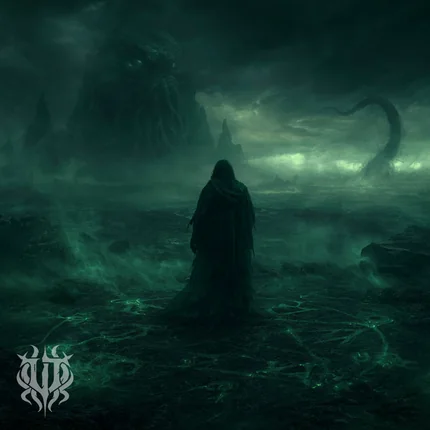
The Dead But Dreaming is a dark folk metal song inspired by The Call of Cthulhu, evoking R’lyeh, forbidden worship and the ancient dream beneath the sea.
References
- HPLHS — The Call of Cthulhu: production credits and journal
- The Call of Cthulhu (2005) — credits, synopsis and release history
- The Call of Cthulhu — Unspeakable Tales ebook
The fictional narrative is evidence for what the story says, not proof of events in the real world.
- Robert Hood — interview with Sean Branney and Andrew Leman (2007)
- Dread Central — Branney and Leman interview, part 2 (28 June 2005)
- H. P. Lovecraft Film Festival — The Call of Cthulhu
- HPLHS — history of the society
- The Call of Cthulhu — IMDb
External identification link; ratings and streaming availability are not fixed in this edition.
At a glance
2005
United States
47 minutes
Andrew Leman
Sean Branney
Sean Branney; Andrew Leman
David Robertson
Troy Sterling Nies; Ben Holbrook; Nicholas Pavkovic; Chad Fifer
Black-and-white silent-film pastiche with original musical score
The Call of Cthulhu, written 1926; first published 1928
tt0478988