

Gustaf Johansen
Gustaf Johansen is the Norwegian sailor whose manuscript supplies the direct encounter with R’lyeh and Cthulhu in The Call of Cthulhu. As second mate of the Emma and later commander of the captured Alert, he survives the opening of the city’s immense door and escapes by driving the yacht into the pursuing being. His account reaches Thurston only after his death, and it does not contain all the connections that the later investigator makes from it.
5 min read · 876 words
Second mate of the Emma
Johansen serves on the two-masted schooner Emma, which leaves Auckland for Callao in February 1925. Severe weather drives the vessel far from its intended course.
His professional background becomes essential when the voyage turns into a crisis. He can command the surviving men, handle the captured vessel and make the rapid decisions required during the escape.
The story presents him through several records: a newspaper report, the results of an inquiry, his widow’s account and his own manuscript. These sources overlap without disclosing the same amount of information.
The encounter with the Alert
On March 22, the Emma meets the armed steam yacht Alert. Its crew orders the schooner to turn back and fires when the captain refuses.
The Emma’s men board the attacking vessel as their own ship is lost. The captain and first mate are among the dead, leaving Johansen in command of the survivors.
A strange image in the yacht becomes another link in the story’s chain of evidence. Johansen encounters it without possessing Angell’s notes or Castro’s account, so its full significance remains unavailable to him.
Landing at R’lyeh
The survivors proceed in the captured yacht and discover a coastline of mud, marine growth and enormous worked stone. They land on the exposed portion of R’lyeh without knowing the history attached to the name.
Johansen’s later description emphasizes scale and unstable perspective. Surfaces seem to change their relation to one another, and ordinary judgments about horizontal and vertical become unreliable.
These impressions correspond with Wilcox’s dreams, but the comparison belongs to Thurston’s reconstruction. Johansen records what he encounters as a sailor confronted with an impossible place.
The opened door
The men find a huge carved entrance and examine its edges until the panel begins to move. Its dimensions and orientation are difficult to interpret within the surrounding geometry.
Cthulhu emerges from the darkness, turning exploratory curiosity into immediate flight. The party’s losses occur through several kinds of catastrophe: terror, direct seizure and a fatal encounter with the city’s spatial irregularity.
Only Johansen and Briden reach the boat and return to the Alert. Their escape is possible because the vessel’s steam has not been allowed to fall completely during the landing.
The collision
Cthulhu follows them into the water. Johansen realizes that the yacht cannot gain speed quickly enough to avoid being overtaken and chooses a direct collision as a desperate alternative.
He drives the vessel into the pursuing body. The impact disrupts it, but the material begins to gather again as the Alert pulls away.
The scene should not be summarized as a permanent killing of Cthulhu. Johansen wins time and distance. The visible re-formation preserves the distinction between a successful escape maneuver and destruction of the being.
Briden, the storm and rescue
Briden’s mind gives way during the escape, and he later dies aboard the yacht. Johansen continues in a severely disturbed state, attending to basic needs but abandoning meaningful navigation.
A major storm on April 2 further overwhelms him. The freighter Vigilant eventually finds the damaged yacht with Johansen alive and Briden dead.
The dates become important to Thurston because the end of the dream disturbances and Wilcox’s recovery coincide with the maritime sequence. Johansen himself does not possess the independent records necessary to make that comparison.
The public account and the private manuscript
After rescue, Johansen describes the conflict at sea but withholds the full experience of the island and its inhabitant. The inquiry does not extract an explanation that resolves the central mystery.
He later writes a fuller account in English. His wife understands it as technical material, and the choice of language helps keep its contents from casual reading by her.
The manuscript is therefore both testimony and an act of concealment. He wants the experience recorded while avoiding an ordinary conversation in which he expects disbelief or distress.
Return home and death
Johansen leaves New Zealand with his wife and returns to Norway. When Thurston eventually reaches the address, the widow tells him that her husband has already died.
The death follows an incident in which falling papers knock him down and two sailors help him. Physicians find no adequate visible cause and attribute the end to his weakened condition and possible heart trouble.
Thurston suspects a connection with the cult. The story supplies the circumstances and the narrator’s fear, but does not prove an assassination through an independent witness or identified method.
The extent of his knowledge
Johansen sees more directly than Angell or Thurston, but understands less of the surrounding tradition. His manuscript does not contain the entire doctrine of the Great Old Ones or a full history of the cult.
That difference gives the account its value within the story. It can be compared with earlier evidence without simply repeating information already supplied by the professor’s investigation.
His role is thus both heroic and limited: practical courage brings him out of an encounter beyond his preparation, while survival leaves him unable to restore the ordinary confidence with which the voyage began.
Related music
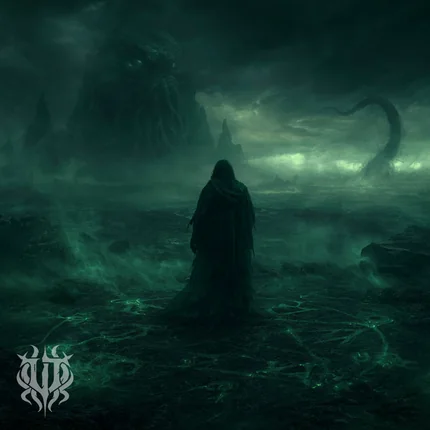
The Dead But Dreaming is a dark folk metal song inspired by The Call of Cthulhu, evoking R’lyeh, forbidden worship and the ancient dream beneath the sea.
References
- The Call of Cthulhu — Unspeakable Tales ebook
The fictional narrative is evidence for what the story says, not proof of events in the real world.
At a glance
The Call of Cthulhu
Norwegian
Second mate of the Emma
The captured steam yacht Alert
March 23, 1925
Collision that disrupts Cthulhu long enough to gain distance
Dies after returning to Norway; circumstances prompt Thurston’s suspicion