

The Cthulhu cult
The Cthulhu cult is the secret religious tradition investigated through several separate records in The Call of Cthulhu. Its members await the return of Cthulhu and the Great Old Ones, preserve images and ritual language, and claim continuity with humanity’s earliest dream-contact with older beings. Most of its doctrine reaches the reader through prisoners’ testimony, especially the account of Castro, while its wider organization remains only partly visible.
7 min read · 1,318 words
A network reconstructed from fragments
The story does not introduce a single headquarters and then explain its entire organization. Professor Angell, Inspector Legrasse, Professor Webb, the sailor Johansen and the narrator each encounter different pieces.
A clay relief, a stone statuette, a remembered chant, a police report and a shipboard image become connected through comparison. The cult’s apparent geographical reach is inferred from those correspondences.
This documentary structure is important to the article’s scope. The original tale establishes a persistent tradition with distant manifestations, but does not provide a complete chain of command, a membership register or a map of every branch.
The Louisiana raid
On November 1, 1907, a request for help brings Legrasse and nineteen other police officers into the swamps south of New Orleans. People from a nearby settlement report disappearances and disturbing sounds from a place they fear to approach.
The officers discover a ceremony organized around a fire and a monolith bearing a small carved image. The missing people’s bodies are displayed around the site. The police intervene, arresting forty-seven participants after a violent confrontation.
The scene supplies direct evidence of a human gathering and its material arrangements. Other claims about presences deeper in the swamp are less secure and depend on frightened testimony or local legend.
The image and the chant
The seized statuette depicts an anthropoid being with an octopuslike head, claws, a scaly body and wings. Its material and style resist identification by the experts Legrasse consults.
The chant refers to Cthulhu waiting and dreaming in R’lyeh. Its importance lies partly in its recurrence: Legrasse’s transcription resembles the words Professor Webb remembers from a separate encounter in Greenland.
The prisoners cannot simply translate every inscription on the image. Spoken transmission preserves meanings that no longer depend on the participants’ ability to read the ancient writing. The cult’s continuity is therefore ritual and oral as well as material.
Webb’s earlier encounter
At the 1908 archaeological meeting, Webb describes a cult he encountered during an earlier northern expedition. Its image and spoken formula closely resemble the Louisiana material.
For the assembled scholars, the comparison is startling because the two reports come from distant settings. It suggests that Legrasse has found something broader than a purely local practice.
The story’s portrayal of the Greenland community uses racialized and dehumanizing language. Its supernatural cult is fictional; the passage should not be treated as a reliable description of Inuit religion or culture.
Castro’s account of the Great Old Ones
The most extensive explanation comes from Castro, an elderly prisoner who claims to have traveled widely and spoken with undying leaders in China. He describes beings who arrived before humanity and once possessed immense cities.
According to this account, their continued existence does not fit ordinary categories of life and death. Their condition depends on cosmic circumstances, and they wait within structures that preserve them through vast intervals.
This is the cult’s doctrine as reported through an interrogation. Some later events appear to support it, but the narrator never personally verifies every part of Castro’s cosmic history.
Cthulhu’s role
Cthulhu is described as the great priest whose power preserves the waiting beings and whose release will make their return possible. His image gives the tradition a recognizable visual center.
The story does not establish that every Great Old One has exactly the same body as the idol. The prisoners themselves decline to claim such complete visual knowledge.
The distinction prevents Cthulhu from becoming a generic template for all the beings invoked in the account. His particular role combines dreaming, preservation, leadership and the expected return from R’lyeh.
Dreams and the first worshippers
Castro says that the older beings communicated with sensitive humans by shaping dreams. Their manner of thought could not reach ordinary human minds through familiar speech, so dreaming provided a bridge.
The cult is said to have formed around these contacts and around images shown or brought by the beings. Ritual preserves the memory while direct communication is interrupted.
Angell’s later study of Wilcox and other dreamers makes this doctrine newly relevant. Similar imagery appears among people who do not know the cult, suggesting that contact need not imply deliberate membership.
R’lyeh, the sea and the right conditions
The sinking of R’lyeh interrupts communication in Castro’s account. Deep water blocks the connection that had once reached human dreamers, while the cult continues to await the city’s return.
The necessary conditions are described through the stars and larger cosmic cycles. At the appropriate time, an outside force must help release the preserved beings; their own protective condition prevents the initial movement.
The doctrine is more specific than an expectation that worship alone will instantly wake Cthulhu. It joins cosmic timing, physical access to the city and an act of liberation.
The promised transformation of humanity
Castro describes a future in which ordinary law and moral restraint have been discarded. The returning beings will teach humanity new forms of unrestrained activity and enjoyment.
The narrative presents this expectation as terrifying, but it also reveals what attracts the cult: the promise that the existing human order is temporary and can be replaced by something radically different.
This is not a balanced description of a real religious movement. It is the story’s imagined anti-social revelation, constructed through an interrogation and framed by the narrator’s horror at what the prisoners believe.
The allies in the darkness
The prisoners refer to other presences that visit the faithful and attribute the killings at the ceremony to winged beings. They distinguish these visitors from the Great Old Ones themselves.
Legrasse’s colleague Galvez also reports impressions of wings, eyes and a white mass deeper in the swamp, but Thurston treats his testimony as highly imaginative. The account does not securely identify that suggested presence by a separate named deity.
These references establish a surrounding field of uncertainty. They should not be converted into a definitive bestiary in which every sound and local legend has a fixed taxonomic place.
The Alert and the accidental release
The yacht Alert carries an image resembling the Louisiana statuette. Its crew tries to prevent the Emma from continuing, and the subsequent fight brings Johansen and the surviving sailors into possession of the vessel.
The sailors then reach R’lyeh and open the enormous door. The release occurs through their uninformed actions, not through a successfully completed ceremony led by the cult’s known priests.
This irony is central to the plot. A tradition that has waited for immense periods is overtaken by chance exploration. The connection between the yacht and the cult helps explain the larger pattern without making Johansen a willing initiate.
Deaths and the limits of the conspiracy claim
Thurston suspects that Angell and Johansen died because they learned too much. Their deaths contain disturbing parallels and unexplained circumstances, but he does not produce a witnessed assassination or a complete forensic proof.
He also notes that Legrasse and the surviving police have apparently been left alone. That fact complicates a simplistic rule that every person who hears the name is immediately killed.
The closing fear is that the cult still exists and may act against the narrator. The found-manuscript framing identifies Thurston as deceased, while leaving the exact manner of his death unstated.
Reading the cult critically
The story’s international reach is entangled with Lovecraft’s racial anxieties. Its descriptions repeatedly use mixed ancestry, foreignness and unfamiliar religion as signals of danger. Those associations require critical framing rather than repetition as objective description.
The fictional cult should also be distinguished from actual Vodou, Indigenous traditions or Asian religions. The text borrows and distorts real-world categories to construct its supernatural threat.
Within the fiction, the most secure outline remains the one established by the records: connected images and chants, a doctrine of waiting and release, a violent Louisiana ceremony, the Alert’s image and the narrator’s fear of a surviving network. Its full extent stays beyond his evidence.
Related music
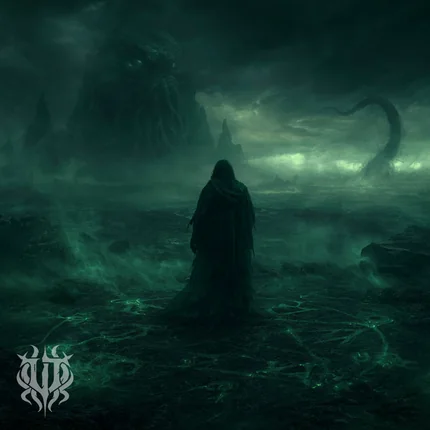
The Dead But Dreaming is a dark folk metal song inspired by The Call of Cthulhu, evoking R’lyeh, forbidden worship and the ancient dream beneath the sea.
References
- The Call of Cthulhu — Unspeakable Tales ebook
The fictional narrative is evidence for what the story says, not proof of events in the real world.
At a glance
The Call of Cthulhu
Louisiana police raid, November 1, 1907
Castro, an arrested participant
Cthulhu, waiting in R’lyeh
Release when the cosmic conditions are right
Webb’s Greenland account; the Alert’s image
No complete hierarchy or confirmed headquarters supplied