

Oriab
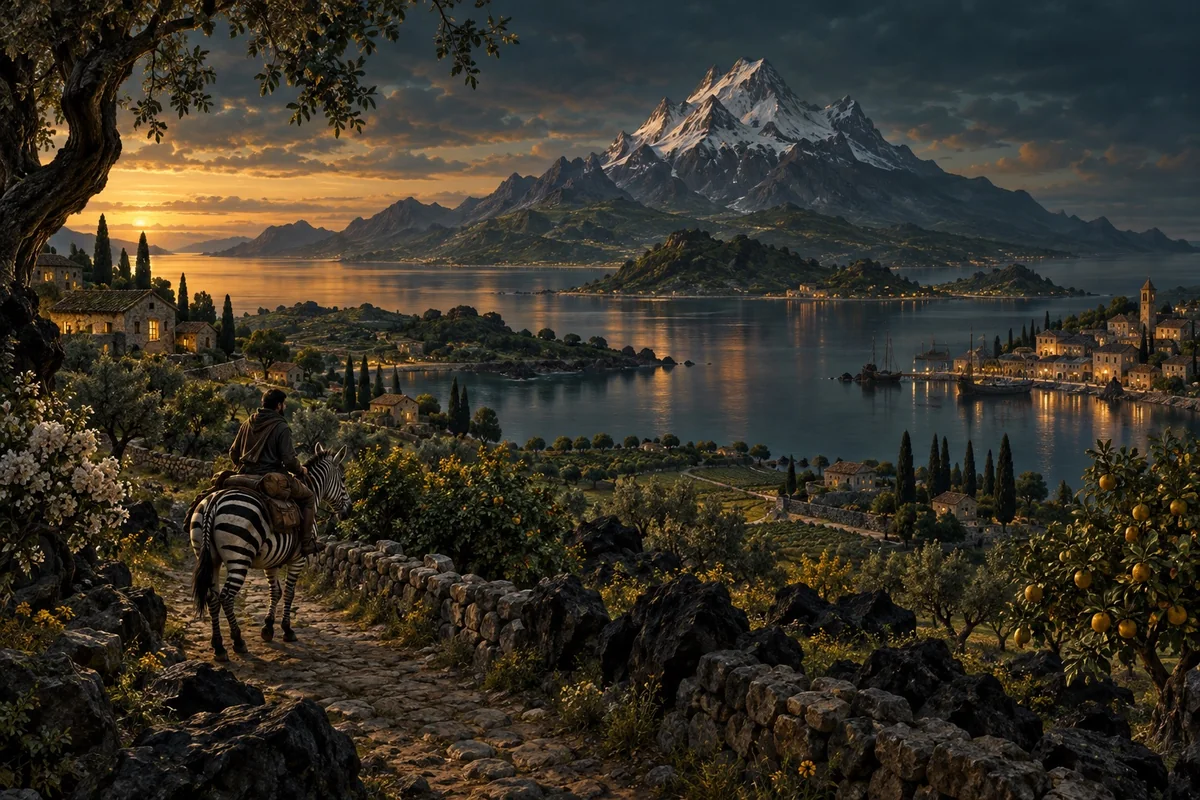
Oriab is the large island in the Southern Sea visited by Randolph Carter on his way to the carved face of Ngranek. Its port, Baharna, connects prosperous workshops and fertile inland country with a trading world that also contains dangerous ruins and scarcely understood mountain inhabitants.
4 min read · 690 words
Island and approaches
The Dream-Quest of Unknown Kadath introduces Oriab through information gathered in Ulthar and Dylath-Leen. Atal’s account of a divine likeness carved on Ngranek gives Carter a reason to travel there. The island is accessible through ordinary commercial shipping within the Dreamlands, rather than only by an extraordinary gateway. Its main port is Baharna, and its most prominent landmark is the high, snowy mountain Ngranek.
Sources: [1]
Carter’s captain estimates a ten-day passage from Dylath-Leen; the ship comes in sight of Oriab on the evening of the eleventh day. The first two days follow a coast eastward before a turn south into open water. These are details of one narrated voyage, not a universal sailing timetable. A submerged city encountered along the way supplies a warning that a familiar trade route can cross places whose dangers are poorly understood.
Landscape and settlement
Behind Baharna lies Lake Yath, linked to the harbor by a canal passing beneath the city. The road around the lake gives access to inland country and Ngranek. Carter passes orchards, cultivated hills and small stone farmhouses before reaching rougher, partly wooded terrain. Resin groves, charcoal burners and the camps of lava gatherers make the island a working landscape rather than an empty stage for the mountain encounter.
Magah birds with seven-colored plumage appear in the resin country. Farther inland, abandoned villages preserve evidence of a retreat from the mountain slopes. According to the history Carter learns, disappearances increased as settlements climbed higher. Their inhabitants eventually moved to Baharna, where their descendants continued the craft of carving images from lava. Coastal prosperity and upland fear are connected through the movement of people and skills.
Sources: [1]
Trade and materials
The barque carrying Carter had brought fragrant resin, pottery made in Baharna and figures carved from Ngranek’s lava to Dylath-Leen. Goods received in exchange included wool from Ulthar, textiles from Hatheg and carved ivory from Parg. These named connections place Oriab within a network of specialized production. Its inhabitants are merchants, sailors, craftspeople and agricultural workers, as well as the keepers of legends.
Zebras serve as riding animals on the island. Carter hires one in Baharna and later acquires a replacement from the lava gatherers after the first animal is killed. The journeys show that the route is traversable and used, although knowledge of a road is not the same as safety at every stopping place. The people making a living from the mountain’s materials respect boundaries the visiting dreamer chooses to cross.
Sources: [1]
The nameless ruins beside Yath
On the farther shore of the lake stand extensive ruins of an ancient clay-brick city whose name is lost. Carter camps there despite warnings. In the morning his zebra is dead, its blood drained through a wound in the throat. Shiny objects have disappeared from his pack, and webbed footprints remain in the dust. A dark stair beneath an old temple adds to his unease as he continues.
The attackers are not directly seen. When Carter later asks whether night-gaunts suck blood, steal glittering objects and leave such tracks, the lava gatherers deny that description. The incident should therefore remain distinct from his subsequent encounter with night-gaunts on Ngranek. Combining every danger on Oriab into a single named species would erase a distinction made by the story itself.
Sources: [1]
Place in Carter’s route
Oriab allows Carter to turn a legend about the gods into a recognizable visual clue. He approaches Ngranek through human hospitality, local testimony and a practical overland journey. The climb then removes him abruptly from the island when night-gaunts carry him into the underworld. His intended return by road and ship is interrupted, but the face he has seen will later help him identify the people of Inganok.
The island thus connects several different kinds of knowledge: Atal’s guarded religious information, sailors’ routes, artisans’ inherited warnings and direct observation on the mountain. Each contributes something the others cannot supply. Its beauty and commerce are as important to that role as its supernatural dangers.
Sources: [1]
References
- The Dream-Quest of Unknown Kadath — original text
The fictional narrative is evidence for what the story says, not proof of events in the real world.
At a glance
Southern Sea of the Dreamlands
Baharna
Lake Yath; Ngranek
Resin, pottery and carved lava figures
Zebras