

Nyarlathotep
Nyarlathotep is a short apocalyptic prose narrative in which an enigmatic visitor from Egypt gives scientific-looking exhibitions that unsettle whole cities. An unnamed spectator attempts to dismiss the performance, then finds the familiar world dissolving into ruin and cosmic disorder. The work introduces Nyarlathotep through spectacle, social dread and the collapse of the narrator’s confidence in ordinary reality.
4 min read · 803 words
A crisis before the visitor arrives
The opening describes a period of political and social upheaval accompanied by a much less definable expectation of catastrophe. Unseasonable heat and widespread apprehension suggest that the world's governing order has changed.
Nyarlathotep arrives within that atmosphere. The narrative does not simply begin with a stable world that one demonstrable act destroys. His coming and the broader disorder are intertwined, while the exact causal sequence remains difficult to establish from the narrator's account.
The Egyptian stranger
The visitor resembles a pharaoh and claims to have emerged from twenty-seven centuries of darkness. He also claims contact with places beyond the planet. These assertions belong to his presentation; the story does not independently reconstruct his preceding centuries.
His activity is conspicuously modern. He purchases glass and metal instruments, combines them into unusual devices and speaks about electricity and psychology. The ancient appearance and scientific vocabulary make him neither a conventional stage magician nor an ordinary resurrected ruler.
Exhibitions and spreading nightmares
His performances become famous despite, or because of, the distress they cause. Spectators urge others to attend while describing experiences that exceed their ordinary expectations.
Cities become filled with nocturnal cries as sleep brings unprecedented nightmares. The public consequences extend beyond the exhibition room. The story imagines a spectacle whose effects follow its audience home and become a collective disturbance.
Rumor further suggests that those acquainted with Nyarlathotep perceive things other people cannot see. The account does not explain whether this is an acquired capacity, a changed condition of the world or an inseparable combination of the two.
The narrator at the performance
The narrator attends after hearing a friend's account. In the darkened room, a screen shows ruined places and a world struggling against destructive forces from space. Electrical effects surround the spectators, accompanied by forms the narrator cannot adequately describe.
He attempts to explain the display as deception and static electricity. Nyarlathotep responds by driving the audience out. The protest is less a successful exposure than an effort to preserve a scientific identity while already frightened.
The story provides no device specifications or repeatable account of the exhibition. Its technology is part of the literary performance of authority and estrangement, rather than a technical explanation of the cosmic events.
The altered city
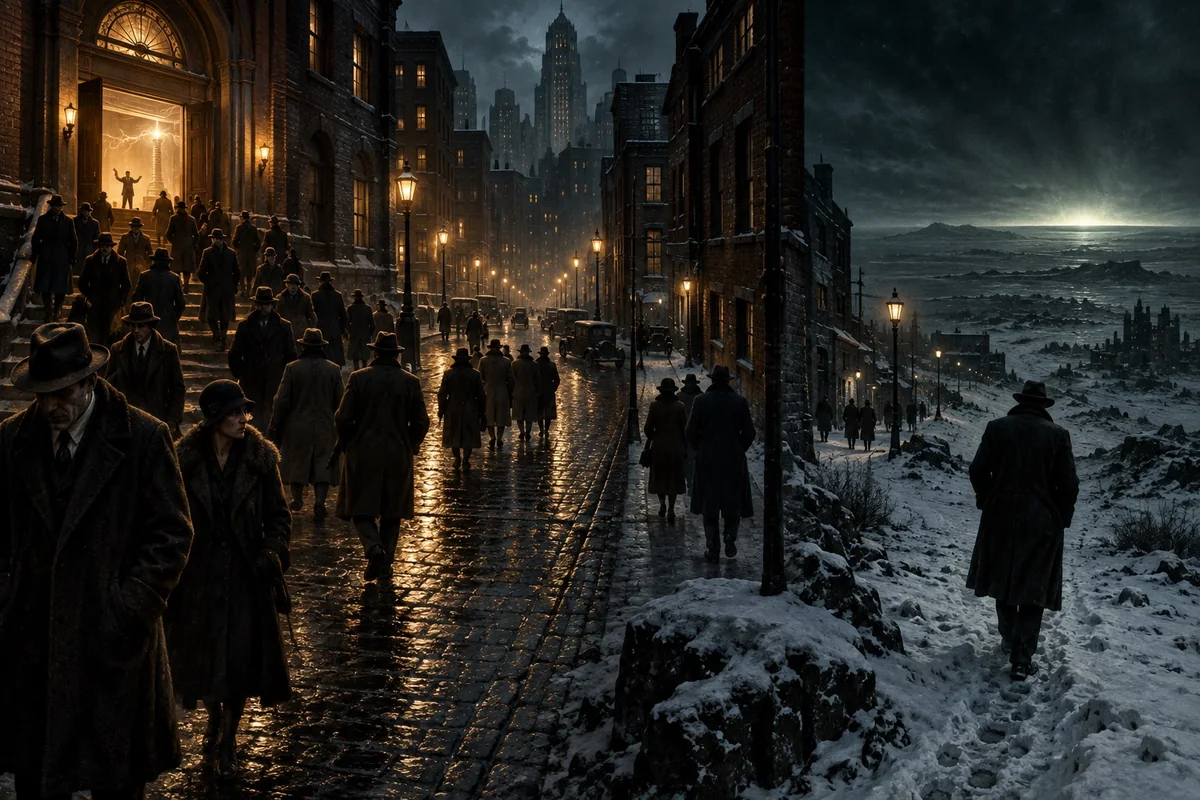
Outside, the spectators insist that nothing has changed. Failing lights are blamed on the utility company. Gradually the street itself contradicts their reassurance: pavement is overgrown, a tram has become a wreck and familiar towers are missing or damaged.
The changes suggest a collapse of ordinary continuity. The city seems at once recognizable and already ruined, as though the audience has crossed a boundary it cannot locate. The narrative does not supply a measured interval that explains the decay.
The crowd separates into columns moving toward different destinations. Some disappear into an alley or a subway entrance, while the narrator's group heads into open country.
Snow, the gulf and the final vision
The hot autumn gives way to inexplicable snow. The narrator follows his thinning group toward a black opening between enormous drifts, resisting only briefly before being drawn after the others.
The prose then leaves the ordinary sequence of streets and walking for a rush through dead worlds, impossible temples and a disordered universe. Drums and flutes accompany immense blind and mindless gods beyond time.
Nyarlathotep is identified as their soul. The piece does not explicitly name Azathoth in this concluding scene. Later connections can be compared, but should not replace the words and limits of this early appearance.
Narrative voice and unresolved scale
The narrator addresses an apparently empty audience and describes himself as the last. The work gives no independent survivor account or external chronology against which his experience can be checked.
Its shifts can be read as an apocalypse, a vision of cosmic reality or the collapse of a spectator's ability to distinguish perception from the world. The text's force comes from refusing a stable position outside the experience.
Nyarlathotep's direct command of spectacle distinguishes him from beings known only through archaeology or cult testimony. He meets people in their cities, uses recognizable scientific interests to attract them and leaves ordinary reassurance unable to account for what follows.
Relation to the recurring figure
The name and association with crawling chaos continue into later works, including The Dream-Quest of Unknown Kadath. There, Nyarlathotep has a more extended speaking role and an explicit relation to Carter's quest.
The early prose narrative does not enumerate his forms, assign a complete genealogy or supply all the functions given him across later fiction. It is best read as one distinctive presentation: the Egyptian visitor, the exhibition and the movement from civic unease into cosmic nightmare.
Sources: Nyarlathotep — Unspeakable Tales ebook, The Dream-Quest of Unknown Kadath — original text
Related music
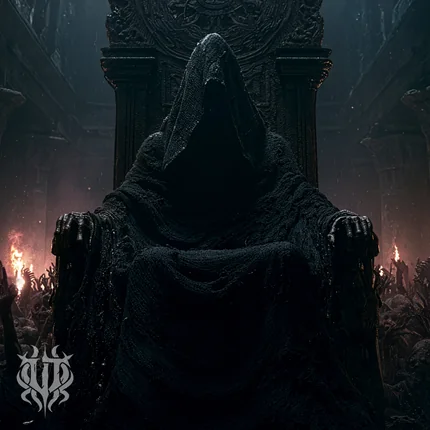
A Thousand Masks is a dark metal song inspired by Nyarlathotep, the Crawling Chaos who walks among humanity, hiding behind countless faces and whispered lies.
References
- Nyarlathotep — Unspeakable Tales ebook
The fictional narrative is evidence for what the story says, not proof of events in the real world.
- The Dream-Quest of Unknown Kadath — original text
The fictional narrative is evidence for what the story says, not proof of events in the real world.
At a glance
H. P. Lovecraft
early December 1920
1920, November
The United Amateur, 20, No. 2
Fiction