

Fungi from Yuggoth
Fungi from Yuggoth is a sequence of thirty-six sonnets in which forbidden reading, alien landscapes, vanished homes and cosmic beings become variations on the desire to see beyond ordinary life. Its miniature narratives are connected by recurring sensations and images, without requiring every speaker to be the same person.
11 min read · 2,218 words
Composition, form and editions
The principal composition dates are 27 December 1929 to 4 January 1930. The sequence therefore belongs to a concentrated period of writing across the turn of the year, although the dates of individual and collected publication must be treated separately.
David E. Schultz's annotated edition, published by Hippocampus Press in 2017, includes Jason C. Eckhardt's illustrations, a manuscript reproduction, textual variants and a chronology of appearances. Its publisher description identifies Donald Wandrei's Sonnets of the Midnight Hours as an influence discussed by Schultz. That bibliographical record identifies the edition's scope; the detailed readings below are based on the poems themselves.
How the sequence holds together
Each sonnet compresses a scene, recollection or argument into fourteen lines. Many first establish an apparently legible situation and then change its meaning near the end. An excavation becomes contact with something still alive; an attractive view becomes a memory of an inaccessible home; a familiar street acquires an impossible destination.
The first three poems provide the clearest continuous narrative: a man finds a book, carries it away and tries to use it in safety. Later poems move among different speakers and modes of address. Some resemble village testimony, some private dream recollections, and others declarations about beauty and time. A reader can trace echoes across them without inventing a travel chronology that the sequence never supplies.
The title likewise does not promise thirty-six accounts of the Mi-Go. Yuggoth is named, and fungi appear as something a poet may imaginatively know, but the cycle's range includes earthly architecture, rural gossip, childhood memory and lost cities as well as the cosmic beings most often extracted into Mythos reference works.
I–VI: the book, the self and dangerous illumination
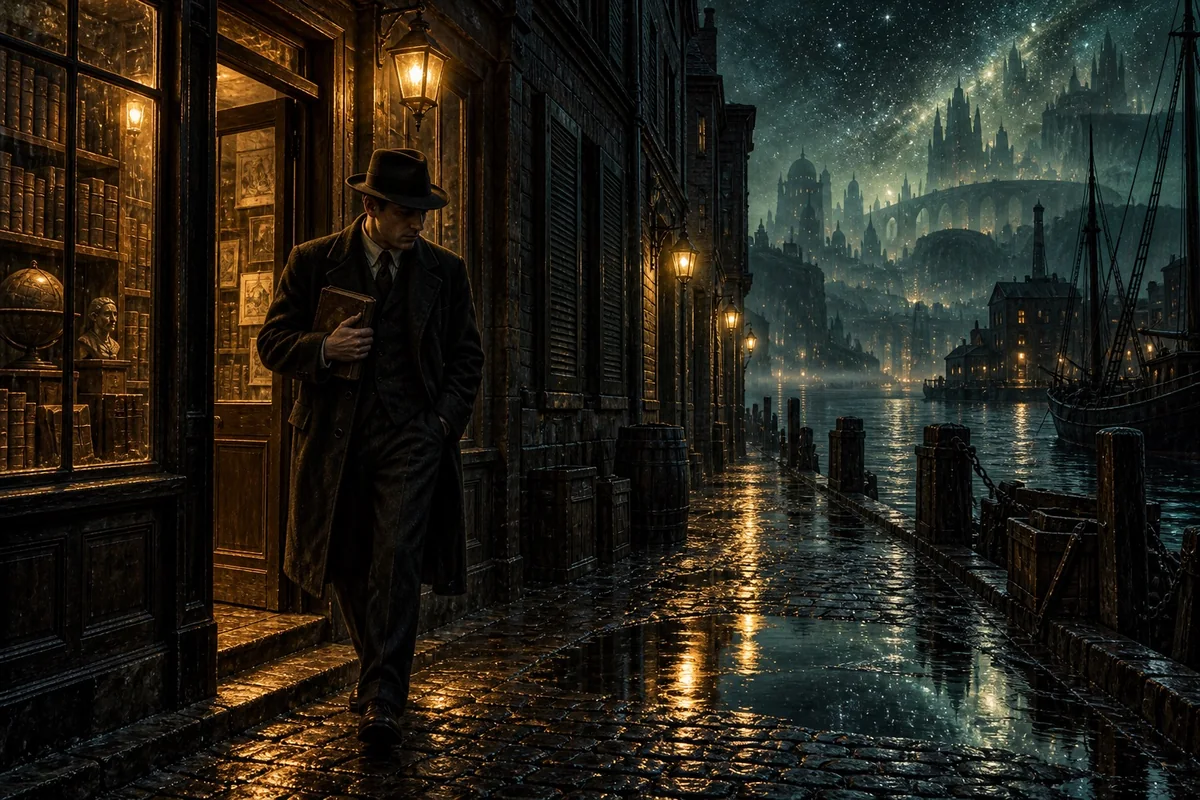
I. The Book. An old waterfront shop draws the speaker to a volume whose significance he only partly understands. When he seeks a bookseller, a disembodied laugh answers. The first threshold is not a spell but the ordinary act of handling a desirable object in an unfamiliar place.
II. Pursuit. The speaker conceals the book beneath his coat and hurries through harbor streets. Windows become watchful and the route loses its familiarity. Unseen footsteps suggest that possession of the book has established a connection he cannot end merely by leaving the shop.
III. The Key. Home appears to offer shelter and an opportunity to study. The book promises passage into dimensions and lost ages associated with the speaker's visions. The faint disturbance at an attic window makes the desired access reciprocal: opening a way outward may also permit something to approach.
IV. Recognition. A remembered scene of sacrifice becomes a revelation of the observer's own position. He identifies the world as Yuggoth and then recognizes himself in the victim. Knowledge arrives too late to preserve the safe distinction between witnessing horror and undergoing it.
V. Homecoming. A guide promises to restore a half-remembered elevated city by the sea. The journey passes alarming cosmic sights before reaching darkness and the sound of water. The guide's mockery turns the promise into a cruel statement about what the traveler can no longer see.
VI. The Lamp. Explorers remove an ancient lamp despite the warnings surrounding its discovery. Lighting its remaining oil gives them a moment of unbearable vision. The sonnet concentrates on the consequence of seeing, leaving the revealed shapes undescribed rather than converting the lamp into a fully explained magical device.
VII–XII: villages, ports and concealed depths
VII. Zaman's Hill. Long-standing rumors prepare for the disappearance of an entire settlement. A mail carrier's claim that the hill possessed a devouring face is rejected by others. The missing village is shared evidence; the explanation remains the alarming testimony of one observer.
VIII. The Port. A coastal walker approaches a familiar prospect of Innsmouth, noticing an ominous sail offshore. The expected view survives, but darkness transforms its significance. The poem gives a particular approach from the direction of Arkham without explaining the later prose story's Deep One ancestry.
IX. The Courtyard. A return to an urban meeting place becomes a vision of mutilated dead people moving in illuminated windows. The poem's language also treats the city's inhabitants and cultural mixture as threatening. Its horror therefore involves the speaker's prejudiced perception as well as its supernatural disclosure.
X. The Pigeon-Flyers. A supposed excursion into a poorer district develops into suspicion of birds traveling beyond Earth. The withheld object in a beak finally silences the speaker's mocking companions. Here, too, ordinary urban difference is filtered through hostile assumptions before the cosmic implication appears.
XI. The Well. Seth Atwood's excavation, his helper's breakdown and his own death leave neighbors a mystery. They find handholds extending into a depth they cannot measure. Their decision to reseal the opening supplies no creature identification, only a boundary they prefer to restore.
XII. The Howler. A traveler ignores warnings associated with an executed woman and a remote house. A ray of sunlight reveals an upstairs occupant with an impossible conjunction of animal body and human face. The brief exposure supplies just enough evidence to overturn the reassuring appearance of the building.
XIII–XVIII: longing and obstructed access
XIII. Hesperia. Sunset becomes the apparent entrance to a realm of ideal beauty and recovered memory. Its attraction is inseparable from distance: the final qualification denies ordinary human occupation of the streets. The desirable place remains something imagination approaches without securely possessing.
XIV. Star-Winds. Autumn air links an inhabited town to distant worlds. Poets momentarily know unfamiliar flowers, scents and fungi, but the exchange also carries human dreams away. Cosmic contact is neither wholly destructive nor a free gift; the gain is accompanied by an unnamed loss.
XV. Antarktos. A bird in a dream describes a black polar feature whose visible portion conceals an enormous buried form. The last image shifts it from apparently geological curiosity to something with eyes. The poem does not itself identify that form with every later Antarctic creature.
XVI. The Window. A sealed opening in an old house attracts a child and later an adult determined to uncover it. The workmen flee when the barrier is broken, while the speaker stays to see the worlds of his dreams. Unlike several other discoveries, the revelation answers his desire directly.
XVII. A Memory. A traveler cannot place an immense nocturnal landscape of camps and a distant wall. A figure approaches, addresses him by name and reveals a dead face. Recognition brings despair rather than a geographical explanation that could be shared with the reader.
XVIII. The Gardens of Yin. The speaker imagines the detailed pleasures of a garden previously reached in dreams. When he finally encounters its wall, the entrance is absent. The scene distinguishes possession of an image from access to its location: remembering the garden cannot recreate the gate.
XIX–XXIV: bells, night-gaunts and cosmic centers
XIX. The Bells. A recurring sound sends the listener through memories of steeples and Innsmouth. Its source proves connected with submerged towers rather than a visible church. Sound preserves a relationship with a place that cannot be recovered by following an ordinary street.
XX. Night-Gaunts. Silent, winged beings abduct the speaker over Thok toward a lake associated with shoggoths. Their facelessness and refusal of sound sharpen the helplessness of the journey. This poem contributes specific imagery, but does not supply an exhaustive account of every night-gaunt encounter elsewhere.
XXI. Nyarlathotep. A commanding figure arrives from Egypt, draws crowds and precedes upheaval of land, sea and human civilization. The ending places Earth at the mercy of a chaos indifferent to what it destroys. The figure's public influence connects social submission to cosmic catastrophe.
XXII. Azathoth. A guide transports the speaker beyond familiar dimensions to a mindless central power. Music and the chance interaction of waves generate cosmic law. The messenger's final act toward his master introduces a disturbing relation of service and contempt rather than a reassuringly ordered divine court.
XXIII. Mirage. A remembered world of towers, rivers and a village seems both intimate and impossible to locate in time. The speaker hesitates over whether he has been there or will be there. Longing survives the failure to establish a stable personal history.
XXIV. The Canal. Empty buildings crowd a dark watercourse in a dream region severed from the material world. The absence of inhabitants makes the flowing water the chief movement and sound. The loss is conveyed through surviving architecture rather than a narrated account of the city's destruction.
XXV–XXX: warnings, familiars and remembered homes
XXV. St. Toad's. Repeated warnings about cracked bells accompany a walk through confusing old streets. Flight does not solve the problem: the feared spire suddenly confronts the traveler. Repetition turns a place name into a pressure on the journey before any explicit encounter occurs.
XXVI. The Familiars. Neighbors interpret John Whateley's neglect of his farm and strange behavior through a familiar local vocabulary. The men sent to collect him instead find winged companions and retreat. Communal judgment is punctured by evidence that exceeds its original explanation.
XXVII. The Elder Pharos. Shepherds tell of a light from Leng, a solitary tower-dweller, a yellow mask and drumming addressed to Chaos. The poem carefully locates much of this knowledge in report. It never confirms that its masked inhabitant is the King in Yellow merely because the color matches.
XXVIII. Expectancy. The speaker names the landscapes, weather, sounds and architecture that promise an undisclosed wonder. The promise makes life meaningful even though its object remains unattained. This is an account of imaginative attraction, not an episode whose missing monster must be supplied.
XXIX. Nostalgia. Birds follow an inherited attachment toward a city now lost beneath the sea. They eventually turn back, while the drowned towers are imagined as missing their song. Longing is distributed between living travelers and an abandoned place, giving absence two complementary perspectives.
XXX. Background. Old streets, windows and steeples establish the speaker's attachment to the past. These material survivals loosen the present's hold and suggest continuity with eternity. The poem's preference for inherited surroundings is personal and emphatic, not a neutral judgment on the worth of newer communities.
XXXI–XXXVI: excavation, estrangement and continuity
XXXI. The Dweller. Excavators reveal architecture older than familiar civilization and clear an entrance below it. Approaching footsteps transform archaeological discovery into immediate danger. The builders and the walker remain unidentified; antiquity is established more securely than a species name.
XXXII. Alienation. A nightly traveler returns bodily unchanged until one further encounter makes ordinary life seem unreal. His family and friends become people to whom he can no longer belong. The lasting injury is altered perception rather than transportation, death or visible transformation.
XXXIII. Harbour Whistles. Calls from different ships merge into a larger, uncanny chorus. Familiar maritime sound acquires notes that cannot belong to earthly vessels. The poem locates cosmic suggestion inside an everyday soundscape rather than requiring the listener to leave his town.
XXXIV. Recapture. An unfamiliar landscape leads to a monumental stairway sized for something other than humanity. The speaker suddenly recognizes an earlier cosmic origin. The title makes the return feel like a seizure: humanity's world becomes the temporary condition from which he has been taken back.
XXXV. Evening Star. A star seen in solitude draws together persistent images of towers, gardens and alien skies. The speaker finally understands them as intimations of a distant home. Recognition here fulfills a longing, though the poem does not describe a completed voyage to that home.
XXXVI. Continuity. Ancient buildings and slanting light suggest that time's apparent divisions conceal a larger enduring structure. The sequence ends with proximity to that structure rather than another violent revelation. The final mood allows wonder, attachment and terror to remain aspects of the same imaginative search.
What the poems establish about the Mythos
The Azathoth sonnet describes dreamed things its central being cannot understand, but it does not explicitly say that all existence is his dream or that waking him would necessarily annihilate it. Those familiar summaries add a more systematic cosmology than these fourteen lines provide. The poem instead emphasizes mindlessness, unstable creation and the unnerving source of apparently eternal laws.
The same caution applies to names elsewhere. The Elder One in The Elder Pharos is not identified by an anatomical description of the Antarctic Elder Things. John Whateley is not automatically Wilbur under a different first name. Thog, Nithon and the Ghooric zone acquire suggestive placement, but the sequence does not supply comprehensive histories for them.
These limits are part of the poetry's method. Names create depth by seeming to belong to a world larger than the scene. An encyclopedia can record the exact appearances and compare them with prose without turning the productive gaps into invented certainty.
Reading the horror alongside beauty
The sequence repeatedly makes discovery double-edged. A book is both a coveted key and an invitation to pursuit; an old house can preserve identity or conceal a breach; homecoming may restore belonging or reveal an irreversible loss. The ending's contemplative continuity does not cancel the earlier violence, but makes clear that violence alone cannot explain the poems' attraction.
The formal restraint is equally significant. A short, patterned verse form holds scenes that imply immeasurable space and time. The reader feels the pressure between a sharply bounded poem and the world that its final lines open beyond it. That pressure is one reason the cycle can contribute memorable Mythos images without functioning as a conventional narrative encyclopedia.
Related music
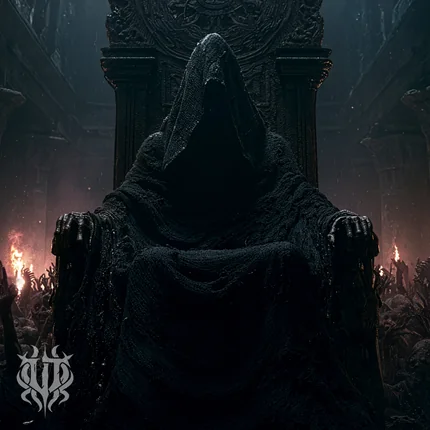
A Thousand Masks is a dark metal song inspired by Nyarlathotep, the Crawling Chaos who walks among humanity, hiding behind countless faces and whispered lies.
References
At a glance
H. P. Lovecraft
36 sonnets; 504 verse lines
27 December 1929–4 January 1930
Individual and collected appearances; see edition history
David E. Schultz, editor; Jason C. Eckhardt, illustrator; Hippocampus Press, 2017
All thirty-six poems; interpretations distinguished from explicit lore