

The Mask
The Mask is Chambers’s story of a sculptor’s discovery that can turn living things into marble and of a concealed love that breaks apart a circle of friends. Appearing second in The King in Yellow, it combines dangerous art, fevered visions and apparent death with an ending that differs sharply from the collection’s more unrelieved catastrophes.
6 min read · 1,054 words
The artists and the concealed attachment
Alec narrates his friendship with Boris Yvain, Geneviève and the painter Jack Scott. Boris is an American-born sculptor with a French father and Russian mother. Geneviève has chosen him after telling Alec that she loves Alec but believes she loves Boris more. Alec attempts to remain a loyal friend while suppressing his own attachment.
Sources: [1]
The household is a place of artistic work, jokes, shared meals and affection. Geneviève has modeled for Boris’s successful Madonna, while Alec works on decorations and a painted screen. Boris’s unfinished Fates supplies another link to the collection: the completed sculpture appears beside the Lethal Chamber in The Repairer of Reputations.
The title’s mask is not merely a piece of supernatural costume. Alec later explicitly describes the concealment of his feelings as a form of self-deception that becomes almost inseparable from his daytime identity.
Boris’s discovery
Boris demonstrates a liquid that transforms an immersed Easter lily into marble within moments. The result preserves exquisite details while showing pale blue veining and a faint internal blush. A goldfish receives a similar transformation. The process produces changing colors, foam and an apparent ray of light before the liquid clears again.
Neither man initially knows whether the transformation should be understood as destruction or preservation. Boris suggests that the apparent ray might represent departing life, but his tone does not establish that speculation as scientific fact. The chemical process is a fictional invention, not a practical method of mineralizing organisms.
Boris refuses to publish the discovery, partly because it would make a disturbing shortcut around sculpture. The discussion also compares its possible effect on his art with photography’s effect on painting. A material copy can be perfect in detail while threatening the value and process of artistic making.
Sources: [1]
The pool and the worsening illness
Boris fills a bathing pool with the solution so that he can experiment on a larger organism. A moment of rough play nearly brings Alec into contact with it, exposing the danger of keeping the liquid in a domestic space. Boris and Jack later test it on a white rabbit.
Meanwhile Alec finds Geneviève distressed at a spinet. She falls when startled and injures her ankle. Fever follows, and Boris cannot understand her declarations of heartbreak. During a later episode, she reveals her love for Alec while Boris is present.
Alec has also briefly opened The King in Yellow. His subsequent illness combines visions from the forbidden play with images of the marble creatures and the strained relationship. The narrative leaves those elements entangled; it does not isolate the play as the sole cause of every action that follows.
Sources: [1]
The catastrophe reported by Jack
After Alec becomes seriously ill, Jack remains with Boris. The sculptor works on the Fates, giving one figure an expression that Jack later recognizes as Boris’s own final look. They hear a sudden movement and discover that Geneviève has entered the pool. She lies at its bottom, transformed into marble.
Boris kills himself. Jack drains the liquid, washes the pool and destroys the remaining solution, containers and written materials associated with the discovery. A sympathetic doctor helps conceal the scandal and records Boris’s death as heart disease. These actions explain why no public scientific demonstration follows the invention.
Geneviève’s marble form is placed beneath the Madonna for which she had posed. Boris’s will passes control of the Paris house to Alec and the property at Ept to Jack if Geneviève dies childless. Alec learns these events after recovering, and the news causes a further collapse before he can begin to leave.
Sources: [1]
Two years away and the return
Alec cannot bear the house’s silence and leaves for travel through the East. During approximately two years away, correspondence slowly makes it possible to mention the dead again. One unresolved detail is his conviction that Boris visited him during his illness, at a time Jack says was after Boris’s death.
Jack eventually develops a persistent sense of expectation and dreams he cannot retain clearly. His urgent letter brings Alec back to Paris. The friends visit Boris’s grave, but Jack’s disturbance continues, and he travels separately while Alec moves into the inherited house.
Alec can paint there with unexpected calm, yet avoids the room containing Geneviève. The delay makes the eventual approach an emotional action, not merely an inspection of a strange object. He finally enters and sees her marble body beneath the compassionate figure modeled from her own appearance.
Sources: [1]
Life returns to the preserved forms
A servant reports that a living white rabbit has appeared where the marble rabbit belonged. She then brings live goldfish, believing that someone has stolen the stone specimens and replaced them. Alec initially treats the interruptions impatiently.
The marble lily provides the decisive recognition. He finds a fresh, fragrant flower where the carved-looking object had stood. Understanding that the transformation is reversing, he rushes to Geneviève’s room. She raises her face and opens her eyes.
The ending shows her awakening without providing a further account of their lives. Boris’s death is not reversed, and the time lost to grief remains part of the history. The recovery changes the meaning of the solution from certain death to an unexplained form of preservation, while leaving the mechanism unknown.
Sources: [1]
Why its ending matters within The King in Yellow
The Mask shares names, dramatic fragments and dangerous reading with the collection’s other early stories, but it does not finish with the complete extinction of hope. Its last movement turns an apparently flawless representation back into living presence. That difference argues against summarizing every story in the volume as an identical encounter with a killer god.
Art is involved at several levels: the chemical copies, the Madonna, the Fates, Alec’s painted work and the play that enters his illness. These objects have different relationships with life. One appears to preserve it, another expresses compassion, another records a face transformed by suffering, and the play disturbs the reader’s perception.
The concealed love and the preserved body make the title’s meaning multiple. Emotional masks can prevent recognition, while marble can appear to be a final exterior that is not final after all. These are readings of the story’s arrangement, rather than additional events supplied by an outside mythology.
Sources: [1]
Related music
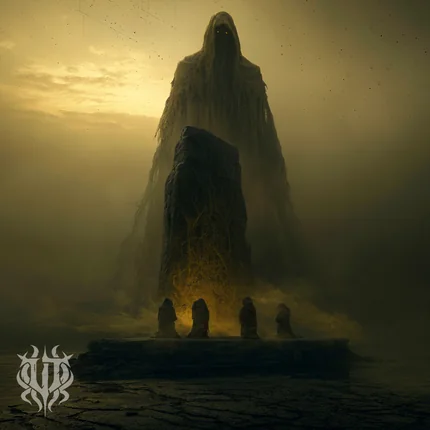
The King In Yellow is a dark metal journey into Carcosa, where Hastur’s influence spreads through dreams, madness and the cursed symbol that can never be forgotten.
References
- Robert W. Chambers — The King in Yellow, Standard Ebooks text
Public-domain transcription. Its contents omit In the Court of the Dragon; this wiki uses a separate verified text for that story.
At a glance
Robert W. Chambers
The King in Yellow, 1895
Second story
Alec
Boris Yvain
Geneviève; Jack Scott
A liquid that apparently transforms living things into marble