

Robert W. Chambers
Robert William Chambers (1865–1933) was an American artist and writer whose The King in Yellow became an important source for later weird fiction. His early training and work in visual art have a close counterpart in stories about painters, sculptors, models and the unstable relation between an image and a life. His wider career also included extensive romantic and historical fiction.
7 min read · 1,323 words
Artistic education and the beginning of a writing career
Chambers was born in Brooklyn on 26 May 1865. After education at the Art Students’ League, he studied in Paris at the École des Beaux-Arts and the Académie Julian from 1886 to 1893. Returning to New York, he sold illustrations to magazines including Life, Truth and Vogue.
Sources: [1]
His first novel, In the Quarter, appeared in 1894, followed by The King in Yellow in 1895. Dartmouth’s archival description also records later books and a surviving typescript of Operator 13 in twelve installments. He died on 16 December 1933. This record gives his career a material history of illustration, manuscripts and publication beyond the single collection for which he is most familiar to horror readers.
A broad career beyond the forbidden play
The Encyclopedia of Science Fiction describes a career of more than seventy novels, chiefly historical and romantic works. His fantastic writing includes The Maker of Moons (1896), The Mystery of Choice (1897), In Search of the Unknown (1904), Police!!! (1915) and The Slayer of Souls (1920).
Those books range across supernatural fiction, comic scientific adventure and other forms. The later reception of The King in Yellow should not make the rest of the career disappear, even when a reader’s main interest is the early weird fiction. Nor should later critics’ disappointment with particular books be substituted for a neutral publication history.
Sources: [2]
The artist’s studio as an active setting
The opening stories of The King in Yellow repeatedly examine the making and interpretation of images. In The Mask, Boris Yvain’s liquid appears to reproduce a living form with a perfection that threatens the purpose of sculpture. His choice to withhold the discovery connects an impossible experiment with a practical artistic concern.
In The Yellow Sign, Mr. Scott cannot keep a painted study from taking on sickly colors after he observes the watchman. The living model remains healthy while her representation seems corrupted. The painter’s tools and materials provide plausible first explanations, but repeated failure makes his usual command of the work unreliable.
These scenes show why the studio is more than picturesque decoration. Artistic practice supplies a way of thinking about evidence. An image can appear exact and still conceal a mistaken conclusion about life, death or identity. The supernatural develops through the same activities that normally make the protagonists confident in their perceptions.
Sources: [3]
The imaginary play as a connecting device
Chambers does not print the fictional King in Yellow in full. Instead, he places fragments, remembered names and descriptions of its effects across separate narratives. Readers recognize a shared background without receiving a complete explanation of it.
The device also allows different kinds of personal crisis. Hildred incorporates the play into claims of imperial legitimacy. Alec sees its images during an illness already entangled with grief and concealed love. The narrator of In the Court of the Dragon finds his attempt at religious refuge undermined by a pursuit connected with guilt. Scott and Tessie recognize their dangerous object only after reading.
The play consequently operates as more than a book containing a monster’s summoning instructions. Its beauty, authority and apparently irresistible meaning alter how characters interpret their own lives. The incomplete excerpts leave readers in a different position: able to recognize the pattern of consequences without possessing the text said to produce them.
Different endings, different emotional movements
The early tales do not all end in the same register. The Repairer of Reputations closes with Hildred’s defeat and an editorial report of his death. The Yellow Sign ends with Scott dying beside an impossible corpse. In the Court of the Dragon denies the narrator a dependable distinction between physical safety and the pursuit of his soul.
The Mask, however, allows Geneviève to return to life, even though Boris’s death remains irreversible. The Demoiselle d’Ys centers on losing a beloved who belongs to another historical world. Its last warm glove preserves intimacy at the very moment the ruins establish distance.
This variety is essential to Chambers’s imaginative range. Desire can be the source of vulnerability, but the desired person or world is not always reducible to a trap. Some of the strongest effects arise when readers can understand why the protagonist would want the impossible encounter to continue.
Bierce’s names in a changed arrangement
Chambers draws on names already used by Ambrose Bierce. Carcosa is a ruined city in An Inhabitant of Carcosa, while Hali is a figure whose words about death introduce that story. Hastur is the god of shepherds in Haïta the Shepherd. Chambers places these names within a different network, including a lake, a dangerous play and obscure dynastic references.
The change can be observed directly by reading the texts together. Bierce’s account does not explain Carcosa’s destruction through the King in Yellow. His Hastur protects distant cities in response to a shepherd’s prayer. Chambers’s less explicit references leave the relationships among names partly uncertain.
There is even a falconer named Hastur in The Demoiselle d’Ys. That occurrence warns against treating every reused name as the same fully defined entity. The history is one of imaginative adaptation, with the new arrangement acquiring effects that the earlier story did not require.
How Lovecraft read him
In Supernatural Horror in Literature, Lovecraft praises the collection’s ability to evoke cosmic fear and singles out The Yellow Sign for particular attention. He also criticizes what he considers affected aspects of the artistic milieu. These are Lovecraft’s judgments, useful evidence of reception rather than universal measurements of quality.
His retelling connects the sign with a cult of Hastur and primordial Carcosa. Comparing that account with Chambers’s actual story shows interpretation at work: the original gives the clasp’s discovery and retrieval without laying out that complete cult history.
The Whisperer in Darkness subsequently uses Hastur, Lake Hali and the Yellow Sign among its allusions. The movement from reading and criticism to new fiction provides a concrete link between the authors. It does not make Chambers a member of Lovecraft’s later correspondence circle or mean that the whole of Chambers’s work was written within a pre-existing Cthulhu mythology.
Politics, social position and critical reading
The Repairer of Reputations gives its imagined American future an exclusionary political order. Hildred’s praise of national prosperity incorporates antisemitism, racial separation and centralized authority. The reader’s distrust of his other judgments makes the political framing especially difficult to detach from his voice.
The Yellow Sign gives another kind of hierarchy: a painter’s account of his young model, her work and her attachment to him. Scott can care about Tessie while speaking paternalistically and reserving decisions about what future would suit her. Those tensions belong to the narrative rather than disappearing beneath the supernatural plot.
A critical account can identify these features without inventing a single intention that explains every passage. The primary texts show what the narrators say and how their statements sit within the story. More definite claims about Chambers’s private convictions require separate biographical evidence.
Sources: [3]
Reading the whole collection and identifying the edition
A useful starting sequence is the original first four stories, followed by The Demoiselle d’Ys. It reveals the development of the play’s fragments and then a shift toward another form of supernatural longing. The remaining contents broaden the book’s forms and artistic settings further.
Edition choice matters because some versions omit In the Court of the Dragon. The original 1895 scans and a separate text of that story prevent the missing item from being mistaken for something Chambers never included. The real book’s changing contents should also be kept separate from modern attempts to write the entire fictional play.
Chambers’s significance lies both in the names later creators borrowed and in the narrative methods that give them power. A clasp, an unfinished dramatic exchange, a ruined home or a disturbing painting can suggest a reality larger than the available explanation. That method survives even where a later work uses none of his specific gods or cities.
Related music
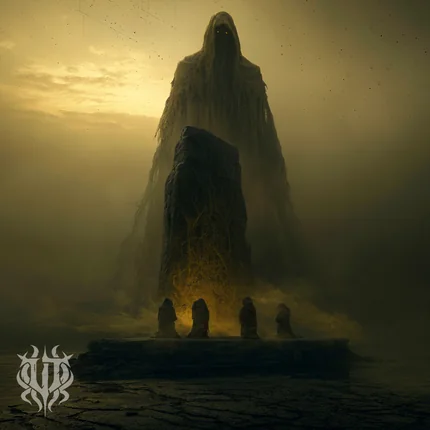
The King In Yellow is a dark metal journey into Carcosa, where Hastur’s influence spreads through dreams, madness and the cursed symbol that can never be forgotten.
References
- Dartmouth Libraries — Robert William Chambers and the Operator 13 typescript
Biographical note on artistic education, illustration, early books and surviving typescript.
- Robert W. Chambers — biographical reference
- Robert W. Chambers — The King in Yellow, Standard Ebooks text
Public-domain transcription. Its contents omit In the Court of the Dragon; this wiki uses a separate verified text for that story.
- Robert W. Chambers — In the Court of the Dragon
Public-domain 1895 text, checked separately because the Project Gutenberg 8492 transcription omits this story.
- Ambrose Bierce — Can Such Things Be?
Public-domain collection, including An Inhabitant of Carcosa, Haïta the Shepherd, The Damned Thing and Moxon’s Master.
- Supernatural Horror in Literature — original essay
- The Whisperer in Darkness — original text
The fictional narrative is evidence for what the story says, not proof of events in the real world.
- Library of Congress — The King in Yellow, F. T. Neely, 1895
Bibliographic record and page scans; the original contents include In the Court of the Dragon.
At a glance
Robert William Chambers
26 May 1865, Brooklyn, New York
16 December 1933
1886–1893
In the Quarter, 1894
The King in Yellow, 1895
Fiction and illustration
Earlier writer read, discussed and alluded to by Lovecraft