

The King in Yellow
The King in Yellow is the ominous figure associated with the fictional play of the same name in Robert W. Chambers’s 1895 collection. Readers encounter him through dramatic fragments, other characters’ accounts, visions and the destruction that follows contact with the play. Chambers leaves his full identity and the complete drama unrevealed.
5 min read · 962 words

A figure, a fictional play and a real book
Three objects share the title. The actual book by Chambers is a collection of stories and short prose pieces. Within several of those stories, characters encounter an apparently published play called The King in Yellow. The King is a figure associated with that play and with the terrors that enter the characters’ lives.
The real collection does not reproduce the imaginary drama in full. Its quoted fragments and references are parts of a literary construction, not scraps of an independently surviving ancient text. Chambers is the author of the collection; the playwright inside the fiction is not given a securely established identity.
Keeping these levels separate prevents several common errors. A publication date for Chambers’s book is not a date when the fictional drama was first performed. The first act discussed by Hildred is not simply the first story in the collection. Nor does the collection provide a continuous narrated biography of its title figure.
Sources: Robert W. Chambers — The King in Yellow, Standard Ebooks text, Library of Congress — The King in Yellow, F. T. Neely, 1895
The two acts and the danger of reading
Hildred Castaigne describes a deceptively ordinary first act followed by a second act whose opening compels him to continue. He first tries to discard the book, but glimpsing the next section makes him recover and repeatedly read it. He speaks of beauty, terror and revelation together, describing a work that cannot be judged by familiar categories.
His account also describes translations, confiscations and widespread condemnation. Those are events asserted within the story’s invented world. The play’s international circulation is part of the fiction, rather than a history of an actual book suppressed by governments.
The Yellow Sign gives the danger a more intimate sequence. Tessie opens the second part, becomes profoundly altered, and Scott then reads the complete volume. Their subsequent understanding of names and symbols is accompanied by helplessness. The prose can be lucid and musical while its meaning remains destructive. The threat is therefore not simply an undecipherable language or an unpleasant visual design.
Sources: Robert W. Chambers — The King in Yellow, Standard Ebooks text
The tattered mantle and the Pallid Mask
The King’s ragged or scalloped clothing recurs in descriptions and visions. In The Mask, Alec imagines him surrounded by the strange colors of his mantle. Mr. Wilde’s account connects the garment with Yhtill. Scott’s final experience in The Yellow Sign includes the conviction that the King has opened his tattered mantle, without an anatomical account of what it contains.
The Pallid Mask is another repeated reference. The dramatic exchange attached to The Mask involves Camilla, Cassilda and a Stranger whose assertion that he wears no mask causes alarm. Chambers gives the exchange enormous suggestive force while leaving the complete scene and its explanation absent.
The safest description preserves that uncertainty. The Stranger, the Pallid Mask, the watchman and the King are connected by the collection’s language, but an explicit identification of all four as one visible individual is not supplied. An illustration can interpret their relation, provided that it is not presented as a literal reconstruction of a fully described scene.
Sources: Robert W. Chambers — The King in Yellow, Standard Ebooks text
Imperial service in The Repairer of Reputations
Hildred and Mr. Wilde connect the King with a sovereignty surpassing ordinary emperors. Hildred can imagine himself ruling America and ultimately the inhabited world while still serving this greater figure. The name supplies a scale of power large enough to absorb his personal rivalry with his cousin Louis.
Their documents invoke Carcosa, Hastur, the Hyades, Cassilda, Camilla and other names as pieces of a dynastic history. Yet the reader receives these claims through a narrator whose grandiose explanations are repeatedly contradicted. His political program culminates in threatened and alleged murder, personal collapse and confinement, rather than an externally confirmed coronation.
The King’s importance in the story is not reduced by this uncertainty. The forbidden work helps shape Hildred’s interpretation of ordinary people and objects. The imaginary or supernatural empire becomes a language through which he turns affection, medical care and an impending marriage into persecution and treason.
Sources: Robert W. Chambers — The King in Yellow, Standard Ebooks text
The final voice in In the Court of the Dragon
The unnamed narrator of In the Court of the Dragon seeks relief in a church after reading the play. He instead experiences pursuit by an organist whose hatred seems directed at him personally. An apparent return from a dream does not release him: he recognizes the pursuer as someone whose fate was connected with his own past weakness.
The church disappears from his perception. Black stars, the winds from Lake Hali and the towers of Carcosa replace its familiar architecture. As he falls, the King whispers a warning about falling into the hands of the living God. The ending joins the play’s otherworldly imagery with guilt and religious judgment.
This is a speaking presence in an experience narrated by its victim. It does not establish a complete theology in which the King has a fixed position relative to every religion or every later Mythos god. The story’s force comes from the collapse of the sanctuary the narrator hoped would protect him.
Why the King remains incompletely known
Each major account is restricted. Hildred is grandiose and unreliable, Alec is ill, Scott is dying, and the pursued churchgoer cannot separate physical escape from the condition of his soul. None offers the detached survey that would let readers arrange every name and event into a consistent handbook.
That restriction is productive. A short speech, a garment, a book or a distant city can imply an immense reality without making it fully available. The collection’s repeated fragments also encourage readers to recognize connections that the characters discover too late.
Later creators can extend the figure into more explicit cosmologies, theatrical scripts or visual designs. Those creations have their own authors and contexts. Chambers’s contribution remains distinctive because it makes the absent complete explanation one of the principal sources of fear.
Sources: Robert W. Chambers — The King in Yellow, Standard Ebooks text, Robert W. Chambers — In the Court of the Dragon
Related music
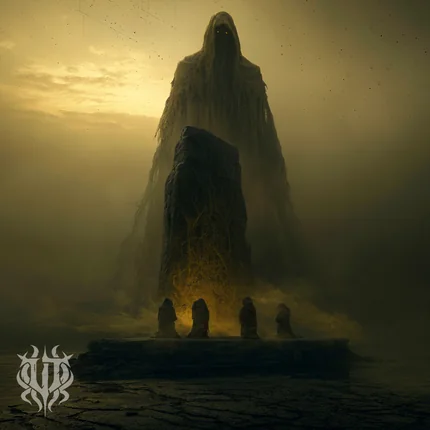
The King In Yellow is a dark metal journey into Carcosa, where Hastur’s influence spreads through dreams, madness and the cursed symbol that can never be forgotten.
References
- Robert W. Chambers — The King in Yellow, Standard Ebooks text
Public-domain transcription. Its contents omit In the Court of the Dragon; this wiki uses a separate verified text for that story.
- Library of Congress — The King in Yellow, F. T. Neely, 1895
Bibliographic record and page scans; the original contents include In the Court of the Dragon.
- Robert W. Chambers — In the Court of the Dragon
Public-domain 1895 text, checked separately because the Project Gutenberg 8492 transcription omits this story.
At a glance
Robert W. Chambers
The King in Yellow, 1895
A play in at least two acts, not reproduced in full
Tattered mantle; Pallid Mask; Carcosa; Lake Hali; Yellow Sign
Not securely identified
Not unambiguously established in Chambers’s original stories