

The Strange High House in the Mist
The Strange High House in the Mist follows Thomas Olney’s climb to an apparently unreachable cottage above Kingsport. A kindly host introduces him to maritime wonders while keeping one disturbing visitor outside. Olney returns to ordinary life, but the story divides that return from the imaginative vitality now heard in the house above the cliffs.
5 min read · 978 words
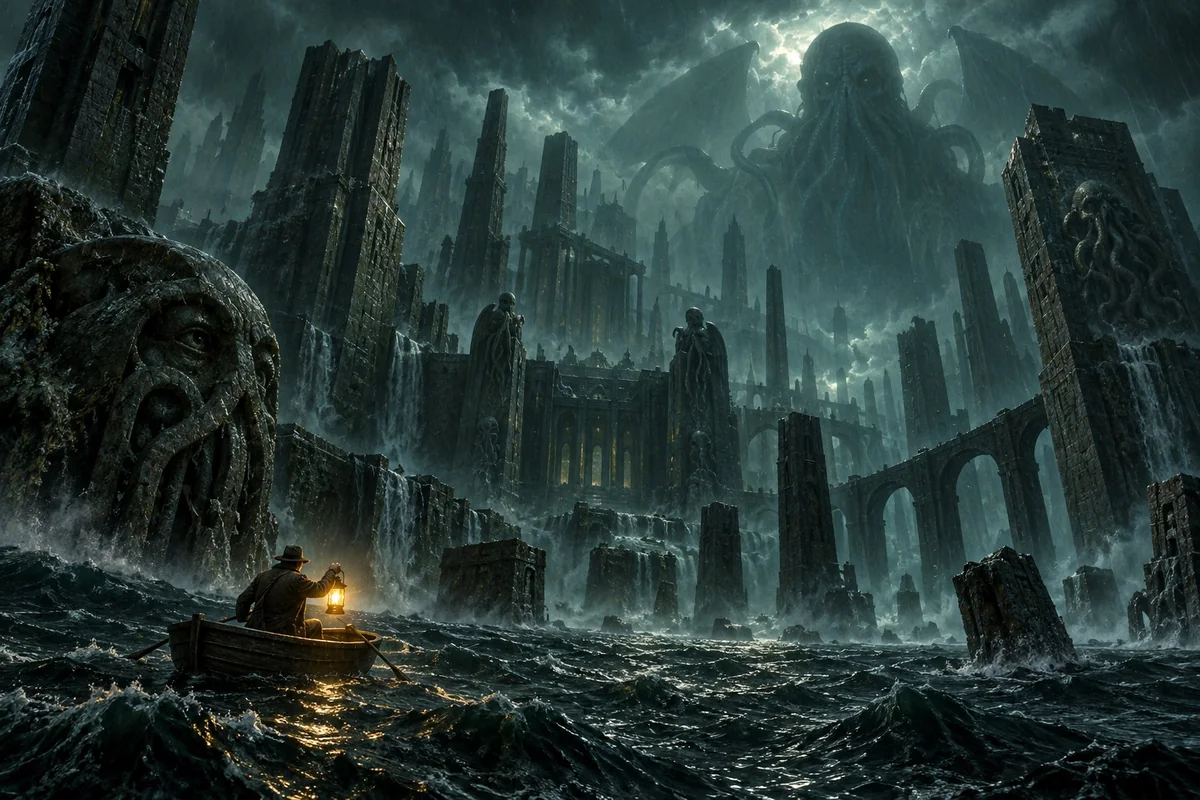
Composition, publication and setting
Lovecraft wrote the story on 9 November 1926. It appeared in Weird Tales in October 1931. Kingsport’s cliffs and sea mist provide a setting in which wonder and danger remain closely joined.
The opening imagines mist carrying secrets from the depths into clouds and then into the thoughts of poets. This makes the landscape an active medium of imaginative communication before Olney begins his physical journey.
Sources: H. P. Lovecraft Archive — fiction in composition order, H. P. Lovecraft Archive — fiction in publication order, The Strange High House in the Mist — original text
The cottage nobody approaches
The highest northern cliff stands near the Miskatonic estuary and seems almost part of the sky. Kingsport’s sailors use its outline in relation to the stars, while treating it with greater fear than the neighboring formations called Father Neptune and the Causeway.
A small ancient house occupies the summit. Its lights are visible in the evening, but residents avoid close inspection. Even the Terrible Old Man can only report that it was already the same in his grandfather’s childhood.
The house’s single door faces the sea at the edge of the precipice. Local stories describe arrivals through the air, while ordinary access from the town appears impossible. These details make the problem architectural as well as legendary.
Thomas Olney’s restlessness
Olney teaches philosophy at a college by Narragansett Bay and visits Kingsport with his wife and children. Repetition in his intellectual and domestic life has made him hungry for unfamiliar experience.
He spends mornings looking into the mist, explores old streets and talks with the Terrible Old Man. Unlike the townspeople, he is not restrained by inherited fear; unlike casual summer visitors, he pursues the mystery seriously.
He initially offers himself a practical explanation: the occupant may reach the house from the inland ridge and trade in Arkham. His climb begins as a test of that possibility, even though the desire driving it extends beyond ordinary curiosity.
The inland approach
On an August morning he follows back roads past Hooper’s Pond and an old powder-house, then climbs eastward along the ridge above the estuary. The expected path does not appear. Woods and fields give way to increasingly difficult ground.
After crossing a chasm, he reaches the cottage amid thickening mist. There is no landward door, and the sea-facing entrance opens directly over empty air. The roof and chimney also seem too decayed to remain standing by ordinary means.
He tries the windows and finds them locked. Then he hears the impossible seaward door open and someone moving inside, showing that his own difficult route was not the route used by the returning occupant.
The host and the rejected caller
A black-bearded man with luminous eyes speaks gently from a window and helps Olney inside. The room has dark oak paneling, Tudor furnishings and a greenish watery light. The host appears young while speaking with the experience of immense ages.
He tells of Atlantis, Poseidonis and times before the familiar gods. During the conversation, someone knocks at the door. After looking through a peephole, the host silently closes and locks the windows.
Olney sees a black shape moving past the translucent panes. The visitor leaves without entry. Its identity is not supplied, and the host’s fear establishes a distinction between wonders he welcomes and beings he knows to avoid.
The maritime procession
A later knock follows a recognizable code, and this time the host opens the door at once. A company associated with the sea’s ancient powers enters, including Neptune, tritons and nereids.
Nodens arrives in a great shell supported on dolphins. He reaches out to help Olney and the host aboard, and the procession moves into the mist and sky amid music and thunder.
The passage combines classical marine imagery with Lovecraft’s own imaginative names. It does not identify the host as Nodens: the two appear separately, and the host joins the visiting figure in the shell.
The return and the Terrible Old Man’s interpretation
Kingsport watches the cliff through the storm while Olney’s family waits. At noon the next day he comes down dry and light-footed, but cannot adequately recall the experience or explain his descent.
He speaks about it only with the Terrible Old Man, who concludes that the returning man is not entirely the same person who climbed. Some part of Olney’s spirit, he believes, remains in the house or the mist.
The narrative then describes years of dutiful, uncomplaining routine. Olney no longer feels the restlessness that brought him to the cliff. His family moves to Bristol Highlands and never returns to Kingsport.
A new voice above Kingsport
Meanwhile, the house becomes brighter and more audible. People hear joyful voices, laughter and music; mist thickens, and northern lights appear more frequently around the cliff.
Young men find these sounds attractive rather than frightening. The elders fear that they too will climb and return with their inward vitality missing, leaving the town increasingly listless while the chorus above it grows.
The warning remains partly prospective. The story does not actually narrate a series of later disappearances or the arrival of the gods to occupy the cliff. Those are feared possibilities voiced by the community.
Wonder and loss without a simple verdict
Olney’s experience cannot be reduced to an ordinary murder or an uncomplicated reward. The figure who returns lives safely and performs the expected duties of citizenship, but the language surrounding that life is deliberately dull.
The joy heard above suggests that what he sought may persist elsewhere, while the townspeople understandably fear losing the imaginative lives of their children. The excluded black visitor also prevents the house’s delights from being treated as a guarantee of universal safety.
The result is a divided ending: fulfillment and deprivation may be occurring at once in different parts of the same identity. The story offers the Terrible Old Man’s explanation and the changed behavior without furnishing a technical account of soul division.
Related music
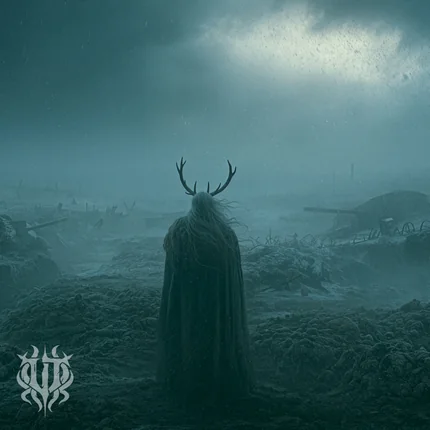
The Dreamkeeper is a dark metal journey into the Dreamlands, inspired by Nodens, the ancient guardian who watches over the boundary between dreams and the unknown.
References
- H. P. Lovecraft Archive — fiction in composition order
Composition dates; question marks and ranges retain the source uncertainty.
- H. P. Lovecraft Archive — fiction in publication order
First publication dates and venues; issue dates can differ from actual release dates.
- The Strange High House in the Mist — original text
The fictional narrative is evidence for what the story says, not proof of events in the real world.
At a glance
H. P. Lovecraft
9 November 1926
1931, October
Weird Tales, 18, No. 3
Fiction