

Kadath
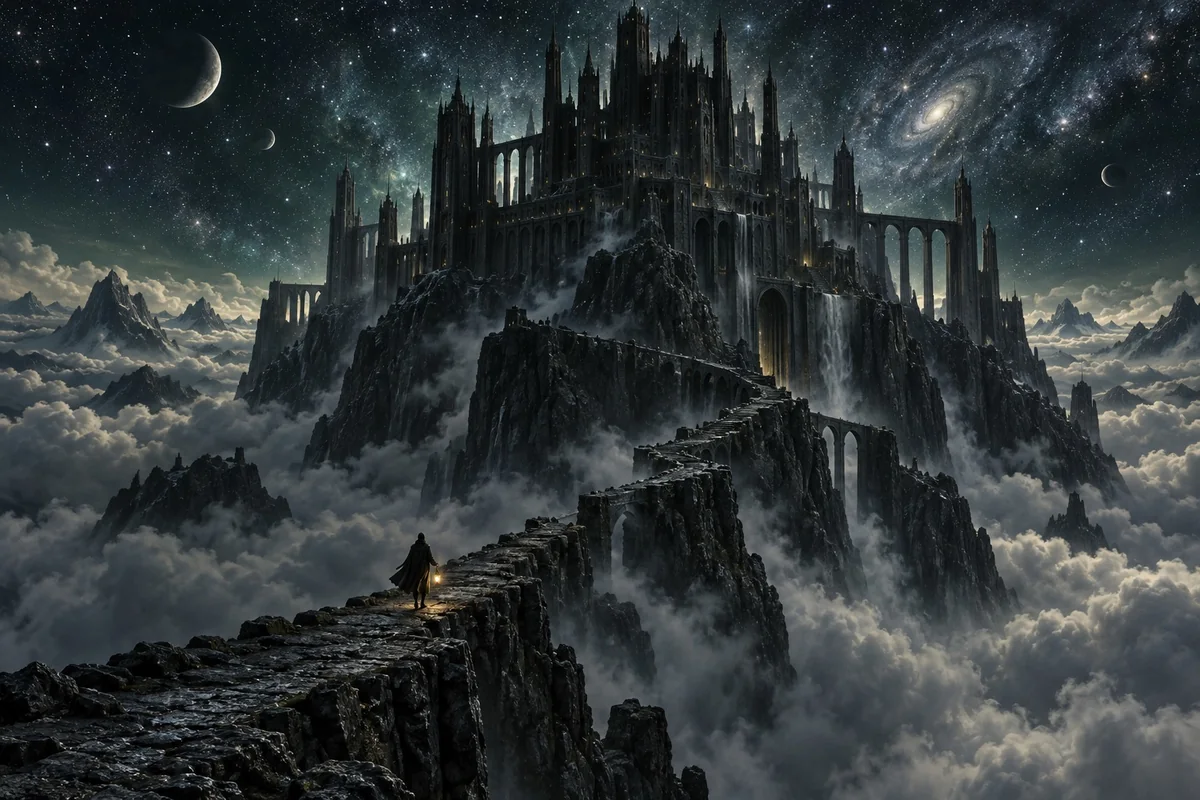
Kadath is the unknown mountain in the cold waste crowned by the onyx stronghold of the earth’s gods. It begins as a place humans should not find and becomes the apparent destination of Randolph Carter’s long dream quest. Reaching it reveals a different problem: the gods have left, while the powers protecting their home are already waiting for him.
5 min read · 947 words
A last refuge for the earth’s gods
The Other Gods explains that human climbers repeatedly displaced the earth’s gods from lower mountains. They finally withdrew to Kadath, where no higher refuge remained. Their new severity reflects both their vulnerability and their determination to keep humans away.
Sources: [1]
The gods sometimes return to earlier homes such as Hatheg-Kla in ships of cloud. These visits do not make those known mountains alternative names for Kadath. The distinction between a place of occasional divine recreation and the concealed permanent stronghold underlies Atal’s later warning to Carter.
The early tale gives no route to Kadath and does not depict someone standing inside its castle. Its inaccessibility is the point: if people knew where it was, their curiosity would lead them into danger.
The destination of Carter’s petition
In The Dream-Quest of Unknown Kadath, Carter wishes to ask the gods to restore access to a beautiful sunset city he has glimpsed in dreams. He therefore seeks their residence as a means to another destination.
Neither the zoogs nor Atal can locate the cold waste. At first there is uncertainty even about whether it belongs to the familiar dream world. The high-priest in Celephaïs and Kuranes also offer warnings without coordinates.
The quest is consequently built from incomplete information. Knowing that Kadath exists, or knowing a story about the gods, is not equivalent to knowing how to reach it.
Sources: [2]
The face on Ngranek and the northern route
Atal reveals the existence of a likeness carved on Ngranek, which Carter uses to identify the distinctive features of the divine race. He recognizes similar faces among the northern sailors trading in Celephaïs.
Their home is Inganok, where a feared desert extends beyond the settled and quarried country. This provides Carter with a direction based on resemblance and geography rather than a direct revelation of Kadath’s position.
The country’s northern guardians and strange quarrying suggest a larger hidden purpose, but Carter still encounters diversions, captivity and misleading guides before approaching the mountain itself. Kadath is not simply the first visible summit outside Inganok’s gate.
Sources: [2]
An army carried against its will
Carter eventually travels north with ghouls and night-gaunts. The enormous carved figures associated with the northern landscape move after them, and the company climbs higher into the air to escape.
Their speed increases beyond ordinary terrestrial movement. Then the night-gaunts fold their wings: an external force is carrying the entire company, and neither the riders nor their mounts control the flight.
The episode defeats Carter’s hope of arriving as an impressive, independent petitioner. Ghouls may acknowledge no master and night-gaunts may serve Nodens rather than Nyarlathotep, but the Other Gods can still overpower them. Lack of allegiance does not equal immunity.
Sources: [2]
The mountain and onyx castle
A pale light appears above a black mass that obscures more and more of the northern stars. The mountain rises to a height at which clouds and familiar peaks lie far beneath it. Its summit supports towers, domes, terraces and battlements on an almost ungraspable scale.
The beacon proves to be a single luminous window in one of the highest towers. Its arch is described as alien to ordinary earthly design. The onyx walls and clustered turrets make the castle both a built structure and an extension of the immense mountain.
Carter connects its scale with the enormous quarry he saw north of Inganok. The comparison suggests where its material might have come from, but the story does not supply a complete construction history, named architect or dated foundation.
Sources: [2]
The empty throne room
The wind sweeps the army through a gate, courtyard and enormous interior passages into the lighted tower room. Its dimensions initially make Carter unsure whether he is indoors. When the current releases them, they descend helplessly to the floor.
The earth’s gods are absent. There is no assembly waiting to hear Carter’s prayer and no ordinary royal audience. Three trumpet blasts then remove the ghouls and night-gaunts from sight, leaving him alone.
The castle’s apparent emptiness is therefore selective. Its rightful occupants are gone, but other presences control the room and its visitors. The tale gives no account of where Carter’s companions are sent after their disappearance.
Sources: [2]
Nyarlathotep’s explanation
A ceremonial procession introduces a figure resembling an ancient pharaoh. He tells Carter that the gods have deserted Kadath for the sunset city Carter created from his childhood memories.
This explanation changes the meaning of the quest. Carter has reached the supposed source of a withheld gift only to learn that the gods themselves have appropriated what he already made. Kadath’s abandoned halls are a symptom of their desire for his city.
The speaker claims that Carter must persuade the gods to return, then provides a shantak and directions that lead toward cosmic destruction. He identifies himself as Nyarlathotep before departure. The later narration explicitly exposes the promised assistance as a cruel deception.
Sources: [2]
The final return of the gods
Carter escapes the fatal journey by recognizing his dream state and turning toward the remembered waking world. Nyarlathotep subsequently returns to Kadath with the earth’s gods, whom he has removed from Carter’s city himself.
The ending disproves his claim that only Carter could accomplish their return. Kadath resumes its role as their residence, but the episode has revealed the imbalance between the sheltered Great Ones and the messenger able to manipulate them and their visitor.
No complete map of the castle results from Carter’s passage. Its importance is narrative and relational: a hidden seat of apparently approachable gods becomes the setting in which their much more dangerous protector exposes and exploits the traveler’s desire.
Sources: [2]
Related music
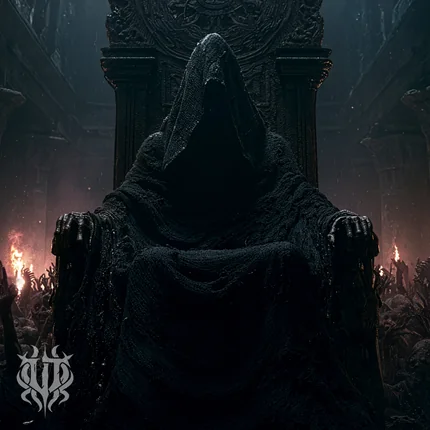
A Thousand Masks is a dark metal song inspired by Nyarlathotep, the Crawling Chaos who walks among humanity, hiding behind countless faces and whispered lies.
References
- The Other Gods — Unspeakable Tales ebook
The fictional narrative is evidence for what the story says, not proof of events in the real world.
- The Dream-Quest of Unknown Kadath — original text
The fictional narrative is evidence for what the story says, not proof of events in the real world.
At a glance
Cold waste in the northern reaches of the dream journey
Onyx castle atop an immense mountain
Great Ones, the gods of earth
The earth’s gods are absent
Nyarlathotep
The gods have been returned by Nyarlathotep