

Kuranes
Kuranes is the dream name of an impoverished Englishman who becomes ruler of Ooth-Nargai, Celephaïs and the sky around Serannian. He first appears as the protagonist of Celephaïs and later receives Randolph Carter in The Dream-Quest of Unknown Kadath. The two stories connect extraordinary creative power with a longing that power cannot finally satisfy.
5 min read · 913 words
Name, ancestry and failed authorship
Celephaïs does not disclose Kuranes’s waking name. It describes him as the last of his family, dispossessed of its land and money and living alone in London. His childhood home, Trevor Towers, stands in an English coastal landscape associated with thirteen generations of ancestors.
Sources: [1]
He writes accounts of dreams, receives ridicule and eventually stops writing. The imagination that fails to secure a public literary life becomes the means of finding a different identity. Kuranes is therefore both a name discovered in dream and a position unavailable to him among his waking contemporaries.
The narrator’s sympathy is closely attached to hereditary memory and hostility toward modern commercial society. These values explain the contrast between the dispossessed dreamer and the wealthy buyer of his ancestral home; they should be recognized as the narrative’s social outlook.
Creating and rediscovering Ooth-Nargai
As a child he dreams of Celephaïs during an afternoon sleep near the cliffs. Forty years later he recognizes it after descending through an abyss at the end of his childhood village. On a subsequent visit, familiar inhabitants and untouched buildings seem to confirm that the place has waited for him.
The knights who later escort him there say that he created Ooth-Nargai in his dreams. They use that creative origin to justify appointing him its chief god. The statement belongs to the procession’s explanation of his new status; it does not establish that he created every region of the Dreamlands or controls all its inhabitants.
Even before the final arrival, he remains vulnerable to awakening and unable to find the city at will. His powers are consequently not presented as universal command over dreams. Much of the story concerns the painful difference between imagining a place and recovering access to it.
Sources: [1]
The traveler beyond familiar reality
His search takes him through deserted gardens, a ruined city and the vicinity of Leng’s masked high-priest. Drug-assisted sleep also carries him into a formless region inhabited by colored gases. There a violet intelligence treats the matter-filled universe as only one kind of infinity.
The Dream-Quest later names the violet being S’ngac and reports that it warned him about Nyarlathotep and Azathoth. Carter regards Kuranes as an exceptionally experienced traveler who returned sane from the star-gulfs.
That reputation gives his warnings unusual weight, but does not make him omniscient. When Carter asks about Kadath or the sunset city, Kuranes cannot locate either one. His knowledge establishes reasons for caution rather than a complete cosmic map.
Kingship and bodily death
The end of Celephaïs grants him rule over Ooth-Nargai and neighboring dream regions, with alternating courts in the city and in Serannian. It immediately pairs this success with the body of a tramp washed against the rocks below the English village.
The Dream-Quest makes the separation explicit: Kuranes’s body is dead, preventing a physical return to his old home. His continuing presence in the dream world nevertheless allows him to recognize Carter, receive a visitor and alter the landscape of his kingdom.
The stories thus distinguish bodily survival from the persistence of the dream personality. They do not provide a general procedure by which every dying dreamer can acquire such a kingdom.
The recreated Cornwall
By Carter’s visit, Kuranes has become weary of the palaces and marvels that once seemed sufficient. East of Celephaïs he has dreamed a small countryside resembling Cornwall: meadows, cliffs, a fishing village, a Gothic manor and an abbey with ancestral names in its churchyard.
He selects inhabitants with English-looking faces and tries to teach them the remembered speech of Cornish fishermen. A gatekeeper and butler replace the ceremonial attendants Carter might expect from a dream monarch. The library window frames a reconstruction of the ordinary world he has lost.
These details also reveal the limits of the reconstruction. Trees and accents are approximations, and the ruler still wishes for his nurse, mother and childhood routine. He can imitate the setting but cannot recover the relationships and historical moment that gave it meaning.
Sources: [2]
Advice to Randolph Carter
Kuranes and Carter knew each other in waking life. Their reunion allows them to discuss both dream travel and the familiar landscapes of England and New England. Kuranes warns against approaching the earth’s gods because the Other Gods protect them.
His deeper objection concerns Carter’s expectation of contentment. Having gained his own long-desired city, he suspects that Carter’s destination may also disappoint once it loses the support of half-remembered longing. He urges attention to the places that formed Carter’s emotional life: Boston, Kingsport, Arkham and the surrounding countryside.
Carter listens but continues his quest. Kuranes does not imprison him, provide an escort or resolve the problem by royal command. His function is advisory, and his own dissatisfaction anticipates the importance of remembered home in Carter’s final discovery.
Sources: [2]
A changing rather than fixed happy ending
Celephaïs promises everlasting happiness; The Dream-Quest portrays a dissatisfied ruler. Both statements belong in his account. The later portrait develops the consequences of his escape instead of preserving the earlier conclusion as a timeless psychological condition.
Kuranes is also distinct from the comparatively weak earth’s gods whom Carter seeks. The title conferred by his own knights should not be used to place him automatically in a universal hierarchy with Cthulhu, Yog-Sothoth or the Other Gods. His identifiable domain is the dream region associated with his creation and rule.
Related music
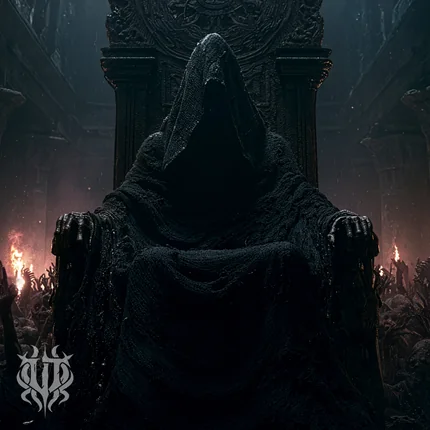
A Thousand Masks is a dark metal song inspired by Nyarlathotep, the Crawling Chaos who walks among humanity, hiding behind countless faces and whispered lies.
References
- Celephais — Unspeakable Tales ebook
The fictional narrative is evidence for what the story says, not proof of events in the real world.
- The Dream-Quest of Unknown Kadath — original text
The fictional narrative is evidence for what the story says, not proof of events in the real world.
At a glance
Celephaïs
Not disclosed
England; childhood landscape later identified with Cornwall
Ooth-Nargai and the sky around Serannian
A recreated English manor east of Celephaïs
Friend from waking life; experienced dream traveler