

Haïta the Shepherd
Haïta the Shepherd is Bierce’s pastoral fable about a young man whose simple duties are disturbed by questions about existence and whose encounters with Happiness prove painfully brief. It is also the original literary setting of Hastur, presented here as a responsive god of shepherds rather than the monstrous figure familiar from some later Mythos treatments.
5 min read · 921 words
Publication and literary form
The bibliography in Donald T. Blume’s study records Haïta, the Shepherd in the San Francisco periodical Wave on 24 January 1891. The collected version in Can Such Things Be? supplies the text discussed here.
The story uses a compact pastoral setting, personified Happiness and an explanatory encounter with a hermit. Its form is closer to a philosophical fable than to an investigation of a threatening creature. The later fame of the name Hastur should not obscure the original subject: the difficulty of finding and retaining happiness.
Sources: Donald T. Blume — Ambrose Bierce’s Civilians and Soldiers in Context, Ambrose Bierce — Can Such Things Be?
The shepherd’s ordinary world
Haïta tends his sheep, prays at Hastur’s shrine and plays a reed pipe in the shade. He lives in a cave and eats simple food. Minor woodland and stream divinities sometimes appear at the edge of his vision but vanish when he looks directly at them.
From those fleeting encounters he forms an early idea that happiness may arrive when not sought but disappears under direct pursuit. The story establishes its central problem before Happiness appears in person. Haïta’s world seems limited, but the relationship between attention and enjoyment already troubles it.
His religious life also has a social dimension. During floods he asks Hastur to protect people living beyond the valley. He is willing to stop worshipping if they are abandoned, and the narrator says that Hastur responds by saving their cities. The young man’s duties are therefore not confined to his own flock.
Sources: Ambrose Bierce — Can Such Things Be?
Questions that disturb the routine
Haïta does not know his own origins or how to understand the end that comes to living things. Observing decay among animals makes the uncertainty personal. He wonders how to perform his duties without knowing why he exists or how long his life will continue.
The questions change his experience of the same surroundings. He becomes melancholy, hears ominous suggestions in the wind and neglects the cheerful habits that had organized his days. The animals still require care, but his thought has become detached from the practical rhythm of that care.
He finally resolves to do his duty as best he can without waiting for knowledge the gods withhold. This decision does not answer the philosophical questions. It changes what he will do while they remain unanswered.
Sources: Ambrose Bierce — Can Such Things Be?
The first two appearances
A radiant maiden appears after that resolution. She says that she is no goddess and offers to remain if he is truthful and dutiful. Haïta immediately asks who she is and why she has come. The question makes her withdraw, and his attempts to find her fail.
The needs of his frightened sheep interrupt his grief. He returns them safely and thanks Hastur. When he wakes, the maiden is beside him again, linking her return with his renewed attention to duty.
This time Haïta wants to keep her until his own end. He also wishes that she were a male companion with whom he could wrestle and race. She leaves again. Outside, rain and a swollen stream threaten the flock, returning him to obligations that cannot be suspended for the sake of his desire.
Sources: Ambrose Bierce — Can Such Things Be?
Service to the hermit and the third loss
Haïta brings food to an elderly hermit and resolves to carry him home so that he can care for him. The thought gives his strength a practical purpose. The maiden appears a third time and offers companionship if he can accept her without demanding explanation.
He promises devotion but asks her to remain despite future mistakes. His appeal tries to turn a momentary gift into a guaranteed possession. Once more she vanishes. A group of bears then drives him back to the hermit’s dwelling.
The repeated pattern links her appearance with outward duty and her disappearance with attempts to secure, define or reshape the experience. The story does not require a different supernatural cause for each visit. Its variation tests related forms of the same desire for certainty.
Sources: Ambrose Bierce — Can Such Things Be?
The name Happiness and the final irony
The hermit listens to Haïta’s account and identifies the maiden as Happiness. She comes without being sought, refuses interrogation and leaves at curiosity, doubt or misgiving. Her conditions cannot be satisfied for long.
Haïta admits that each visit lasted only an instant. The hermit answers that, without his mistakes, he might have enjoyed two. The ending sharply limits the comfort that a conventional moral lesson might promise. Better conduct does not produce permanent possession; at most it might briefly prolong what cannot be held.
The irony gives the fable its distinctive edge. It values duty and generosity while refusing to turn them into a reliable bargain for lasting emotional reward. Happiness is personified precisely so that her independence from the shepherd’s wishes becomes visible.
Sources: Ambrose Bierce — Can Such Things Be?
Hastur and the later tradition
Hastur hears prayers, protects cities and remains unseen. No physical description connects him with yellow robes, tentacles or a cosmic prison. The maiden is not identified as his incarnation, and Carcosa does not enter the story.
Chambers later reuses Hastur among the names surrounding The King in Yellow. Lovecraft subsequently alludes to that later vocabulary. Reading those stages in order shows how a name can acquire a vastly different atmosphere without the original tale secretly containing every future interpretation.
For this wiki, the fable is both a source for Hastur’s literary origin and a work worth reading on its own terms. Its central drama concerns a shepherd, his duties, his unanswered questions and a companion whose presence cannot be made permanent.
Sources: Ambrose Bierce — Can Such Things Be?, Robert W. Chambers — The King in Yellow, Standard Ebooks text, The Whisperer in Darkness — original text
Related music
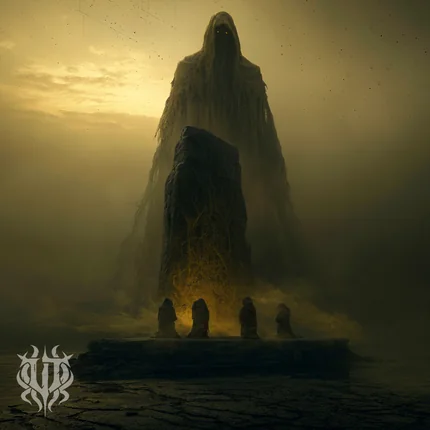
The King In Yellow is a dark metal journey into Carcosa, where Hastur’s influence spreads through dreams, madness and the cursed symbol that can never be forgotten.
References
- Donald T. Blume — Ambrose Bierce’s Civilians and Soldiers in Context
Kent State University Press, 2004. Publisher preview, bibliography pp. 387–389: original newspaper dates for Carcosa and Haïta; edition chronology requires care.
- Ambrose Bierce — Can Such Things Be?
Public-domain collection, including An Inhabitant of Carcosa, Haïta the Shepherd, The Damned Thing and Moxon’s Master.
- Robert W. Chambers — The King in Yellow, Standard Ebooks text
Public-domain transcription. Its contents omit In the Court of the Dragon; this wiki uses a separate verified text for that story.
- The Whisperer in Darkness — original text
The fictional narrative is evidence for what the story says, not proof of events in the real world.
At a glance
Ambrose Bierce
24 January 1891
Wave, San Francisco
Can Such Things Be? collected version
Haïta
Hastur, god of shepherds
Happiness