

Medusa’s Coil
Medusa’s Coil places a murderous family crisis inside a haunted plantation narrative. A traveler hears how Marceline Bedard’s marriage, Frank Marsh’s disturbing portrait and a severed mass of independently living hair destroyed the de Russy household. Written by Lovecraft for Zealia Bishop, the story combines artistic revelation and supernatural persistence with a racist final disclosure that must be identified as the narrative’s prejudice rather than repeated as a valid source of horror.
12 min read · 2,436 words

Authorship, publication and the text discussed
The Archive dates the work with Zealia Bishop to May 1930 and presents the story as written by Lovecraft for her. Its first publication belongs to the January 1939 Weird Tales, volume 33, number 1, pages 26–53. The individual bibliography prints the issue date as January 1938 followed by the correction 1939; the publication-order list places it in 1939.
This article follows the Archive's online text. The distinction matters because an account of a particular text should not silently become a claim that every magazine printing and later edition preserves all the same wording.
The story has six numbered sections. An unnamed traveler's immediate experience encloses Antoine de Russy's long recollection, which in turn contains Denis de Russy's account of the killings. The reader consequently receives crucial events through different witnesses with different opportunities to observe them.
Sources: Medusa’s Coil — original text, H. P. Lovecraft Archive — fiction in composition order, Medusa’s Coil — publication data, H. P. Lovecraft Archive — fiction in publication order
The traveler reaches Riverside
Driving toward Cape Girardeau through unfamiliar southern Missouri country, the narrator loses confidence in his route as a November evening darkens. He leaves his open car near an overgrown gateway and walks toward a plantation house beside a river.
The building has a large classical portico but is badly decayed. What first appears to be an abandoned estate is inhabited by Antoine de Russy, an elderly man afflicted by a painful spinal condition. His complicated directions and the impending storm encourage the traveler to ask for shelter.
Antoine is surprised that anyone would willingly remain there. He nevertheless receives the visitor and explains that he stays because something in the house requires his guardianship. Curiosity then holds the traveler through the night as the old man tells his story.
The frame establishes both attraction and warning. The narrator admires the traces of an old social order and believes that Antoine's manners guarantee a certain standing. Those assumptions affect the sympathy with which he hears the subsequent account.
Sources: Medusa’s Coil — original text
The de Russy family and its version of the past
Antoine dates Riverside's construction to 1816 and describes its origins in a Louisiana planter family. His account idealizes the plantation's former life and treats enslaved people's apparent contentment as evidence of a lost social harmony. That is the perspective of a nostalgic slaveholding tradition, not a neutral description of slavery.
His wife died when their son Denis was born. Antoine then devoted himself to the boy's upbringing, emphasizing family honor and inherited social expectations. Denis attended Princeton, began medical training at Harvard and continued his studies in Paris.
In Paris he renewed his acquaintance with Frank Marsh, an artist from New Orleans interested in unconventional aesthetic and occult experiences. Through that circle Denis encountered Marceline Bedard, who led a ritual group under the name Tanit-Isis.
Antoine's information about this period comes largely through letters and reports. He claims insight into Marceline's ambitions, including an expectation of wealth, but those explanations are his judgments rather than a full account from her own perspective.
Sources: Medusa’s Coil — original text
Marceline and the hair
Marceline claims an aristocratic connection and a succession of incarnations. The Paris group links its activities with ancient Egyptian, Carthaginian and African traditions, along with legends involving snakes and hair. Denis takes her claims and personal attraction seriously, marries her and brings her to Missouri.
Her most conspicuous physical feature is exceptionally abundant black hair extending below her knees when loose. Antoine imagines that it sometimes moves independently, separates into ropelike masses and requires unusual nourishment. These early impressions remain suspicions within his account; later events give the hair a more explicit agency.
Denis is devoted to his wife, while his father finds her increasingly unsettling. Most household servants dislike or avoid her. Sophonisba, an elderly African woman living separately on the estate, responds with marked reverence.
Marceline's appearance is repeatedly described through exoticizing comparisons and assumptions about ancestry. A reliable summary can record what the characters perceive without accepting the text's suggestion that unfamiliar beauty or African descent is itself evidence of evil.
Sources: Medusa’s Coil — original text
Frank Marsh’s visit
Marsh arrives seeking rest after a creative and nervous collapse. Ordinary subjects no longer stimulate him, and he hopes for a return of the imaginative intensity on which his work depends. Antoine finds him cultivated and engaging despite disapproving of his habits.
Marceline initially avoids the visit by going to St. Louis. When she returns, Marsh studies her closely. Their shared interests and French conversation make Denis feel excluded, although he continues to treat his guest courteously.
Marsh eventually asks permission to paint Marceline. He insists that his interest is artistic rather than romantic: she seems to connect him with a larger background of images and forces. He also hints that the finished work may restore Denis to a clearer understanding of his situation.
The distinction between portrait and revelation is already present. Marsh wants to represent more than the visible sitter, and his promise of a kind of rescue implies that the painting will disclose something Denis has failed to recognize.
Sources: Medusa’s Coil — original text
The concealed painting and the managed separation
An attic room becomes Marsh's studio. He works behind a covering that prevents Marceline and the others from seeing the developing canvas. Meanwhile, Antoine believes that Marceline has become romantically attached to the painter.
To reduce the immediate strain on Denis, Antoine arranges for a business agent to summon him to New York on a manufactured pretext. This intervention removes the husband while leaving the painter and sitter together. Antoine assumes he can supervise the situation until the portrait is finished.
An overheard conversation undermines that confidence. Marceline wants ordinary affection; Marsh is impatient with her wishes and absorbed in his work. She warns him against reviving the old rites and refers to Yuggoth, Zimbabwe and R'lyeh. He refuses to uncover the painting and expresses pity for Denis.
Marceline increasingly turns to Sophonisba, with whom she discusses hidden traditions and Kadath. The household's emotional tensions and supernatural implications now reinforce one another, though Antoine still lacks the information that the canvas will reveal.
Sources: Medusa’s Coil — original text
The day of the killings
Antoine takes an unusually large dose of his prescribed opiate for pain and sleeps through much of the day. On waking near sunset he finds the house unnaturally quiet, hears distant wailing and notices blood that has seeped through the ceiling.
Upstairs he discovers Marceline's body, with much of the hair removed. Bloody footprints lead away, accompanied by a broader trail that suggests something moving along the floor. Following them, he reaches the attic and finds Marsh dead, entangled in a dark coil.
Denis is present with a machete. Contrary to Antoine's belief, he has returned secretly, sent the household servants away and gone upstairs intending to confront the apparent betrayal. His subsequent explanation supplies events his father slept through.
The internal dating is not perfectly consistent. Antoine places the visit in summer 1916 but later calls the climactic date Tuesday, 26 August; that calendar date in 1916 was a Saturday. The inconsistency should remain visible rather than be silently repaired by inventing a different year.
Sources: Medusa’s Coil — original text
What Denis says happened in the studio
Denis found Marceline posing for Marsh and demanded to see the canvas. Marsh tried to prevent its exposure, and Denis knocked him unconscious. Marceline then uncovered the painting herself and fled after seeing it.
Looking at the image transformed Denis's interpretation of the marriage. He believed that Marsh had revealed her connection to an ancient, hostile tradition and had been trying to warn him. The account invokes Cthulhu, the Elder Ones, Atlantis and the Necronomicon as part of that imagined background.
Denis took the machete and followed Marceline to her room. He describes killing her after an encounter in which attraction briefly threatened to overcome his resolve. His account repeatedly presents the murder as necessary extermination rather than an act for which he must answer.
That justification belongs to Denis and to the sympathetic presentation of his father. The later supernatural events do not turn every element of the men's possessive, racial or hereditary reasoning into an objective moral conclusion.
Sources: Medusa’s Coil — original text
The severed coil kills Marsh
According to Denis, Marceline's hair continued moving after her death. He cut and pulled it from the scalp intending to burn it, but dropped the mass when the distant wailing distracted him.
The severed braid struck toward him and then moved away like a large snake. Its passage left the broad blood trail Antoine would later follow. It reached Marsh before the injured artist could rise.
Denis says that he tried to free his friend but could not safely use the machete without cutting him. The coil tightened until Marsh died. It then remained around the body, apparently motionless and difficult to remove.
The sequence distinguishes the two deaths: Denis kills Marceline, while the hair kills Marsh in Denis's account. It also separates the hair's independent survival from the question of Marceline's ordinary bodily life. Her death does not terminate the force attached to it.
Sources: Medusa’s Coil — original text
Sophonisba and Denis’s death
The distant cries become intelligible as Sophonisba's lament. She refers to Marceline through the ritual identities Tanit and Isis, invokes Shub-Niggurath and calls upon a figure rendered in her speech as a version of Cthulhu. Her words link the death to traditions she claims to remember from Africa.
The lament is not an eyewitness appearance by the invoked powers. It supplies evidence of a connection between the women and of Sophonisba's understanding of the event. The text's caricatured dialect and depiction of African religion are themselves part of its racial construction.
Hearing the cries, Denis becomes desperate to eliminate everything associated with Marceline through marriage or descent. Antoine tries to disarm him, but Denis kills himself during the struggle. Antoine is unsure whether his son also meant to kill him.
The expanding logic of contamination now threatens the de Russys themselves. The family code that the old man praises has not protected the household from violence; it helps shape the reasoning through which Denis extends that violence.
Sources: Medusa’s Coil — original text
Burials and the false history
Antoine ignores Denis's instruction to burn the coil and the picture immediately. Instead, he buries the three bodies in the cellar with quicklime, placing his son's grave apart from the others. Marsh remains enclosed by the hair.
He cleans the rooms, destroys stained objects and clothes, and conceals the blood marks. When the servants return, he says that the younger people have gone away. Later he has forged letters sent from Paris and arranges reports that Denis and Marsh died in the war, while Marceline entered a convent.
These statements are deliberate fabrications within his confession. They should not appear in a character chronology as actual subsequent travels, military deaths or religious retirement.
The cover-up gradually coexists with the estate's decline. Crops fail, employees leave and the house falls into disrepair. Local suspicions attach themselves to Antoine, but he remains because of the painting and the powers he believes will punish its neglect.
Sources: Medusa’s Coil — original text
The painting as representation and active presence
When Antoine finally uncovers the canvas, Marceline occupies only part of a much larger composition. The setting contains uncertain architecture, unfamiliar geometrical relationships and multiple monstrous figures. He tentatively associates it with R'lyeh and an underwater existence.
That identification is an interpretation, not an independently labeled location within the painting. Likewise, the animal-like figures should not automatically be assigned the names of other Mythos species merely because later readers recognize a resemblance.
Antoine believes that the image retains Marceline's awareness. The eyes seem to watch him, and strands of painted hair appear capable of reaching outward. The work becomes both an extraordinary artistic achievement and an object that imposes obligations on its custodian.
At the same time, a black snakelike thing is reported in the cellar and near Sophonisba's cabin. Antoine fears activity from the buried remains as well as from their painted counterpart. The story connects these manifestations without giving a technical account of how material body, hair and image exchange power.
Sources: Medusa’s Coil — original text
The traveler destroys the canvas
Near dawn Antoine takes his visitor to the attic. Despite damp and decay, the traveler can still see the extraordinary scene. He perceives a change in the painted figure and movement in the hair, then fires repeatedly into the canvas.
The damaged picture collapses. Antoine reacts with terror, explaining that he had been required to guard it and predicting the return of what lies buried. The men flee as sounds begin at the rear of the house and something approaches from the cellar.
Antoine escapes through a window while the traveler forces the main door. A dropped candle appears to start a fire upstairs. Looking back from a distance, the traveler thinks he sees a bald figure overtake the old man and drag him toward the house.
Closer movement in the undergrowth suggests that the coil is following the visitor. He reaches his car and drives away. The sightings are explicitly distant or incomplete, and the narrative does not provide a calm examination of either pursuer.
Sources: Medusa’s Coil — original text
The house that had already burned
A farmer subsequently tells the traveler that Riverside burned five or six years earlier. Antoine vanished at the same time, after cries were heard on a morning following rain. The house in which the traveler spent the night should no longer exist.
The report transforms the framing encounter. It suggests some recurrence or survival of the catastrophe, but the story does not choose a single explanation such as a fully defined time loop. A gray hair on the traveler's sleeve supplies a small physical trace of his contact with the old man.
The visitor does not tell the farmer the full account. Instead, he defends Antoine against local gossip and places responsibility on Marceline. His response shows how thoroughly he has adopted the old man's preferred interpretation of the family tragedy.
Sources: Medusa’s Coil — original text
The racist final disclosure
The last disclosure concerns Marceline's partly African ancestry, which the narrator treats as a further disgrace to the de Russy name. It is important to identify the function of that ending plainly: racial ancestry is made into a supposed horror alongside the actually supernatural events.
The prejudice is not confined to one final sentence. Plantation nostalgia, dehumanizing descriptions of Black characters, fears about inheritance and repeated claims of family purity prepare the conclusion. The narrator's defense of the de Russys reinforces rather than challenges those values.
The story can be analyzed for its haunted image, autonomous hair and unstable temporal frame without accepting that racial premise. Its supernatural fiction does not make African descent morally corrupt, nor does Marceline's ancestry explain real human character.
An encyclopedia should therefore preserve both aspects of the work: what happens within its fictional world, and the discriminatory assumptions through which its narrators decide whose suffering matters and what they consider contamination.
Sources: Medusa’s Coil — original text
Related music
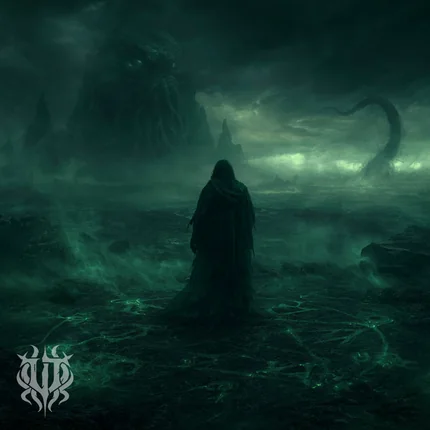
The Dead But Dreaming is a dark folk metal song inspired by The Call of Cthulhu, evoking R’lyeh, forbidden worship and the ancient dream beneath the sea.
References
- Medusa’s Coil — original text
The fictional narrative is evidence for what the story says, not proof of events in the real world.
- H. P. Lovecraft Archive — fiction in composition order
Composition dates; question marks and ranges retain the source uncertainty.
- Medusa’s Coil — publication data
- H. P. Lovecraft Archive — fiction in publication order
First publication dates and venues; issue dates can differ from actual release dates.
At a glance
H. P. Lovecraft, written for Zealia Bishop
May 1930
1939, January
Weird Tales, 33, No. 1
Fiction