

Out of the Aeons
A mysterious mummy in a Boston museum becomes the focus of publicity, occult investigation and fatal attempts to reach its display case. The records connect it with T’yog, an ancient priest who climbed a forbidden mountain to challenge Ghatanothoa. Written by H. P. Lovecraft for Hazel Heald, Out of the Aeons turns the preservation of a body into the possibility of consciousness trapped across almost unimaginable time.
9 min read · 1,729 words

Authorship, publication and the manuscript frame
Lovecraft wrote the story for Hazel Heald in 1933. It appeared in the April 1935 issue of Weird Tales. The narrator is Richard H. Johnson, curator of the fictional Cabot Museum of Archaeology in Boston.
The text presents his account as a manuscript discovered after his death. He has withheld its contents during his lifetime, partly because of the danger he believes disclosure would pose and partly because cult members may threaten those involved.
An executor’s note records subsequent deaths and a disappearance among the principal witnesses. These details do not solve every act of violence, but they extend the fear beyond the museum’s central incident and explain why the document survives as a guarded disclosure.
Sources: H. P. Lovecraft Archive — fiction in composition order, H. P. Lovecraft Archive — fiction in publication order, Out of the Aeons — original text
The island and the acquisition
In May 1878 the freighter Eridanus encounters an uncharted island while traveling between New Zealand and Chile. Captain Charles Weatherbee’s landing party finds evidence that the land has recently risen from the sea.
Among immense worked stones lies an ancient crypt containing a crouching body. Nearby is a small metal cylinder holding a written membrane. The party notices a huge floor opening or trapdoor but lacks the equipment to move it.
The museum arranges to acquire the body and objects. A subsequent search fails to find the island, which appears to have sunk again. The absence of the site prevents ordinary archaeological follow-up and leaves the recovered objects detached from the physical setting that might explain them.
The specimen goes on display in November 1879. For decades it remains an unsettling attraction for a relatively limited audience rather than a mass sensation.
Sources: Out of the Aeons — original text
The body, cylinder and undeciphered writing
The body’s crouched position and partially shielding hands suggest overwhelming fear. Its exterior combines a leathery texture with stonelike hardness, resisting the investigators’ attempts to explain its preservation. The tightly closed eyes are unusually prominent.
The cylinder is made from an iridescent substance that defeats chemical identification. Its decoration suggests an unfamiliar geometry. Inside, the bluish-white membrane carries symbols no consulted specialist can confidently read.
Some scholars notice resemblances to signs in obscure books, including the Book of Eibon, Pnakotic material and the Necronomicon. Those comparisons remain uncertain. The decisive link with von Junzt’s Nameless Cults is delayed because the museum’s ordinary channels of expertise do not initially bring the objects to the appropriate readers.
Sources: Out of the Aeons — original text
Publicity changes the case
A different acquisition draws a newspaper reporter to the museum in 1931. Stuart Reynolds of the Boston Pillar discovers that the unidentified mummy offers a more sensational story than the material he originally came to cover.
His photographs circulate the cylinder’s markings and the written membrane much more widely. Johnson despises the article’s exaggeration and its effect on attendance, but the publicity also enables knowledgeable outsiders to recognize evidence the institution has failed to interpret.
Etienne-Laurent de Marigny publishes an analysis connecting the designs with von Junzt’s account. Johnson consequently reads the forbidden book himself. Swami Chandraputra is also among the unusually informed visitors, a name that links the story with Through the Gates of the Silver Key without requiring this narrative to retell Carter’s entire history.
Sources: Out of the Aeons — original text, Through the Gates of the Silver Key — original text
Mu and the mountain fortress
Von Junzt’s narrative describes K’naa in the lost continent Mu. Mount Yaddith-Gho rises above the region, carrying a fortress constructed by beings from Yuggoth before the beginning of human civilization.
Ghatanothoa remains below the abandoned fortress. Its appearance is said to harden the exterior of anyone who sees it while leaving the brain alive. Even a perfect small representation can produce the effect.
The local priesthood maintains sacrifices to keep the being from emerging. The priests enjoy enormous wealth and authority because society believes that its continued survival depends on their service. The terror is thus both a supernatural possibility and the foundation of political privilege.
Sources: Out of the Aeons — original text
T’yog’s proposed liberation
T’yog, priest of Shub-Niggurath, believes that other divine powers can oppose Ghatanothoa. He prepares a written protection and proposes to climb the mountain, survive the sight of the being and end its threat.
His plan attracts popular support and the king’s blessing. It also carries the possibility of immense personal reward: success could transfer the old priesthood’s honors to him.
Imash-Mo, high priest of Ghatanothoa, first denounces the plan and then secretly removes the protective scroll. A close but ineffective substitute takes its place. T’yog departs without discovering the change, while his opponents retain the actual protection for themselves.
The people watch him climb until the mountain hides him. He does not return. His absence strengthens the order he meant to overturn, and the later exposure of the deception does not overcome the fear produced by his disappearance.
Sources: Out of the Aeons — original text
The tradition survives its homeland
Mu eventually sinks beneath the sea. Survivors carry fragments of its worship and objects into other lands, allowing the cult to persist without a known route back to the original fortress.
The account describes a line of custodians preserving the true scroll even after the meaning of its language has been lost. The object’s continuity matters more than a complete surviving understanding of it.
Johnson sees a disturbing resemblance between this history and the museum’s body, cylinder and membrane. The finding site’s submerged masonry and unopened trapdoor acquire new significance. The ancient narrative begins to act as an explanation for the physical evidence rather than merely a parallel legend.
Sources: Out of the Aeons — original text
Cult activity and attempts on the case
During 1932, reports of unusual religious activity contain distorted versions of the names Ghatanothoa and T’yog. They also refer to a true scroll and a custodian called Nagob. Johnson’s correspondents and the press connect these reports with the museum.
Visitors appear to address the specimen through chants and gestures. Two attempts to penetrate its case lead to arrests. Johnson increases security, while publicity fuels speculation that the body is T’yog and could be awakened.
The narrator identifies suspicious people through racial and national categories, making the sequence inseparable from the story’s xenophobic framing. Those attributions are part of the fiction’s construction of a threatening foreign cult, not documentary evidence about real populations.
Sources: Out of the Aeons — original text
Changes in the mummy
A guard begins to suspect tiny alterations in the hands and face. Johnson initially interprets the changes as disintegration rather than animation. The museum’s specialist confirms softening and relaxation but hesitates to intervene aggressively in case the specimen falls apart.
The possibility of movement changes public curiosity into fear. Attendance drops even while the story remains newsworthy. A visitor claims to have seen the eyes trying to open.
On 24 November a narrow crescent of an eye becomes visible. Handling causes the lids to close again. The event is physically small, yet it threatens the assumption that the museum is exhibiting a wholly inert body.
Sources: Out of the Aeons — original text
The night of 1 December
Screams bring police and museum officials to the building in the early morning. The watchman has been murdered. Upstairs, two intruders lie dead beside a display case from which glass has been cut.
One holds a membrane bearing writing similar to the museum’s scroll, though later examination reveals important differences. His body has no obvious injury. The other has acquired the same gray, stony and leathery exterior as the ancient specimen.
The mummy itself has changed posture, lowered its hands and opened its eyes. The observers feel an abnormal stiffness while looking at it, then notice that this recedes as they handle the intruder’s scroll.
The distribution of effects recalls the old protection: the man holding the writing has avoided petrification, while the other has not. Johnson nevertheless stops short of presenting a controlled experiment or a fully verified reconstruction of everything the intruders intended.
Sources: Out of the Aeons — original text
The image in the eyes
Johnson notices something in the mummy’s eyes that is not simply a reflection of the room. Magnifying lenses reveal an ancient stone chamber with repellent carvings and a large trapdoor opening in the floor.
The image in one eye has faded too far to show the emerging being clearly. In the other, enough remains for Johnson to glimpse an immense, tentacled and partly shapeless creature. He loses consciousness.
By the time he recovers, the image has faded beyond useful inspection. His account implies that the intruders saw it while it was more complete and thus suffered a more severe result.
The scene makes a body into an archive whose contents can act upon the observer. What the museum has preserved is not merely evidence of an ancient terror but a possible means of transmitting it.
Sources: Out of the Aeons — original text
The dissection and final discovery
Examination of the petrified intruder finds unexpectedly fresh internal organs behind the rigid exterior. The museum removes the old specimen from exhibition and arranges a more extensive medical investigation.
On 8 December, Dr. William Minot begins a dissection. The apparently mummified body contains preserved organs and blood, with local damage where the outer shell has been injured.
The opening of the skull reveals a living brain. Those present swear secrecy. This final discovery makes the ancient account’s most terrible claim physically immediate within the story, though the patient’s own consciousness and memories remain inaccessible to them.
Sources: Out of the Aeons — original text
Knowledge, publicity and institutional authority
Johnson repeatedly condemns sensational journalism and popular curiosity. Yet the publicity he dislikes distributes the images that permit the crucial identification. The institution’s conservatism protects its dignity while also delaying recognition.
The narrative does not simply replace science with credulity. Its investigators make observations, compare objects and perform examinations. The disturbing issue is that their familiar categories fail to accommodate the evidence they produce.
Their refusal to try the protective scroll also remains troubling. They reject the proposal as superstition even after events have repeatedly resembled the legend. The story leaves unresolved whether institutional caution has preserved safety, prevented rescue, or done both at once.
Sources: Out of the Aeons — original text
A different form of survival
The central revelation reverses the usual value of preservation. A body surviving the ages might ordinarily be an archaeological marvel. Here, survival may mean that the person inside has endured every interval that the observer regards as dead history.
T’yog’s failed attempt and the museum’s discovery are thus one continuous predicament viewed from opposite ends. The supposed mummy’s silence is not proof of an absence of experience.
Ghatanothoa’s power also changes the relation between representation and danger. The being need not travel to Boston: an accurate trace can carry its effect. The final horror arises from the combination of living memory, bodily imprisonment and an image that should have remained inaccessible.
Sources: Out of the Aeons — original text
Related music
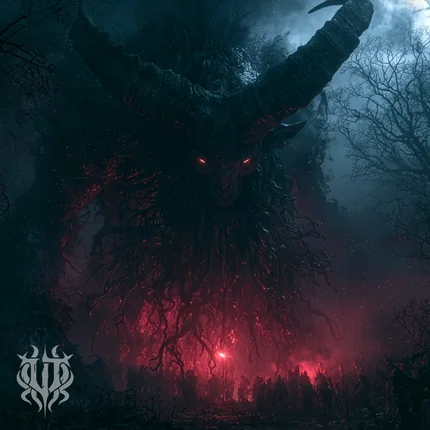
The Black Goat of The Woods is a dark metal tribute to Shub-Niggurath, the ancient woodland deity whose forgotten cults gather beneath twisted trees and indifferent stars.
References
- H. P. Lovecraft Archive — fiction in composition order
Composition dates; question marks and ranges retain the source uncertainty.
- H. P. Lovecraft Archive — fiction in publication order
First publication dates and venues; issue dates can differ from actual release dates.
- Out of the Aeons — original text
The fictional narrative is evidence for what the story says, not proof of events in the real world.
- Through the Gates of the Silver Key — original text
The fictional narrative is evidence for what the story says, not proof of events in the real world.
At a glance
H. P. Lovecraft; Hazel Heald
1933
1935, April
Weird Tales, 25, No. 4
Fiction