

The Demoiselle d’Ys
The Demoiselle d’Ys is a romantic supernatural tale in which an American traveler lost on the Breton moors encounters a young woman living in an apparently vanished historical world. Its conclusion joins a sudden return to ruins with evidence of a love that has already become part of the past. The story follows the four principal forbidden-play tales in The King in Yellow.
5 min read · 960 words
A traveler lost on the moors
Philip ignores advice to take a guide before going shooting near Kerselec. The landscape proves deceptive: what seemed from a distance to be shallow hollows and scattered rocks becomes a country of deep valleys and large cliffs. Streams lead inland rather than giving him a reliable route to the coast.
As evening comes, fatigue forces him to contemplate spending the night outside. A falcon strikes a hare nearby. Its fittings show that it belongs to someone, and a young woman appears to retrieve bird and quarry. Philip recognizes her arrival as a possible rescue from his immediate predicament.
The opening makes disorientation physical before it becomes temporal. His confident reading of the terrain fails, preparing for a much larger failure to understand where, or when, he has arrived.
Sources: Robert W. Chambers — The King in Yellow, Standard Ebooks text
Jeanne and the strange terms of hospitality
The young woman explains that he cannot reach Kerselec that night. She speaks of the moors as easy to enter but potentially requiring centuries to leave. Philip initially assumes that he has misunderstood rather than accepting the statement literally.
Two servants, Hastur and Raoul, arrive with the hunting equipment. The girl offers food and shelter in her own home. Their progress across the moors includes hounds, bells and a hunting horn before they reach a fortified residence with a moat and drawbridge.
The welcome is formal and affectionate. Philip becomes increasingly conscious of his hostess’s beauty and of the unfamiliar customs surrounding her. The servants’ presence and the household’s routines give the place a functioning everyday life, rather than the emptiness of a conventional abandoned castle.
Sources: Robert W. Chambers — The King in Yellow, Standard Ebooks text
A household outside the familiar present
The next morning Philip hears the older vocabulary of falconry and discovers that his clothes have been replaced with garments belonging to another period while his own dry. His hostess’s dress confirms the historical difference he has begun to suspect. He nevertheless finds the older clothing more attractive than his own.
She identifies herself as Jeanne d’Ys, nineteen years old, living with her nurse Pélagie and the servants who served her parents. Her knowledge of the outside world is extremely limited. Her books are old, and the moors carry a legend that those lost in them may never return.
The account does not provide a scientific device, an explained spell or a precise moment of transit. Philip has entered a situation whose anomalies accumulate through language, clothes, architecture and biography. Desire increasingly displaces his original concern with the way home.
Sources: Robert W. Chambers — The King in Yellow, Standard Ebooks text
Love and the language of falconry
Philip and Jeanne recognize their attraction through a passage in which he experiences mutual understanding before ordinary speech. They later name their love more directly. He agrees to remain for a time and promises frequent visits afterward, without understanding whether the journey will permit them.
Jeanne shows him her birds and explains their training. The terminology becomes part of their courtship: capture, taming and return can describe both the falcon and the lover. Philip willingly imagines himself bound to her rather than treating attachment as something from which to escape.
Hastur appears here as a falconer in the household. The tale offers no revelation that he is a god in disguise and no direct role for the forbidden play. The shared name is a connection within the collection, but it should not erase the story’s stated characters and setting.
Sources: Robert W. Chambers — The King in Yellow, Standard Ebooks text
The bite and the changed landscape
A snake disturbs the falcons. Jeanne identifies it as dangerous and fears for Philip. As they embrace, it bites him. He moves her away from the danger, kills the snake and collapses while she holds him.
When he regains awareness, the stream, rock and crushed snake remain, but the household has disappeared. Trees grow through ruined masonry where the residence stood, and the birds’ perches and cultivated garden are gone. A falcon rises from the ruins and vanishes into the sky.
The retained details give the transition continuity. Philip cannot simply dismiss the whole visit as a disconnected dream when the site and the animal remain before him. Yet the story supplies no external witness to explain what has occurred.
Sources: Robert W. Chambers — The King in Yellow, Standard Ebooks text
The memorial and the warm glove
Philip kneels near a ruined shrine to the Virgin and reads a memorial to Jeanne. It says that she died young for love of a stranger named Philip and gives the year 1573. His own name has become part of a past that appears to have ended long before his arrival.
A woman’s glove lies on the cold stone, still warm and fragrant. That final object holds the immediate sensory reality of Jeanne against the historical distance implied by the ruins. The ending does not recount another meeting or show Philip recovering a route to her.
The story therefore gives the encounter an emotional completion through loss rather than an explanation of the mechanism. Its last evidence is both intimate and impossible: a memorial from the distant past beside an object that seems newly left.
Sources: Robert W. Chambers — The King in Yellow, Standard Ebooks text
Its place beside the King in Yellow stories
The Demoiselle d’Ys shares the collection’s interest in worlds that ordinary perception cannot securely locate. It differs from the opening sequence by centering on love, hospitality and separation rather than the destructive reading of a forbidden drama.
The moors’ attraction and danger remain inseparable. What begins as rescue from fatigue leads Philip into an attachment that his return to ordinary time cannot preserve. The historical world is not merely a threat; losing it is the catastrophe.
Reading this story after the four principal play-connected tales reveals a change in emotional direction within the collection. Chambers’s supernatural imagination includes longing for the inaccessible as well as dread of its intrusion.
Sources: Robert W. Chambers — The King in Yellow, Standard Ebooks text
Related music
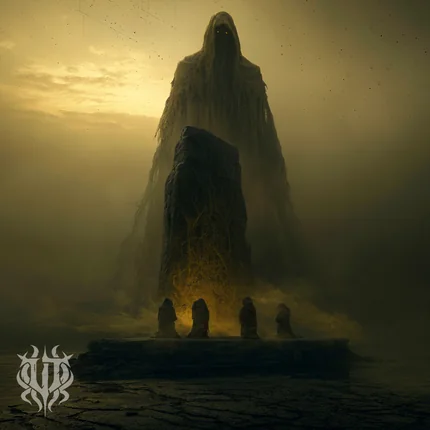
The King In Yellow is a dark metal journey into Carcosa, where Hastur’s influence spreads through dreams, madness and the cursed symbol that can never be forgotten.
References
- Robert W. Chambers — The King in Yellow, Standard Ebooks text
Public-domain transcription. Its contents omit In the Court of the Dragon; this wiki uses a separate verified text for that story.
At a glance
Robert W. Chambers
The King in Yellow, 1895
Fifth story
Philip, an American traveler
Jeanne d’Ys
1573
Raoul, Gaston, Hastur and Sieur Piriou Louis