

The Other Gods
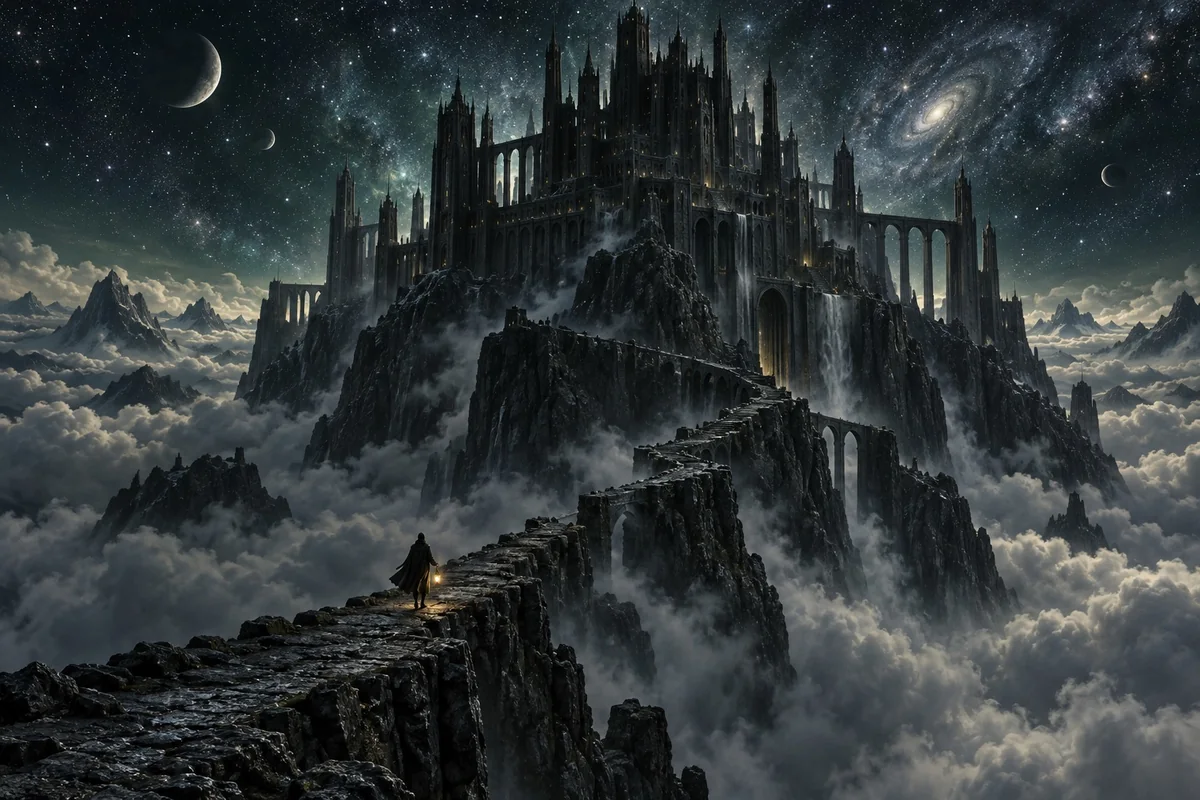
The Other Gods follows Barzai the Wise and his younger companion Atal as they climb Hatheg-Kla to see the gods of earth. Barzai believes knowledge can overcome divine restrictions. His final cries reveal that the apparently vulnerable earth gods have protectors far beyond the powers he expected to confront.
5 min read · 954 words
Composition and publication
The story was written on 14 August 1921 and first published in The Fantasy Fan in November 1933. Its long interval before publication separates its early place in Lovecraft’s development from the moment it reached readers.
It expands a setting already associated with Ulthar and its cats. Its divine geography, including Kadath and Ngranek, becomes important in The Dream-Quest of Unknown Kadath. The later work adds named cosmic powers and a much longer journey, but the short tale already establishes the essential distinction between earth’s gods and their more formidable guardians.
Sources: H. P. Lovecraft Archive — fiction in composition order, H. P. Lovecraft Archive — fiction in publication order, The Other Gods — Unspeakable Tales ebook, The Dream-Quest of Unknown Kadath — original text
The gods’ retreat
The opening explains that the gods of earth once lived on lower mountains. Human climbers repeatedly drove them higher until they withdrew to unknown Kadath in a cold waste. With no further refuge available, they became less willing to tolerate intrusion.
They nevertheless revisit their former homes in ships of cloud. Their tears are mistaken for rain and their sighs for mountain winds. Hatheg-Kla is one of the places where they return to dance under the moon.
This introduction gives the gods an emotional vulnerability: they, too, remember lost homes. It also makes the climber’s ambition an intrusion into a refuge, even before the catastrophic protection of the Other Gods is revealed.
Barzai’s confidence and Atal’s caution
Barzai lives in Ulthar and has studied the Seven Cryptical Books of Hsan and the Pnakotic Manuscripts. He understands enough divine lore to gain a reputation approaching divinity and believes that his knowledge can shield him from the gods’ anger.
Atal, his disciple, is a young priest and the son of an innkeeper. Barzai’s father was a landgrave, and the narration ironically associates the older man’s social background with freedom from ordinary superstition. His confidence, however, will prove much less useful than the fears he dismisses.
The villagers of Hatheg warn them against climbing the mountain, particularly at night when clouds cover the summit. Barzai proceeds because he thinks his scholarship places him outside the conditions that govern less learned people.
The approach and the wait
The travelers cross the stony desert beyond Hatheg and reach the mountain on their thirteenth day. Their ascent takes three days of climbing through broken rock, snow, thinning air and difficult chasms.
They then wait for clouds. Four nights pass without the required conditions. On the fifth, at the full moon, dense clouds gather around the summit and hide it from sight. Barzai listens for the signs he expects and begins climbing again.
The methodical timing makes the expedition more than an impulsive act. Barzai has matched inherited lore to an anticipated celestial occasion. His error concerns the scope of that lore and the assumption that understanding a ritual setting also means controlling its risks.
A voice beyond the cliff
Atal follows reluctantly while Barzai moves ahead with astonishing ease. The older man disappears beyond an overhanging cliff, leaving Atal to hear his excited declarations from above.
Barzai says he can hear the gods singing and believes they fear him. He boasts that their barriers cannot stop his wisdom. Atal does not hear the divine voices himself; readers receive the interpretation through Barzai’s increasingly exalted speech.
Then the terrain changes in a more disturbing way. Climbing becomes unnaturally easy, as if the ordinary physical laws no longer apply. The same apparent assistance that seems to confirm Barzai’s mastery begins to suggest a force drawing both men upward.
The unpredicted eclipse
The moon darkens in an eclipse absent from the books Barzai knows. His account shifts from triumph to confusion: the gods’ apparent cries of fear become laughter, and the slopes seem to extend into the sky.
At last he recognizes the Other Gods, whom he describes as guardians of the weaker gods of earth. His final warning tells Atal not to look and to retreat. Barzai himself appears to be falling upward into the heavens.
Atal closes his eyes and ears and struggles downward against the pull. A tremendous thunderclap wakes people in Hatheg, Nir and Ulthar, who witness the strange eclipse. When the moon returns, Atal is safe on the lower snows, having seen neither group of gods.
What the searchers find
Men from the surrounding settlements later climb by daylight to look for Barzai. They find a gigantic symbol cut into the summit, about fifty cubits across, resembling a sign in unreadably ancient portions of the Pnakotic Manuscripts.
The narrative also mentions Sansu, an earlier climber whose ascent is recorded in the manuscripts. His account says that he found only rock and ice. The parallel points toward an antiquity that the surviving readers cannot fully interpret; it does not provide a translated explanation of the sign.
Barzai is never found. Atal refuses to pray for his soul’s rest, and the communities retain their fear of eclipses and cloud-hidden summits. The earth’s gods continue returning to Hatheg-Kla, secure in their protection.
Knowledge, testimony and later cosmology
The central reversal is not that Barzai knows nothing. Much of his knowledge appears effective: he finds the right mountain and occasion and seems to recognize the earth gods. The failure comes when partial knowledge becomes a claim of supremacy over an order larger than he anticipated.
Atal’s survival also preserves a limit on description. He hears the climber’s cries and experiences the changed pull of the mountain, but deliberately refuses the decisive sight. The tale never supplies an anatomical catalogue of the Other Gods.
The Dream-Quest later names Nyarlathotep as the soul and messenger of the powers protecting the Great Ones. That development belongs in the connected reading, but Nyarlathotep and Azathoth are not named in this short narrative itself.
Sources: The Other Gods — Unspeakable Tales ebook, The Dream-Quest of Unknown Kadath — original text
References
- H. P. Lovecraft Archive — fiction in composition order
Composition dates; question marks and ranges retain the source uncertainty.
- H. P. Lovecraft Archive — fiction in publication order
First publication dates and venues; issue dates can differ from actual release dates.
- The Other Gods — Unspeakable Tales ebook
The fictional narrative is evidence for what the story says, not proof of events in the real world.
- The Dream-Quest of Unknown Kadath — original text
The fictional narrative is evidence for what the story says, not proof of events in the real world.
At a glance
H. P. Lovecraft
14 August 1921
1933, November
The Fantasy Fan, 1, No. 3
Fiction