

Leng
Leng is the feared cold plateau reached by Carter beyond the mountains east of Inganok. Its stone villages, almost-human inhabitants and prehistoric monastery reveal the connection between the black-galley trade, the moon-beasts and the guarded approaches to Kadath.
4 min read · 770 words
Geography in The Dream-Quest of Unknown Kadath
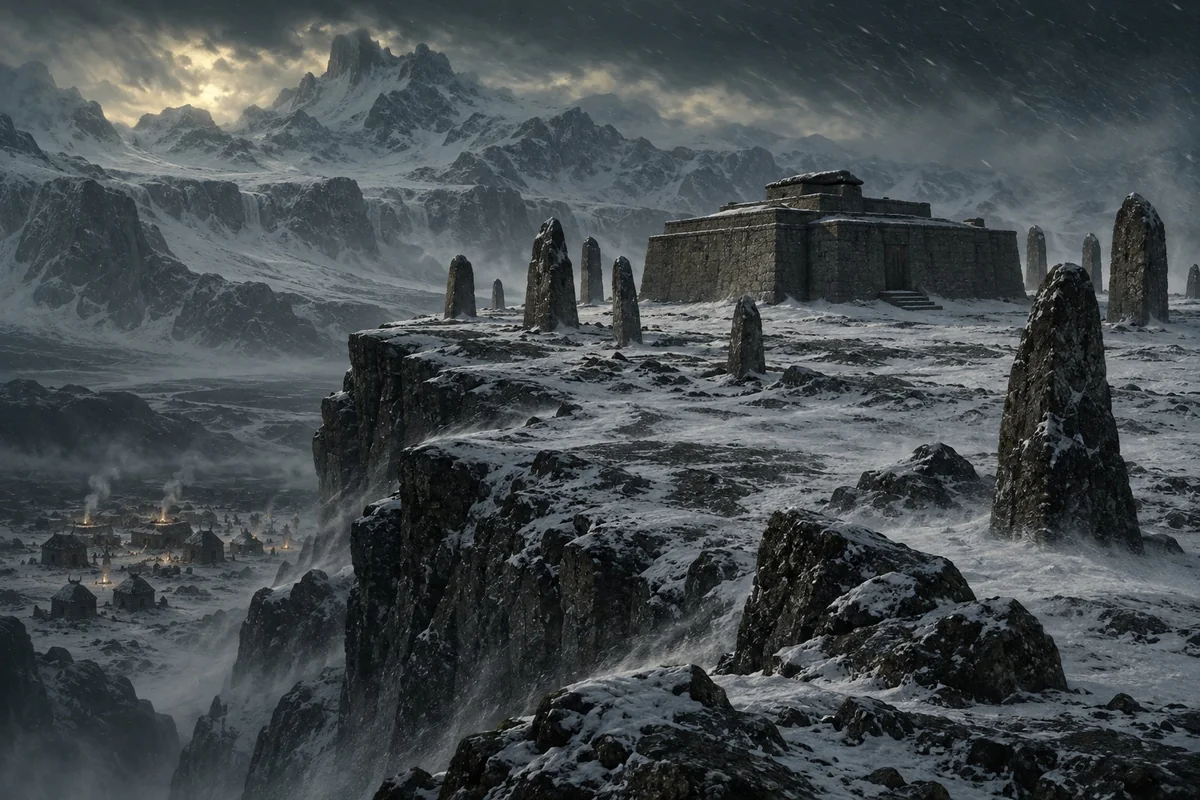
Inganok’s people believe Leng lies beyond their high eastern mountains, although the barrier prevents easy confirmation. Elsewhere, reports place access to Leng by different oceans. Within the quest, Carter crosses the mountains as a prisoner on a shantak and sees the plateau himself. Granite huts, scattered stone villages, fires, cold wastes and a high tableland replace the cultivated country he has left behind.
Sources: [1]
The plateau is connected through passages to the coastal ruins of Sarkomand and through its monastery’s legendary pit to deeper regions. These connections make Leng part of a layered geography rather than an isolated point on a normal map. The present account follows the route and descriptions in this narrative; a name recurring in other stories need not carry an identical set of mapped boundaries.
The people of Leng
At first Carter sees distant figures dancing around fires. As his shantak descends, he recognizes physical features previously concealed by the black-galley merchants’ clothing: hooves, small horns, broad mouths, fur and short tails. They are the same kind of almost-human beings he encountered as traders in Dylath-Leen and as subordinates on the moon.
This recognition separates Leng’s inhabitants from their lunar masters. The moon-beasts are pale, eyeless, tentacle-faced creatures of a different anatomy. The inhabitants of Leng can appear sufficiently human when dressed to conduct commerce, and that outward role conceals their place within the larger system of domination.
The monastery’s frescoes show an older history in which Leng’s people fought enormous purple spiders in neighboring valleys. They also depict the arrival of the black galleys and submission to the moon-beasts. The images portray the invaders as objects of worship and show selected inhabitants being taken away. Carter reads these scenes as a historical explanation of the hierarchy he has already witnessed.
Sources: [1]
The monastery and its records
The monastery stands alone on a windswept tableland within a circle of rough monoliths. It is low, stone-built and windowless. Carter’s captor carries a small lamp through winding corridors whose walls retain ancient painted scenes. The cold, dry environment is said to have preserved the pigments.
The frescoes connect apparently distant places. They show Sarkomand before its ruin, the winged lions above its stair, the mountains dividing Leng from Inganok and the nameless offshore island used by the moon-beasts. They also identify the high caves feared by shantaks as night-gaunt dwellings. The records make the monastery an archive as well as a center of threat.
One especially consequential image shows that the night-gaunts acknowledge Nodens rather than Nyarlathotep. Carter can later combine that knowledge with his ghoul friendships. Even while he is a captive, observing the walls gives him information that will help him challenge the network controlling his movements.
Sources: [1]
The high-priest not to be described
The inner chamber is domed and contains a circular pit surrounded by six stained altars. At its far end, a raised dais and golden throne support the masked high-priest. Yellow silk patterned with red covers the figure, and a yellow mask conceals its face. The priest communicates with Carter’s guide through flute sounds and gestures rather than ordinary conversation.
The odor and music remind Carter of his earlier lunar captivity. When a covering slips from a gray-white paw, he recognizes what sits before him. The sequence identifies the priest through cumulative evidence associated with the moon-beasts, rather than providing a conventional spoken introduction or personal name.
Yellow clothing alone does not make this figure Chambers’s King in Yellow or establish an identity with Hastur. The relevant evidence is the creature’s body, smell, music and relationship to the lunar events already narrated. Conflating unrelated figures by robe color would lose the particular revelation on which this scene depends.
Sources: [1]
Carter’s escape and the larger network
Carter pushes the trader into the pit, takes the lamp and runs. Rumor holds that the opening reaches the Vaults of Zin, but Carter does not descend it to check. His own escape follows a confused series of passages that eventually eject him at Sarkomand. The result confirms a connection between the monastery and the coast without giving him a complete plan of the subterranean route.
At Sarkomand he finds his former ghoul guides held by the moon-beasts. Their rescue brings the hostile system into open conflict with the ghouls and night-gaunts. Leng therefore connects the early mystery of Dylath-Leen’s concealed trade to the later campaign and the guarded northern passage. Its horror is geographical and political as well as visual: distant ports, enslaved intermediaries, religious authority and controlled transport belong to the same structure.
Sources: [1]
Related music
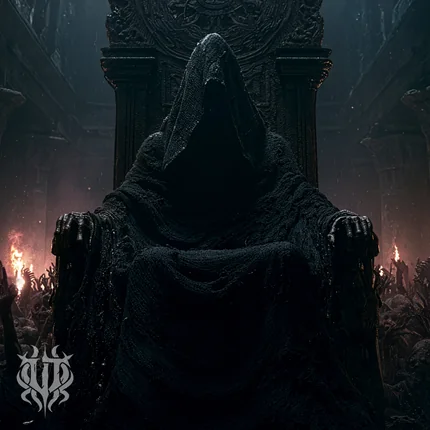
A Thousand Masks is a dark metal song inspired by Nyarlathotep, the Crawling Chaos who walks among humanity, hiding behind countless faces and whispered lies.
References
- The Dream-Quest of Unknown Kadath — original text
The fictional narrative is evidence for what the story says, not proof of events in the real world.
At a glance
The Dream-Quest of Unknown Kadath
Cold plateau, stone settlements and high tablelands
Inganok beyond the mountain barrier
Sarkomand
The prehistoric windowless monastery
Almost-human inhabitants subordinated to moon-beasts