

Walter Gilman
Walter Gilman is the Miskatonic student whose study of mathematics and witchcraft becomes a series of involuntary journeys in The Dreams in the Witch House. His experiences are marked by a widening gap between intellectual understanding and practical control, ending with an attempted rescue that defeats one adversary but leaves him exposed to another.
6 min read · 1,066 words
Background and academic work
Gilman comes from Haverhill and attends Miskatonic University in Arkham. The town’s history encourages him to connect higher mathematics with accounts of magic. He studies forbidden books in the university library until the authorities limit his access and reduce parts of his course load.
His performance becomes uneven. Early in the crisis he fails examinations in Calculus D and Advanced General Psychology, yet later demonstrates unusual intuitive skill with advanced equations. Professor Upham praises his understanding of higher-dimensional problems.
The contrast is important: Gilman is neither uniformly brilliant at every task nor simply incapable of reasoning. Concentration, health and formal academic performance deteriorate while one narrow area of insight intensifies. The narrative does not give him a completed degree or a professional appointment.
Why he rents Keziah Mason’s room
Gilman chooses the Witch House because of its association with Keziah Mason. Her reported explanation of lines and curves leading beyond ordinary space resembles the problems he is investigating. The survival of her former dwelling appears to offer an opportunity to connect documents with a physical site.
He first searches the walls for old markings, then becomes absorbed in the corner formed by the sloping ceiling and inward-leaning partition. Closed areas beside and above the room remain inaccessible because the landlord refuses permission to open them.
His early decision is voluntary and motivated by research. The later experiences are not. The story traces the transition from deliberately seeking a dangerous location to being unable to control when he leaves it, where he goes or what others demand of him.
Symptoms and attempts at explanation
Fever, disturbed sleep and painfully acute hearing begin in early February. Gilman stops his clock and becomes preoccupied with sounds in the walls and sealed loft. Dreams of unfamiliar spaces alternate with visions of an old woman and Brown Jenkin approaching his bed.
He initially attributes these events to illness, overwork and remembered folklore. Reports that he is absent from his bed suggest sleepwalking. He tries practical measures, including blocking rat-holes and laying flour to detect movement through the corridor.
Those measures create further problems for an ordinary explanation. His body bears marks, mud appears without a corresponding trail outside the room, and other people observe a violet light associated with his dreams. Each attempt to test the experience produces information that makes it harder to dismiss.
Alien journeys and the metal figure
Gilman reaches a green-lit hillside where movement is difficult, then a high terrace overlooking an immense city under three suns. Keziah and Brown Jenkin accompany him in forms that sometimes appear as abstract geometrical projections during transit.
At the city he breaks an ornament from a balustrade while trying to steady himself. The figure later appears in his bed and is placed on his table by Mrs. Dombrowski. He and Frank Elwood bring it to museums and professors, giving a false account of finding it in rubbish because its apparent origin is too extraordinary to explain openly.
The object’s unusual composition and subsequent museum display distinguish it from a sensation known only to Gilman. The narrative supplies evidence of an unexplained artifact while leaving the exact nature and location of its city unresolved.
Pressure to become an initiate
Keziah insists that Gilman meet the Black Man, sign a book in blood and take a secret name. His independent investigations have apparently brought him within reach of a system of obligations he never intended to accept.
Brown Jenkin bites his wrist during a scene before the open book. Gilman later wonders whether he signed, but his fragmented memory never provides a definitive answer. It is therefore inaccurate to state unconditionally that he completes the initiation.
The pressure includes physical coercion and apparently impaired control over his own movements. His mathematics helps him recognize where he may have gone; it does not protect him from the beings who know those routes more intimately.
Elwood’s help and the kidnapped child
Gilman eventually confides in Elwood and moves to his room. Companionship briefly restores ordinary sleep and gives him help in investigating the artifact. The relief ends when the witch and familiar reach him there as well.
During an apparent journey to Orne’s Gangway, Keziah tries to make him carry an unconscious child. He resists and attempts to flee, only to be seized by the waiting Black Man. The next morning brings bruises, mud and a newspaper account of the missing Ladislas Wolejko.
Witness descriptions in the report resemble the group Gilman remembers. He and Elwood now fear not only illness or supernatural danger but involvement in an actual disappearance. Their uncertainty about how to seek help becomes entangled with the possibility that Gilman himself will be implicated.
Resistance on May Eve
At the attempted sacrifice, Gilman breaks free from his paralysis and takes the knife from Keziah. She attacks him, but the crucifix supplied by Joe Mazurewicz momentarily disrupts her grip. He uses its chain to strangle her and kicks Brown Jenkin away when the familiar intervenes.
His action does not save Ladislas. Brown Jenkin has already inflicted the fatal wound while Gilman fought the witch. The rescue fails even though his resistance is real and the witch appears to die.
Gilman then attempts to return through the dimensions without a guide. The journey exposes him to an overwhelming sound. When the lodgers find him, he has fresh injuries and both eardrums are ruptured. His acquired knowledge has helped him get back, but it has not brought him back unharmed.
Death and surviving evidence
Gilman resolves with Elwood to leave the house. Before they can do so, a rat-like creature attacks him in bed and escapes after causing fatal internal injuries. The familiar’s survival turns the apparent defeat of Keziah into only a temporary reprieve.
The story continues beyond his death. The building is deserted and later damaged by a storm in March 1931 before demolition in December. Bones, books, the crucifix and other objects connect the hidden spaces with his account. The strange metal figure also survives in the university museum.
Gilman cannot explain or defend the story of his experiences himself. Elwood’s memories and the material remains carry it forward. This makes him both a failed explorer of forbidden routes and the source of evidence that others inherit without being able to resolve.
Related music
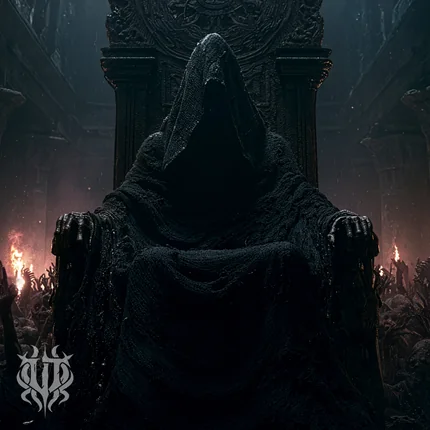
A Thousand Masks is a dark metal song inspired by Nyarlathotep, the Crawling Chaos who walks among humanity, hiding behind countless faces and whispered lies.
References
- The Dreams in the Witch House — original text
The fictional narrative is evidence for what the story says, not proof of events in the real world.
At a glance
Haverhill, Massachusetts
Miskatonic University
Mathematics, with research into physics and occult traditions
The Witch House in Arkham; first its eastern attic room
Frank Elwood
Keziah Mason and Brown Jenkin
He cannot remember whether he signed the book
Killed after returning from the May Eve ordeal